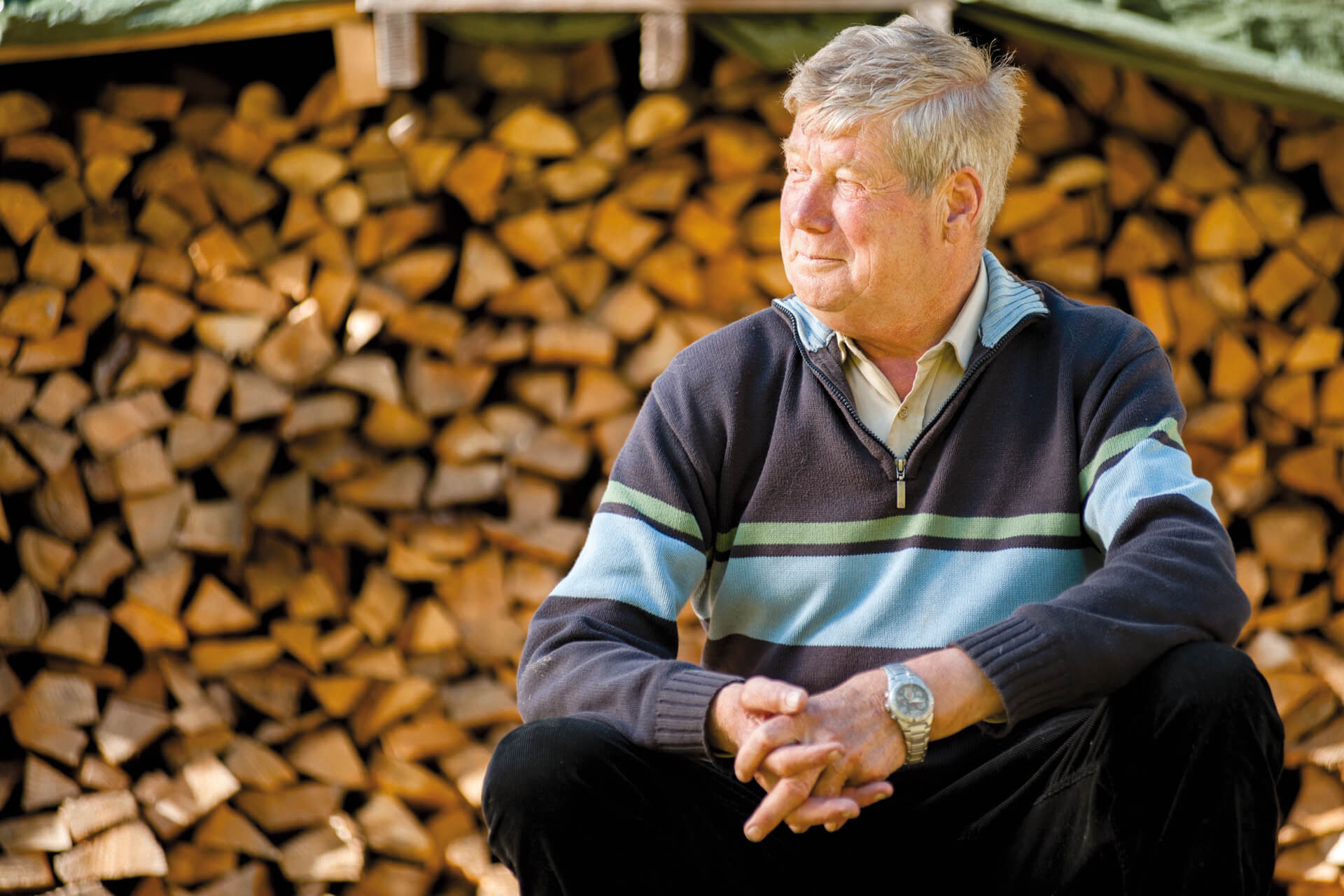
Willy Gurschler
Interview with the sheep whisperer
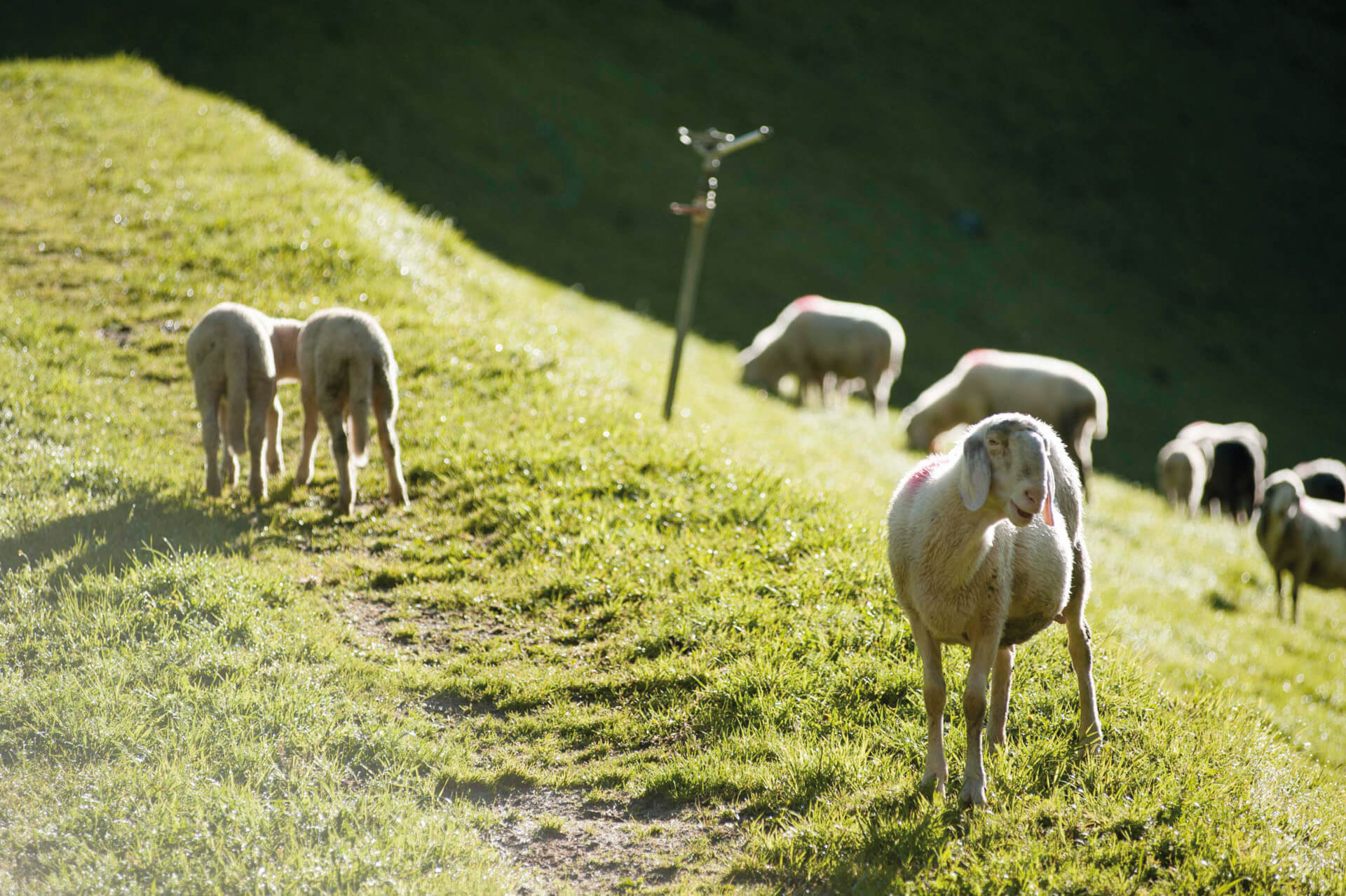
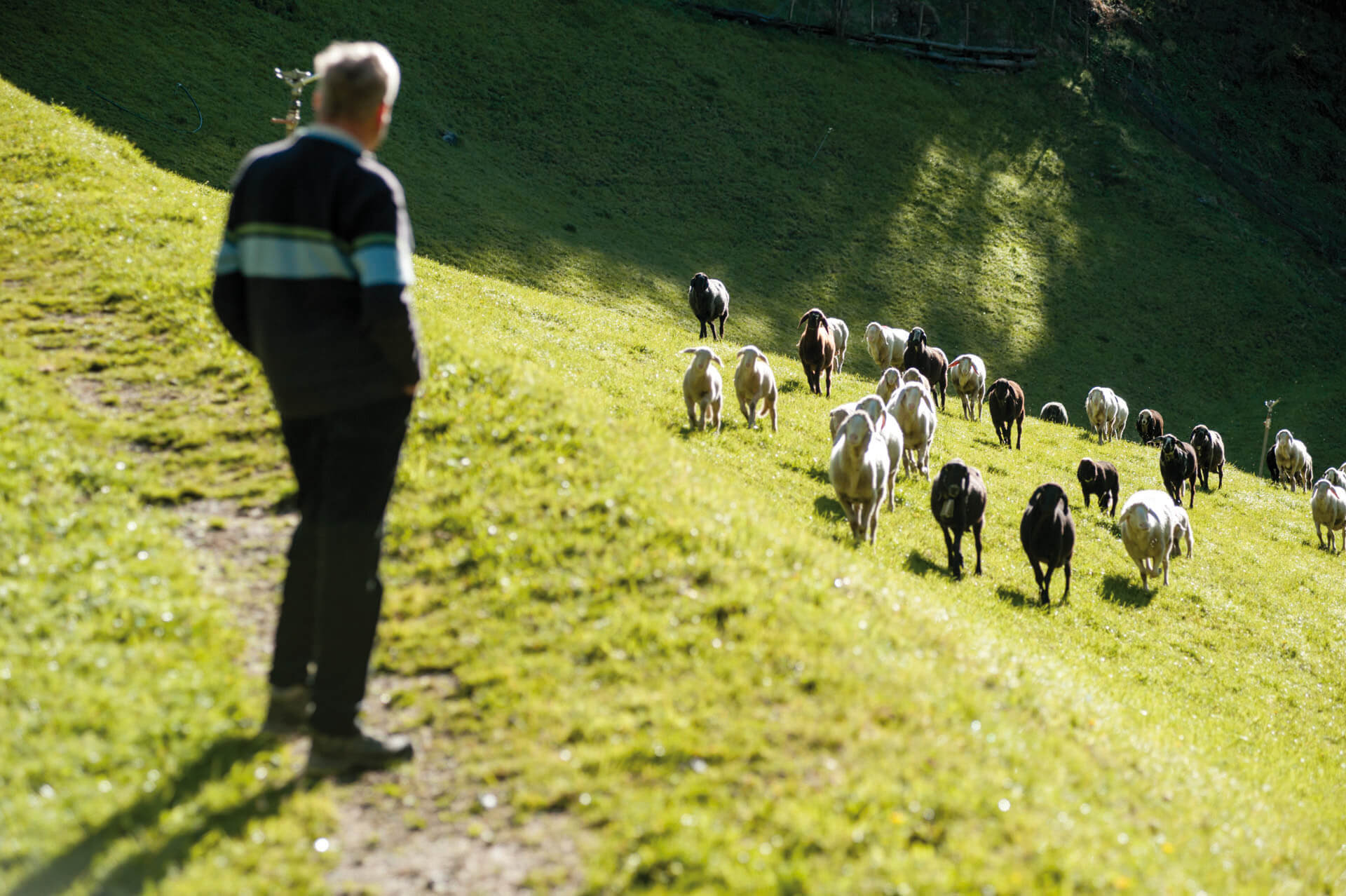
WE DRIVE THROUGH A TUNNEL. THEN A MOUNTAIN MEADOW CLIMBS UP TO THE LEFT. SURROUNDED BY BLACK AND WHITE SHEEP, WILLY GURSCHLER, THE SHEPHERD, STANDS THERE. AS WE GET THERE, HIS HERD MOVES AWAY, BEATING. EXCEPT FOR ONE SMALL SHEEP. IT STANDS BETWEEN US, NIBBLING ON OUR JACKETS, SEEKS TO BE CLOSE TO US. BEATING FOR ATTENTION.
What is a sheep like?
Sometimes loyal, sometimes shy, sometimes cocky, now stubborn in spring. They also always steal the hay from me here in the meadow, which I actually only stored for interim feeding. Well, a woolly animal like that can be pretty cheeky.
Willy, do you know your sheep inside and out?
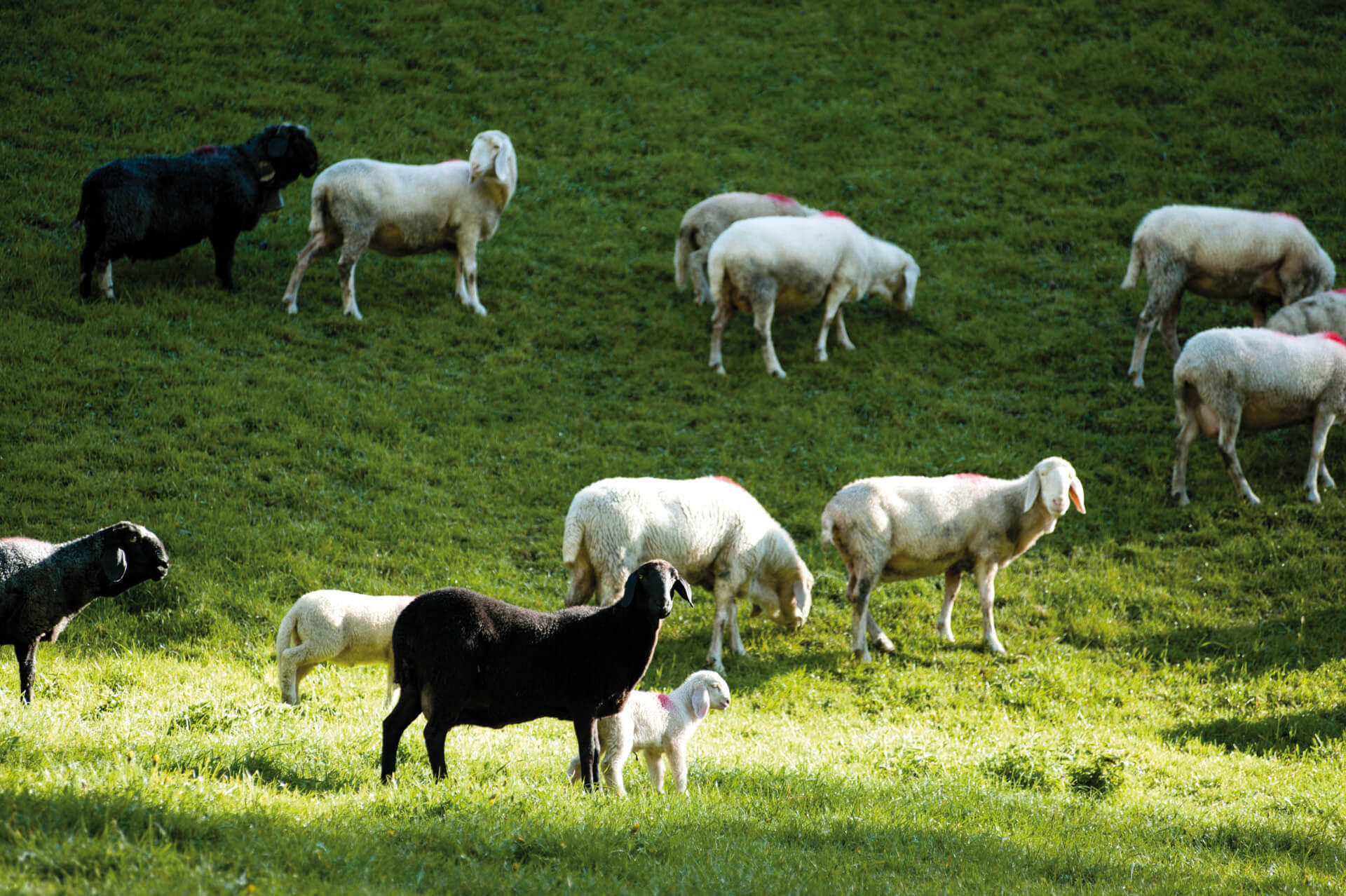
Yes, they are very peculiar, each one has its own character and temperament. Some are rather stubborn, others are more trusting. They don’t have names, but the sheep and I are very familiar. The way I walk, they recognize me by the way I walk and the way I smell. They know exactly when I’m coming. The mothers and their young recognize each other by the sound. By the “baa” so to speak and by the bell. Each owner has their own color combinations for their flock so that they can tell the animals apart. The yellow tags in the ears are also used for this purpose.
How many sheep can you count?
Do you have a system?
With 1600 sheep, counting is difficult, so you count them once in spring and then once in autumn. There are enough sheep that are born on the way. Some of them have accidents up there in the mountains.
How did you get into sheep?
Well, I used to work and did herding as a hobby on the side, at weekends. Now I’m retired and stay up there for the whole three months. My father was also a shepherd for three decades, but few have done it as long as I have, namely 36 years.
Are there special routes or do the sheep go their own way?
We’re going over the Hochjoch. But the sheep would go without a shepherd. The older sheep in particular remember the paths and their meadows well. Sometimes the newborns and mothers are left behind in the valley, but they also go over the yoke and back alone.
So behind the yoke there are actually whole meadows? Are these pastures common property?
Between the glaciers are where you think there is nothing left. Sometimes it is completely blue because so many flowers grow. The sheep only eat the best. But the pastures belong to eight different owners.
Who is your actual employer?
The farmer, a cooperative? The sheep?
Willy laughs. No, I don’t have a direct employer, I herd them because I like it. But the sheep of over 30-40 farmers are driven to pastures. You get a flat rate per sheep, but you don’t do it for the money. It’s not that easy to find new shepherds either. The young people don’t want to run after them for much longer.
The money or the sheep?
Laughs again. The sheep. They’ll soon run after the money. That’s why many people decide to go into livestock farming in a different way. We used to drive 6000-8000 sheep up. Today, cow milk farming is more profitable.
You’re on the road for three months. Do you miss other people on the mountain?
Are you ever bored?
No, it’s never boring, there’s something different to do every day. I’m happy when I’m up there and I’m happy when I’m down there too. On some days I just have to make sure I have some peace and quiet. The hikers all want to chat. I prefer to go my own way and when I want to chat myself, I stop at a mountain hut. I know all the innkeepers up there. You also meet some mountain guides who tell me when they have seen a sheep on a ridge.
What are your tasks?
I always walk my rounds, once across the meadows, once up into the mountains. I also carry the salt to the herds. I have set up little salt huts (small houses) everywhere. I look after my sheep well. In the past, I would carry fifty kilograms of salt up on my back by myself. For hours without stopping. Now I can’t do that anymore. Age. If they don’t have enough salt, they run after hikers – then they salt. That’s not to be underestimated – when a herd like that is racing towards you.
Where do you sleep up there?
In the shepherd’s hut. My father still had snow on his bed covers in the hut when it snowed during the night, and his frozen socks. When I go up there now, I’ll find a nice room, heated with wood and electricity. That’s how I’ve set it up. It’s cozy and comfortable up there, I don’t want for anything.
What do we need to protect the herd from the most?
What dangers are they exposed to?
The most dangerous thing is actually the eagle, which grabs the little lambs one by one. Or the fox. Fortunately, there are no bears here yet. Now that the glaciers are receding, there aren’t so many dangerous places to fall in the mountains. Sometimes lightning kills one of the animals. But you can’t be careful everywhere and you can’t protect the animals from the forces of nature.
How do you communicate with your colleagues?
Whistle or use your cell phone?
I don’t have any colleagues up there. I am the only shepherd in the mountains. But there is a whole group of drovers, about 20 of us. We know each other so well that we don’t really need to talk much. We whistle, the dogs help us. In the autumn we round up the sheep for three days – we all need them. It’s a huge area, you can’t even imagine it. If a few sheep are left behind, they just have to be searched for again afterwards.
You’re looking at 1600 sheep. Do you have a favourite sheep in your own flock?
Mah, I love all 56 of them. Willy laughs.
What do you call your 56 favourite sheep?
Lick-lick-lick or go-go-go. But on the mountain that doesn’t help me much, they have enough salt. They no longer listen to me.
As soon as we retreat, Willy calls out his go-go-go.
The favorite herd slowly approaches with a multi-tonal ringing. To their favorite shepherd.