

Martin Rainer
Artist

Martin Rainer was born in 1923 on the Örlerhof farm in the Schnalstal valley. As a child, he began to carve wooden figures while tending his father’s flock, and throughout his life his works were inspired by this archaic, deeply religious pastoral world.
After returning home at the end of the Second World War and after a period of imprisonment in an American camp near Naples, during which he continued to create wood carvings, even winning first prize in a competition organized among prisoners, he continued his work in the art camp.
In 1947 he attended the art school in Val Gardena and later the Academy of Fine Arts in Munich. In the 1960s his home farm and other farms were demolished to make room for the Vernago reservoir. In 1964, after his marriage, he and his family moved to Brixen, where he worked until his death in 2012.
So he began to create small sculptures and portraits to order, including those of his seven children. In the course of his very long artistic career, he tried his hand at wood, terracotta and bronze, creating statues, medals, bas-reliefs and leaving us countless masterpieces that enrich numerous private collections as well as public works throughout the province of Bolzano.
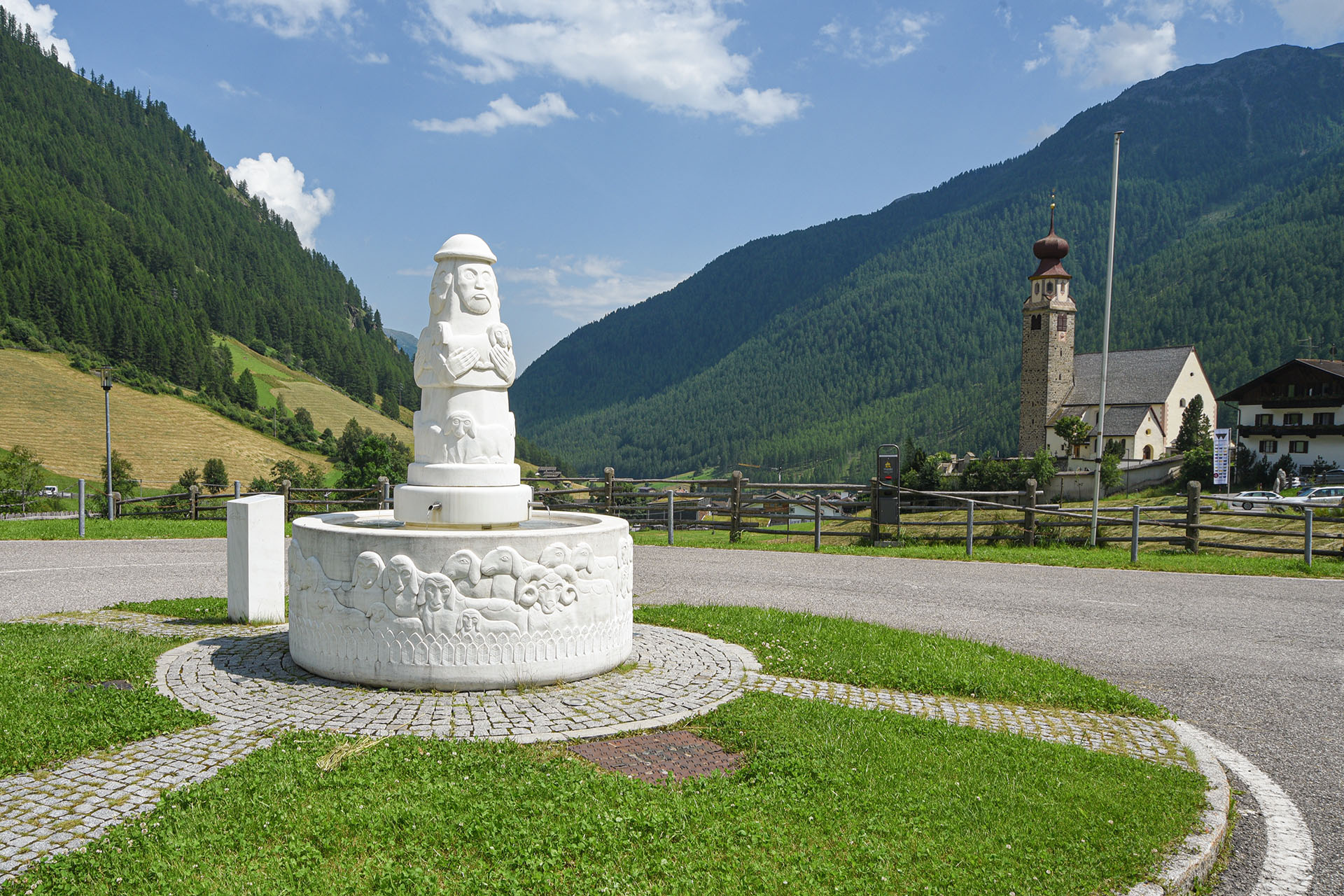
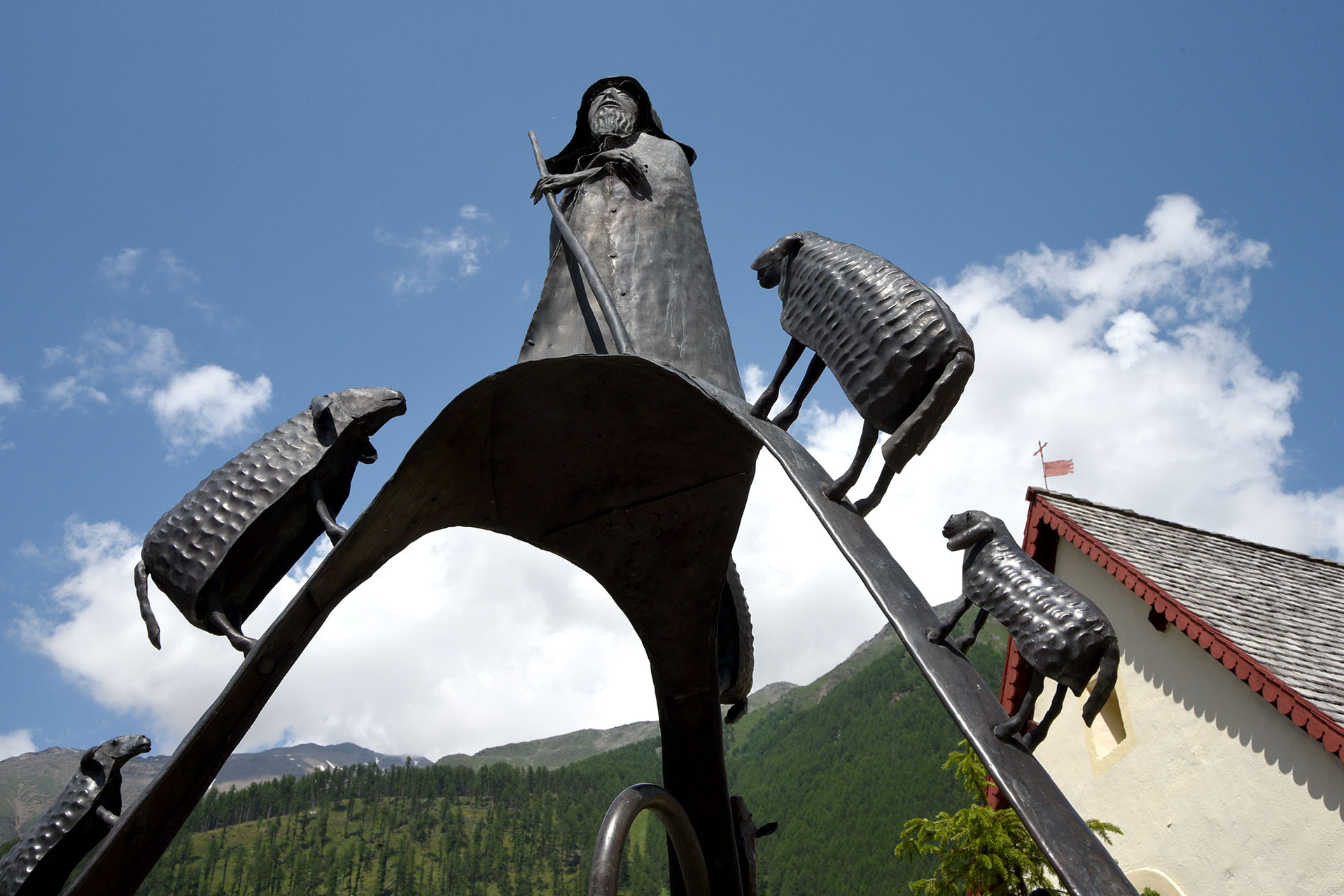
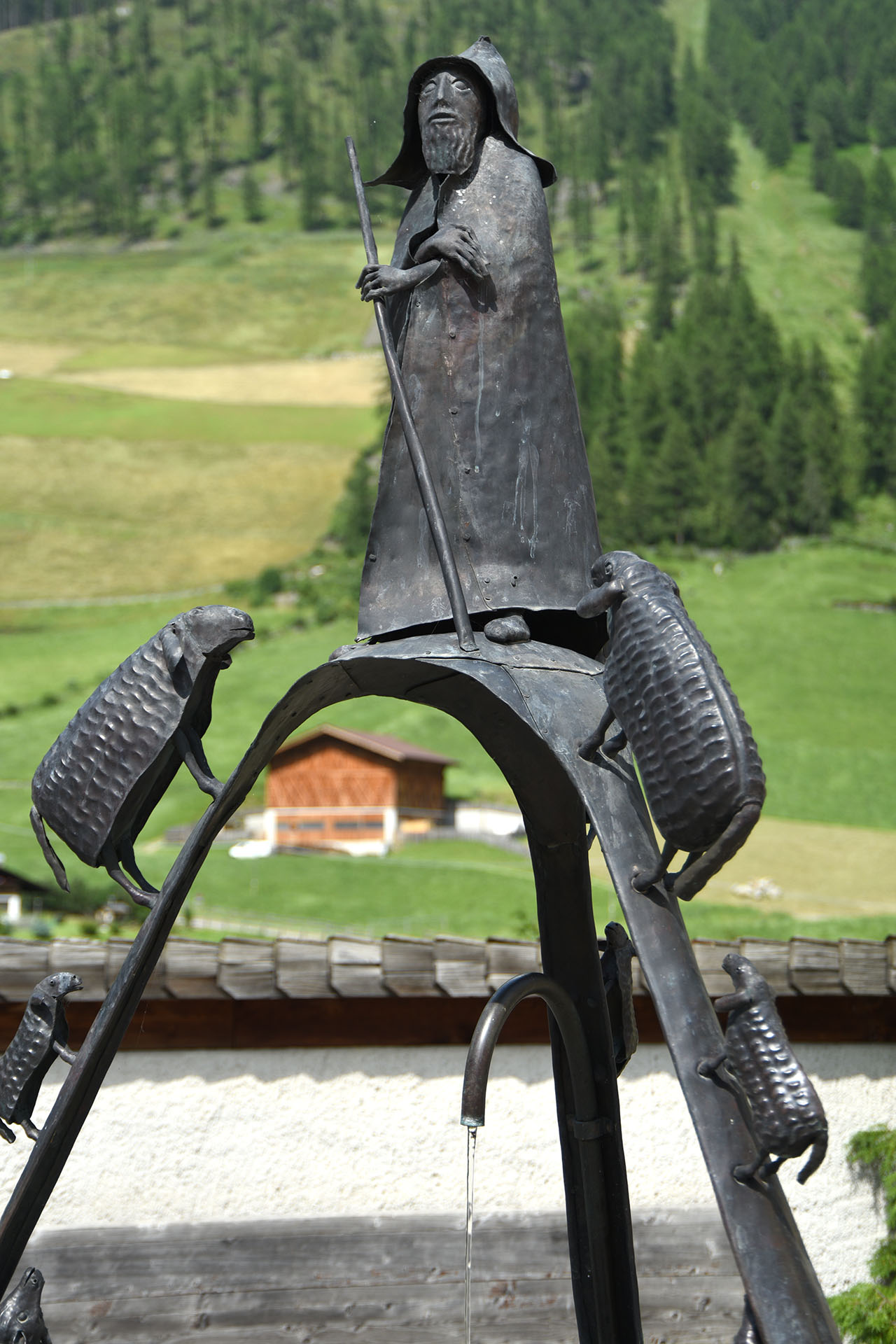
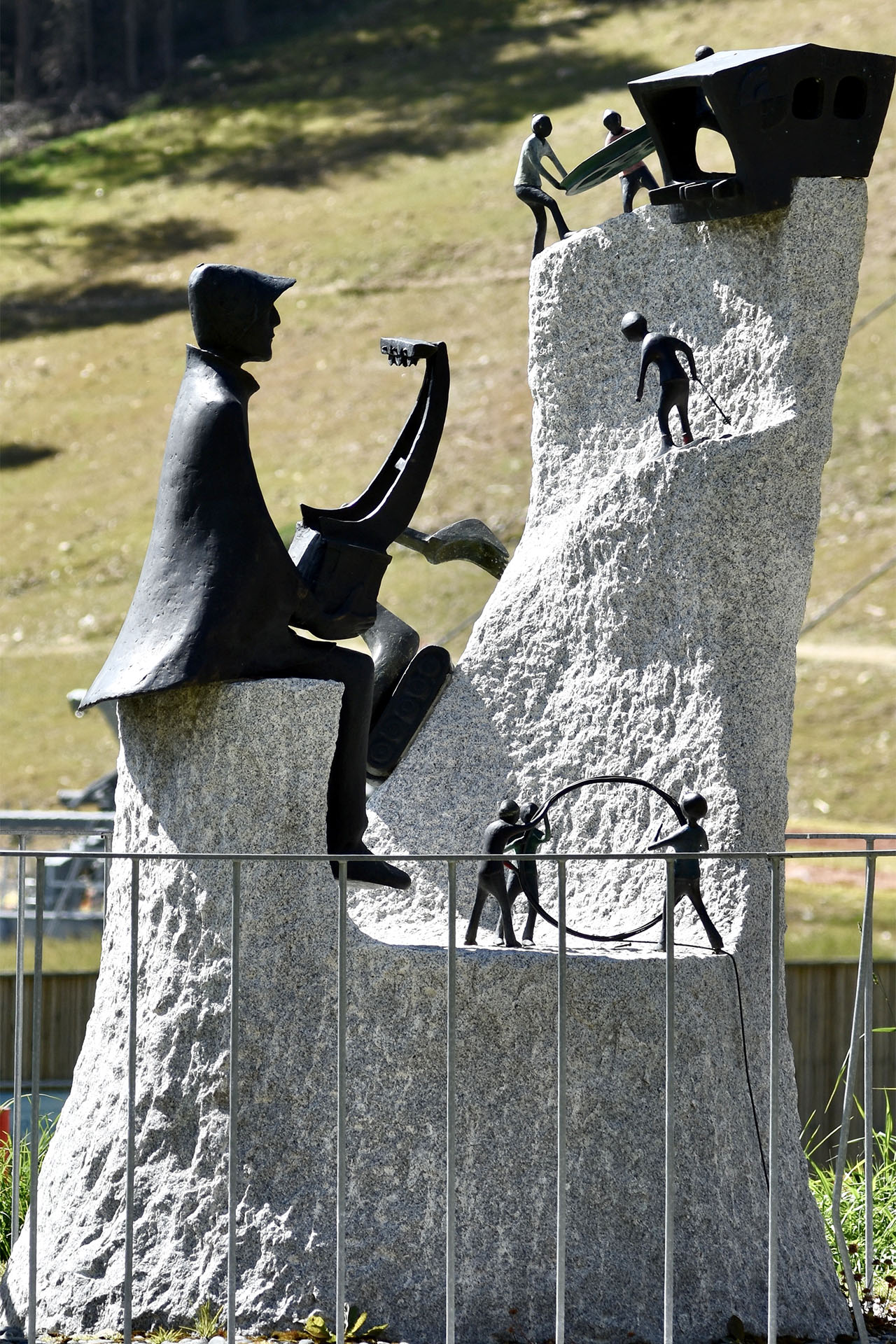
A common thread, perhaps not always recognizable, links his works to his youthful experiences: I think of the characters that animate his nativity scenes, rich in small details and which, although influenced by his academic experience, retain the roots of his native valley. These countless figures and situations recall, in three-dimensional form, certain paintings by Hieronymus Bosch; in short, Martin Rainer is a storyteller of the first order. His most famous work is undoubtedly the monumental Fountain of Life in the Cathedral Square in Bressanone. On the marble basin filled with water, the symbol of life, rests an elegant screw-shaped bronze pyramid decorated with allegorical figures. Another fountain in front of the Schnalstal parish church shows the Good Shepherd surrounded by his sheep, and in this case the setting of the work is the alpine landscape of his native valley. Sheep, shepherds, mountaineers, hunters and prey: a microcosm seen with profound knowledge and a touch of irony, are his favorite themes.
Martin Rainer, who is remembered for always being modestly dressed, has received countless awards and honours, but of all of them I would like to mention the Walther von der Vogelweide Prize and the honorary citizenship of the municipality of Schnals, which he particularly valued. Dozens of biographies and catalogues published over the years help to keep the memory of the artist and his work alive.


