All Posts By

Dennis Pongs

Eva Götsch

The sheep mother

Eva Götsch
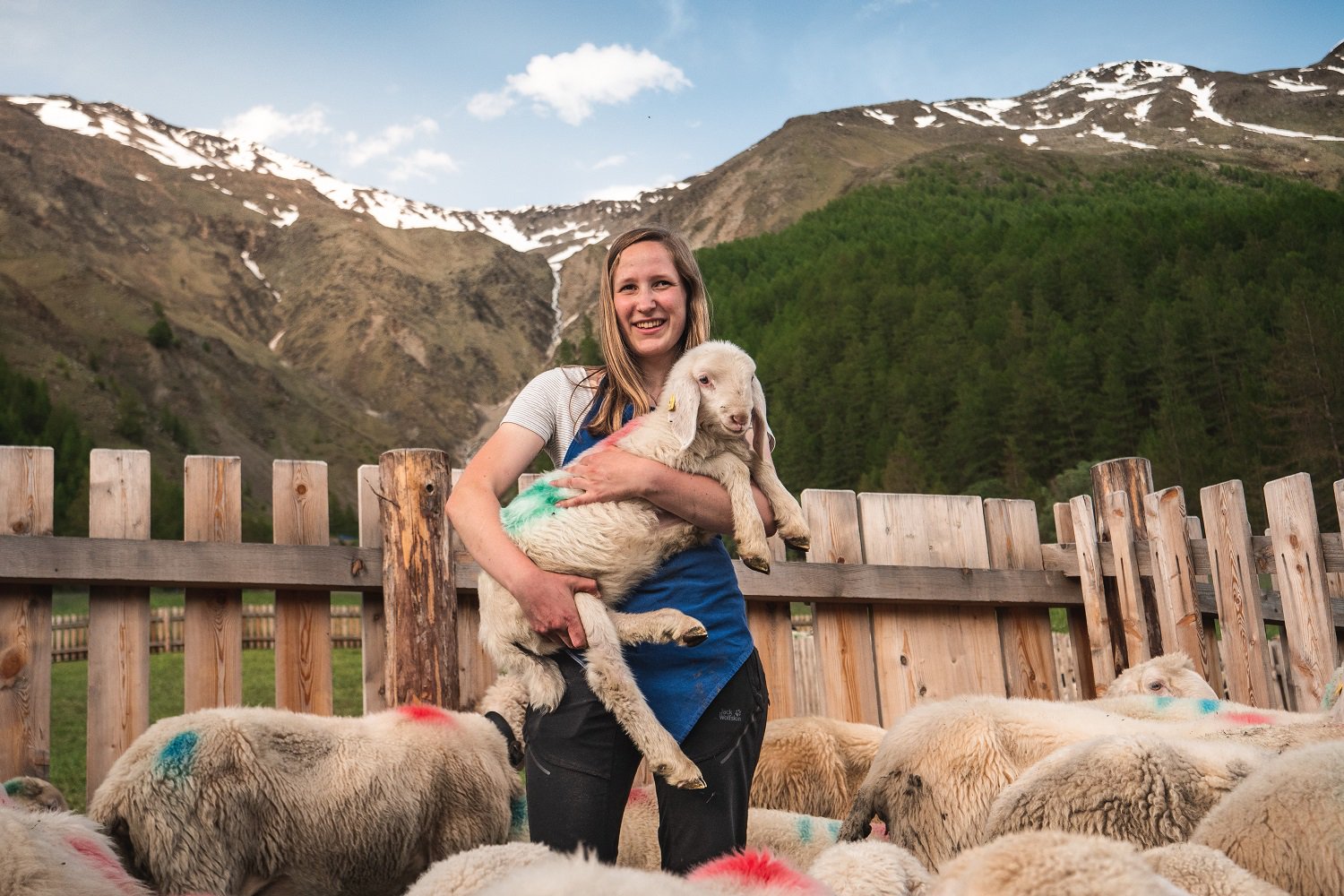
Helping the farmers with your eleven-year-old daughter during the traditional sheep drive from the Ötztal to the Schnalstal in South Tyrol? Oh yes, that’s possible, although the daughter will end up being more skilful than the parents.

In Vent I hand Magdalena her poles. “They’re stupid!” complains the daughter. Her look says: If only we had proper Nordic walking poles like the hikers who are now clattering down steep paths to the mountaineering village at the far end of the Ötztal this afternoon. But ordinary ski poles for sheep drives in the autumn? “We have the worst equipment!” protests the eleven-year-old.

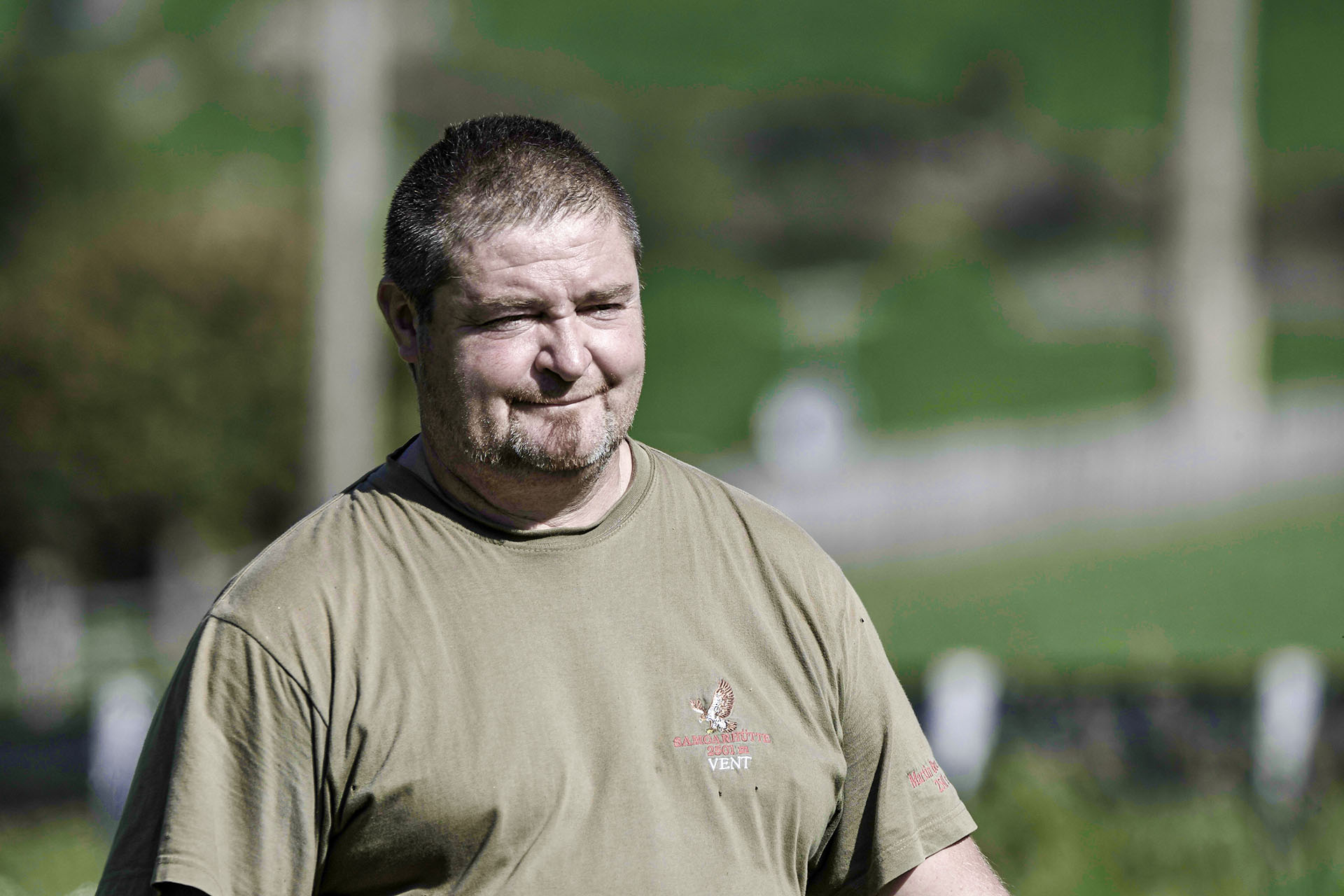
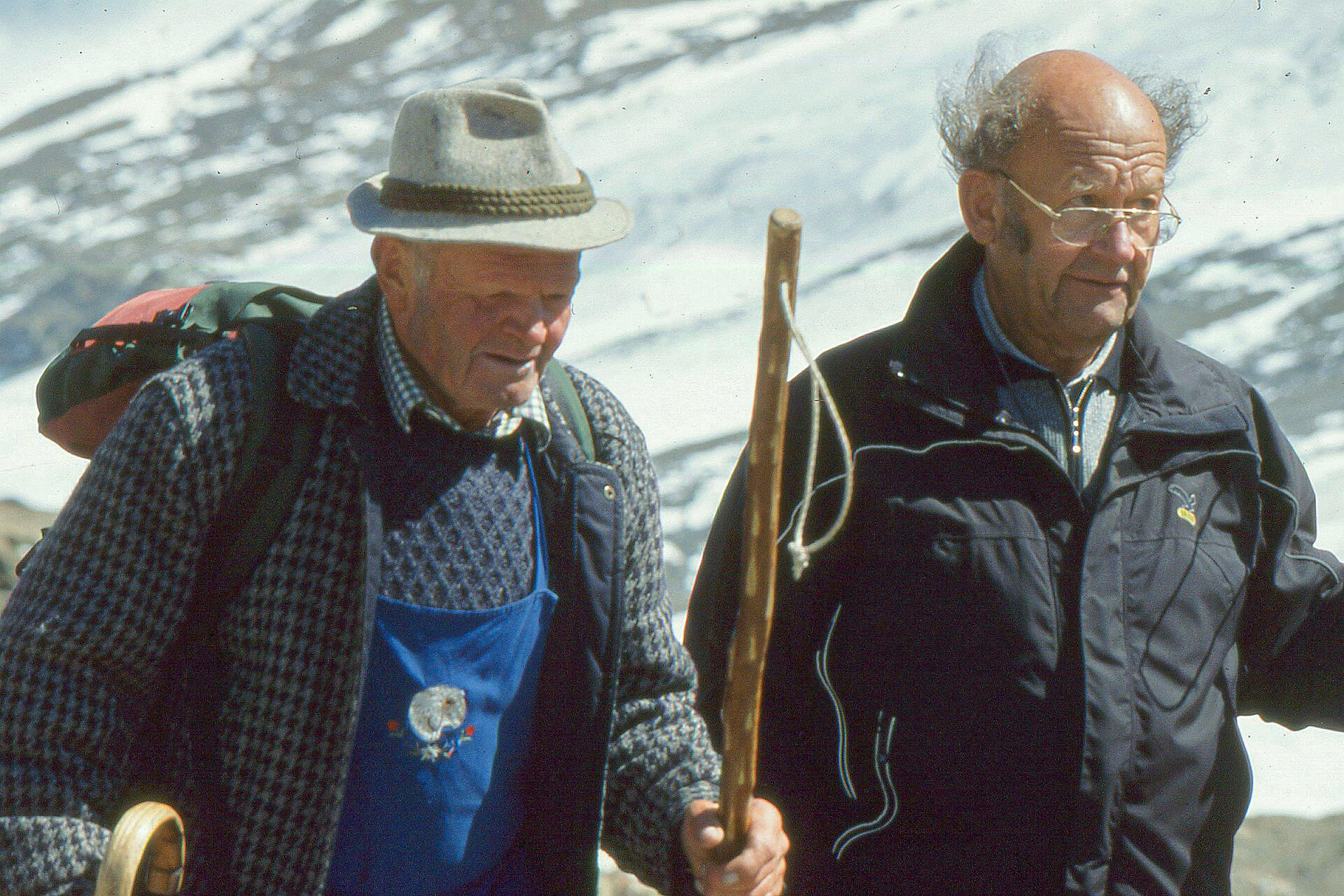
Especially compared to the sheep drivers. Weather-beaten, taciturn men who stand around smoking in the parking lot. They are wearing chunky mountain boots and dirty jeans, and blue aprons with the emblem of the Schnalstal sheep breeding association are stretched around their bellies. The drivers are leaning on chin-length wooden sticks with iron tips, greasy hazelnut sticks that, like the men’s outfits, show heavy signs of wear. We have arranged to meet the drivers for the traditional sheep drive from the Ötztal to the Schnalstal. We are allowed to help bring the animals, which in June covered the same distance to their traditional pastures over the Niedertalferner and the Similaunhütte at an altitude of 3017 meters, back to their stables in South Tyrol. “Of course we could drive the animals to the Ötztal and back in trucks, but it’s about the old customs,” says Josef Götsch, chairman of the Niedertal Alpine Pasture Interest Group, who organizes the annual trek. He doesn’t mention that this would be much more expensive.

Donkey and St. Bernard

Götsch has three daughters: Carla, 27, Eva, 17, and Paula, ten years old. Paula is with us for the first time. She excitedly tells Magdalena that they have eleven dairy cows at home on the farm, which she names all by name, chickens, goats and an ancient pony that looks like a cross between a donkey and a St. Bernard dog. There is no sign of the sheep that we are supposed to drive. In the past few days, helpers have been collecting them from the widely scattered pastures in the Vent Valley, where the Schnalstal people have held grazing rights for centuries. Now they are at the meeting point at the Martin Busch Hut, a three-hour walk from Vent. We traipse through the barren Niedertal, where the last pines will soon give way to grass that glows in autumnal red tones. While Paula is thriving in the familiar environment, the new surroundings have intimidated Magdalena. She stumbles along beside Paula with her lips pressed together, her ski poles tucked under her father’s saddlebag. Our task awaits us in front of the Martin Busch Hut: hundreds of sheep huddled together behind a wooden fence. The animals create a deafening cacophony. Mother sheep, called Görren by the drovers, call for their lambs, the lambs bawl for their mothers, mixed with the tinkling of countless pasture bells. It has become cold, the Martin Busch Hut is at an altitude of 2501 meters. Fog is wafting around the hut, sleet is falling from the sky. “It’s possible that there will be ten centimeters of snow tomorrow,” says Josef Götsch and disappears into the warm hut with the drovers. Magdalena and Paula hurry to a pen where they discover half a dozen tiny lambs – their fur still wet from birth, still too weak to stand on their own two feet. “Tomorrow they will be carried piggyback over the mountains in a cage,” says Paula. Her and Magdalena’s job will be to make sure that no sheep gets lost at the end of the long train. It is unimaginable how the clumsy young animals and the round brats, who almost drag their bulging udders on the ground, will be able to cope with the forced march.

Reckless jostling

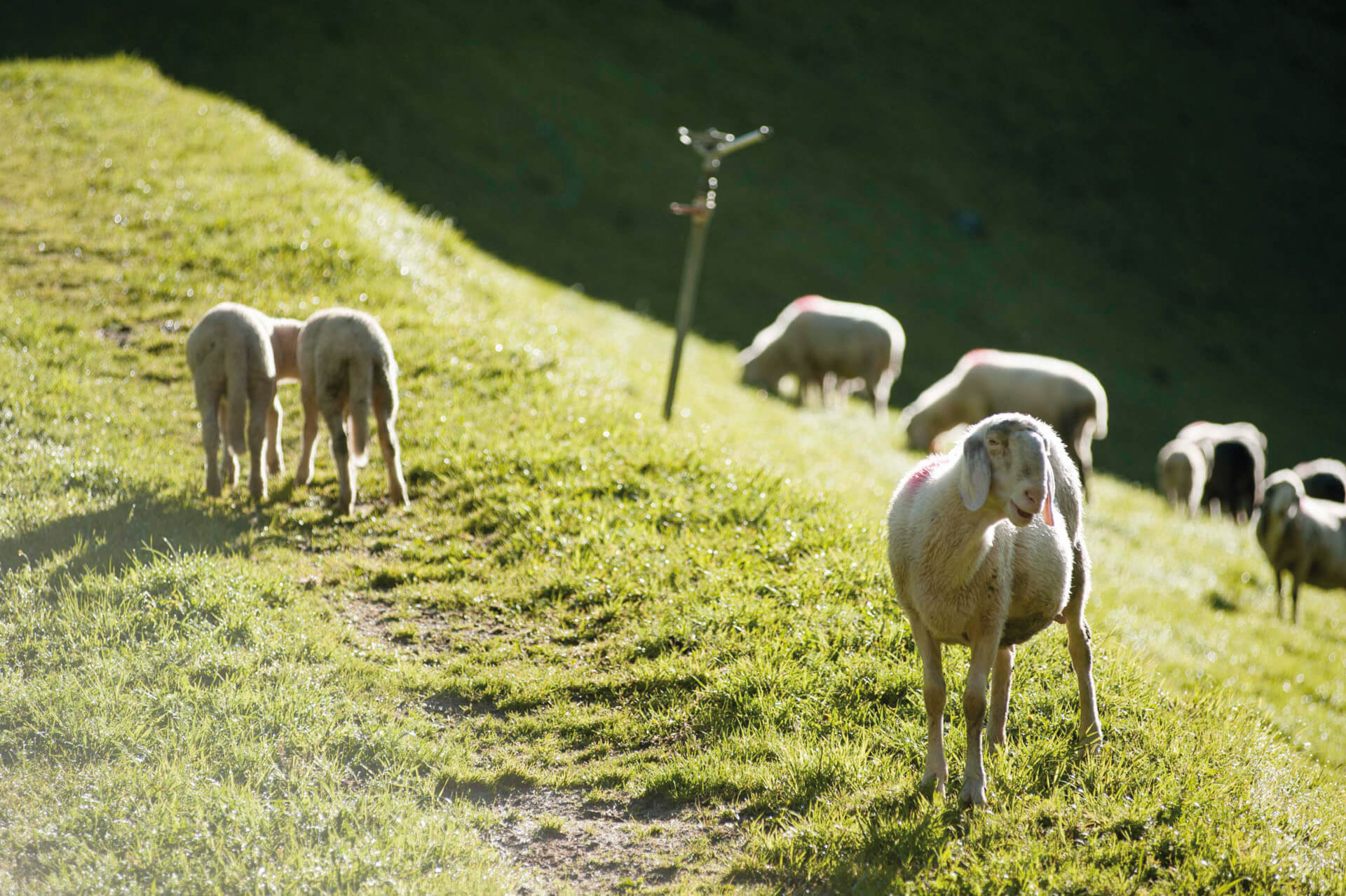
The next morning, the balls of wool pour out of the open gate like a torrent. They are spread out on the slopes to the left and right of the path, where the drivers, gesticulating with their sticks, shout “Hopp! Hopp!” and “Hoi! Hoi!” to direct the animals in the desired direction. The herd “drives” uphill, as the farmers say, at a run, towards the Similaun Hut. But what seems like a harmonious flow from a distance is in reality a merciless jostling and shoving. You can also feel how wild this chase is at the end of the giant worm that the flock of sheep has gradually formed into. At one point, a horned 100-kilo billy goat tries to escape to the side, then a mother sheep simply stops or puts the sheep in reverse while the whining lamb escapes between our legs. We adult hobby drivers soon run out of energy and limit ourselves to watching.
Bearded vulture alarm

But Magdalena perseveres. Together with her new friend Paula, she chases after the runaways, uses the ski poles as artificial arm extensions and directs the escapees back to the herd. The eleven-year-old jumps through swampy grass areas, over sharp stones and glacier streams, her trouser legs and hiking boots smeared with mud like all the drivers. In the cold air, clouds of breath come out of the sheep’s nostrils, and a layer of frost forms on the drivers’ hats and fleece jackets.

The convoy slowly fights its way over the remains of the Niedertalferner and reaches the Similaun Hut on the Niederjoch on the border between North and South Tyrol, the highest point of this ordeal at 3017 meters. Suddenly a bearded vulture hovers over our heads, and the rare bird of prey circles less than 50 meters away. One driver claims that it sometimes knocks lambs off rocks and then eats them. The idea that bearded vultures only feed on carrion is a myth. Magdalena feels sorry for the lambs and would be prepared to fight the bearded vulture, she says. So much sacrifice is not necessary today. The most dangerous stretch of the trail begins behind the Similaun Hut, where the path zigzags downhill through steep, rocky terrain. Maximum concentration is now required; one wrong step and the person or sheep would be food for the bearded vultures. Some lambs that cannot go any further are carried on the shoulders of the drivers. Lower down, where the Vernagt reservoir shimmers, the herd rolls like a broad avalanche over gently sloping slopes. The sheep greedily pluck out tufts of grass.

In a depression we discover a jet-black lamb, still smeared with blood and mucus. Its mother gave birth here; panicked at losing the herd, she abandoned her young. Carla, Paula, Eva and Magdalena become rescuers. Carla takes the pitifully bleating ball in her arms, where it quickly calms down and after a while even begins to suck on the finger she holds out to it. The 27-year-old farmer’s daughter knows what to do in such cases. The three sisters take turns carrying the lamb into the valley, and Magdalena is also allowed to rock her charge like a baby in her arms.

In Vernagt we are greeted by onlookers. “There are more spectators here than sheep,” mocks a drover. This does not stop him and everyone else from demonstratively waving their shepherd’s sticks for the photographers. Magdalena also knows what is expected of her here; that ordinary ski poles are the insignia of her office is no longer important. At the final tent party there is grilled food. We order lamb chops.

Source: diepresse.com
https://www.diepresse.com/3879836/ein-falscher-schritt-und-du-bist-futter-fuer-die-bartgeier

Hermann Götsch

Hermann Götsch

Mountain farmer & Chairman of the agricultural community "Niedertal"

Hermann Götsch, born in Merano in 1975, grew up on the Obergamp farm in Vernagt in the Schnalstal valley. Under the same roof lives a “dynasty” of farmers/breeders who have been dealing with sheep for generations. His father Konrad is the former president of the Niedertal agricultural community, which has managed and cultivated the extensive alpine pastures in the Ötztal since 1514.

As the farmer of the farm, he had 80 sheep that spent the summer in the Ötztal, while in spring and autumn he kept them on the slopes of the Prettberg above the Obergamp farm that he leased. Konrad accompanied the herds past the Similaun hut countless times and remembers that at that time the glacier itself washed around the hut and it took more than an hour to cross it.

The weather was not good several times and in 1979 a terrible storm killed 70 sheep! Hermann, his son, accompanied the sheep for the first time in 1983, when he was only 8 years old, and then for decades, and he remembers that the entire crossing has now been made without setting foot on the glacier! As he was quite strong, he had the task of carrying the lambs born along the route or those that were too weak in a special basket on his shoulders. But he also fondly remembers certain evenings, even playing the accordion, in the old shepherd’s hut, destroyed by an avalanche in 2011. Then he proudly tells us that it was immediately rebuilt with the help of craftsmen and companies from the Schnalstal valley and is now a gem, equipped with an ecological sewage treatment plant and a turbine to generate the necessary electricity.

He inherited the farm in 2005 and now keeps around 30 sheep. Meanwhile, his son Manuel, who brought the sheep to Ötztal for the first time at the age of 6, not only helps with the work on the farm, but also spends the whole summer alone in the new shepherd’s hut. It is only at the beginning of September, when the sheep have to be rounded up in a large and impassable area, that he gets help from many employees. A very strenuous job that, as Hermann says, would not be possible without the help of well-trained dogs!

Anton Peter Raffeiner

Anton Peter Raffeiner

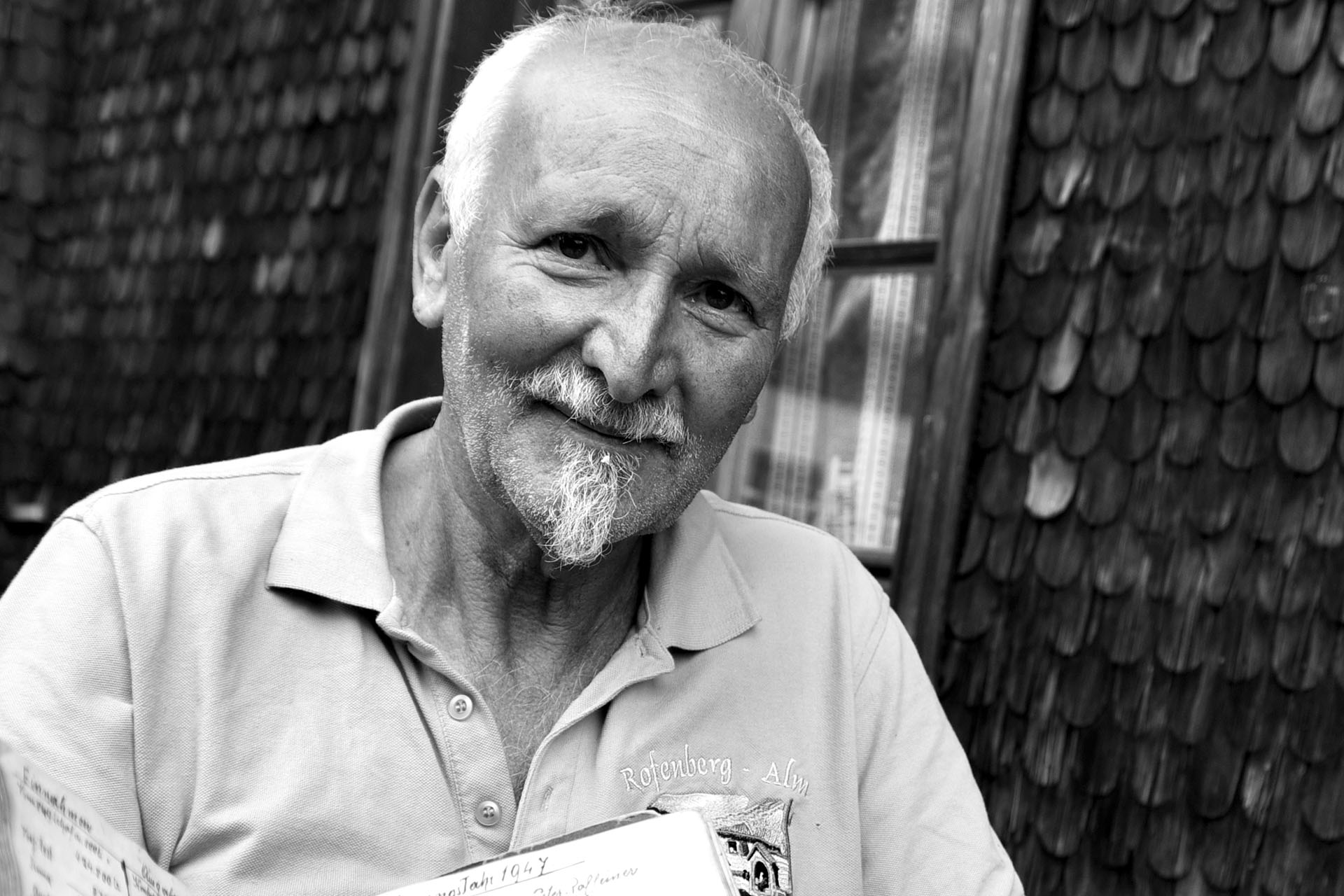
Mountain farmer & Chairman of the agricultural community "Rofenberg"

Anton Raffeiner was born in Merano in 1956. He grew up on the Pitairhof, which is located on the steep slopes above the right side of the valley. The small farm used to grow grain and keep 30 sheep.

Anton inherited the farm from his father in 1985, but by then the income from the farm’s own products had become too low to feed a family properly. So he found a job with the glacier railways, continued to work on the farm, but had to give up sheep farming due to lack of time.

In 1997, driven by his unbroken passion for sheep and the feeling that “someone has to do it”, he took over the office of president of the Rofenberg Alm, succeeding Johann Reiner, who held this delicate position from 1957 to 1997.

Today, Anton keeps the books and records of the Alm, which belongs to eight farmers, and manages its fortunes. Among his memories of the many alpine pastures he has climbed in recent years is the rapid retreat of the glaciers and the rapid advance of tourists.

Hans Haid

Hans Haid

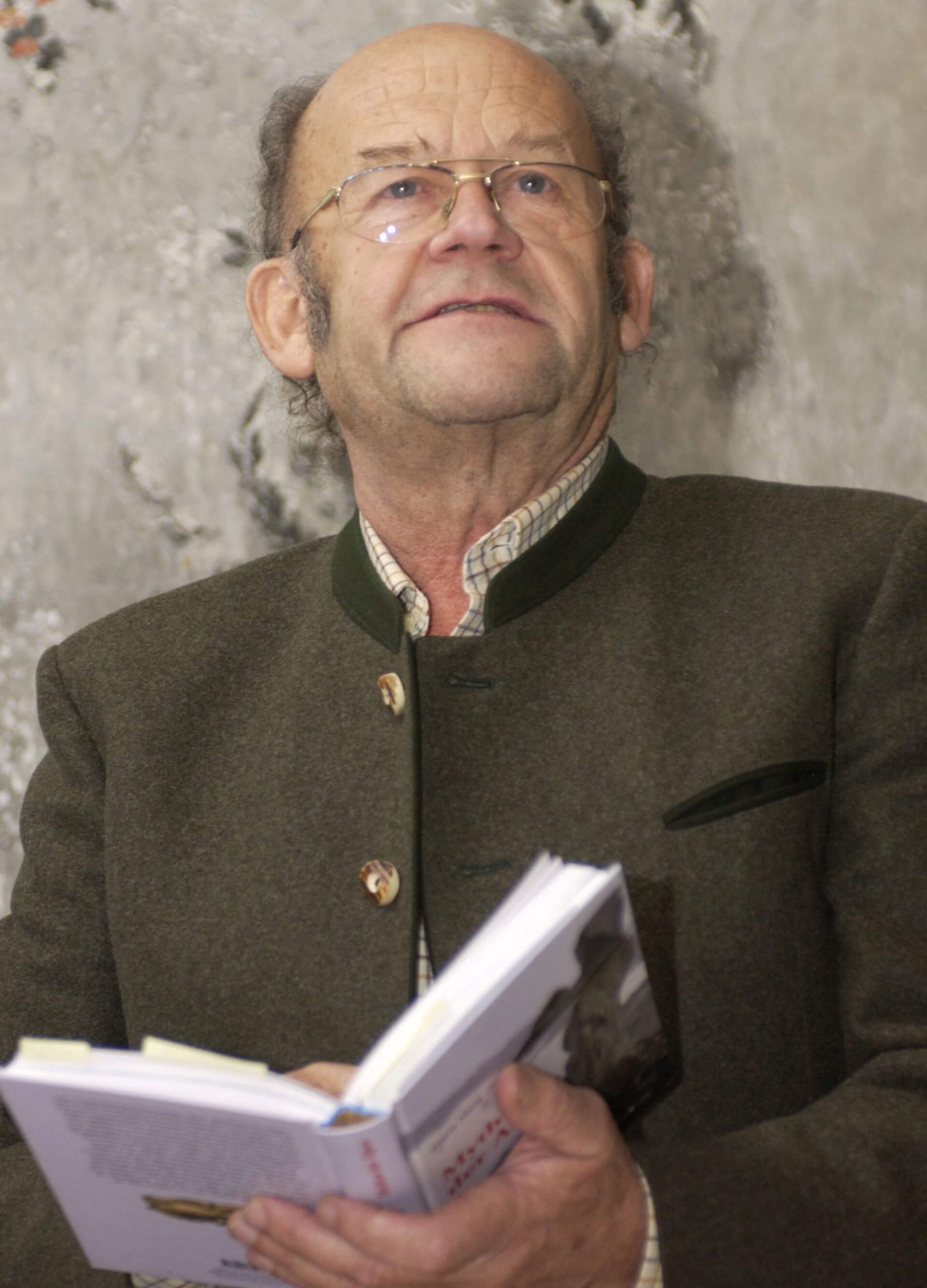
Austrian folklorist, mountain farmer and dialect poet

Foto: Hans Hofer

Hans Haid (1938-2019) was an Austrian folklorist, dialect poet and activist who was committed to preserving and promoting Alpine culture and the environment throughout his life. Born and raised in the Ötztal region in Tyrol, he developed a close connection to his homeland and the people living there at an early age. This connection shaped both his professional and his artistic work.

Life and work

Hans Haid studied folklore, German studies and art history at the University of Innsbruck. After completing his studies, he worked as a teacher and at the same time dealt intensively with the regional culture and traditions of the Ötztal. His main focus was on recording and preserving the dialect, folk customs and traditional ways of life.

As a dialect poet, Haid published numerous volumes of poetry in which he focused on the language and life of the Alpine population. His poems are characterized by a deep connection to nature and a fine feeling for the nuances of the Alpine dialect. He succeeded in converting traditional forms of expression into a modern, poetic language.

Commitment to the environment

In addition to his work as a folklorist and poet, Hans Haid was a passionate environmental activist. He campaigned vehemently for the protection of Alpine landscapes and their biodiversity. In the 1970s, he campaigned against the expansion of hydroelectric power stations in the Alps and was a co-founder of the “Initiative Pro Ötztal”, which successfully campaigned against the construction of large power stations in the Ötztal. His environmental activities brought him recognition, but also resistance from economic and political interest groups.

Cultural projects and legacy

Hans Haid initiated and led numerous cultural projects, including the Ötztal Local History Museum and the “Ötztal Dialect Archive”. These institutions are dedicated to collecting, documenting and presenting regional culture and history. Through his work, Haid made a significant contribution to preserving the cultural heritage of the Ötztal and making it accessible to the public.

His commitment and artistic work have received numerous awards. He has received the Tyrolean State Prize for Art and the Austrian Nature Conservation Prize, among others. Hans Haid left behind a rich cultural legacy that lives on after his death and serves as a source of inspiration for future generations.

Final words

Hans Haid was an outstanding personality who knew how to preserve and promote the traditions and language of his homeland in a contemporary and artistically sophisticated way. His commitment to the environment and the cultural identity of the Ötztal makes him an important representative of Alpine culture and a role model for the active protection of nature and tradition.

Suugelen Suugelen

suugelen suugelen
höörla leck leck leck
decht nit
drschtickn vrhungrn vrreckn
parge völl suugelen
schallen drumummha
lompm und groosn
und roppm an felsnen
worchtn und passn
gahe draunocha
öögn auspiekn
gaaling dr töet
suugelastöet
drschticket vrhungrcht vrleent
höörla leck leck leck
und wiidr di nöet und dr töet
und di freede
eppan wöll und asö …

sheep come, come
hey, lick lick lick
hey, lick lick lick
just don’t
suffocate, starve, die
mountains full of sheep
bells all around
lambs and graze
and ravens on the rocks
wait and watch
just around them
pecking out eyes
soon afterward death
the sheep’s death
suffocates, starves, buried in an avalanche
hey, lick lick lick
and again the misery and death
and the joy
something yes and so on

This poem was published in:
TIROLER LAND wie bist du …? A musical-literary journey.
BONA EDITIO – Thomas Ploder, Mötz 2009 (p. 134), with CD
Poem read by the author, with music by Marcello Fera (CD Track 5, 1:30)

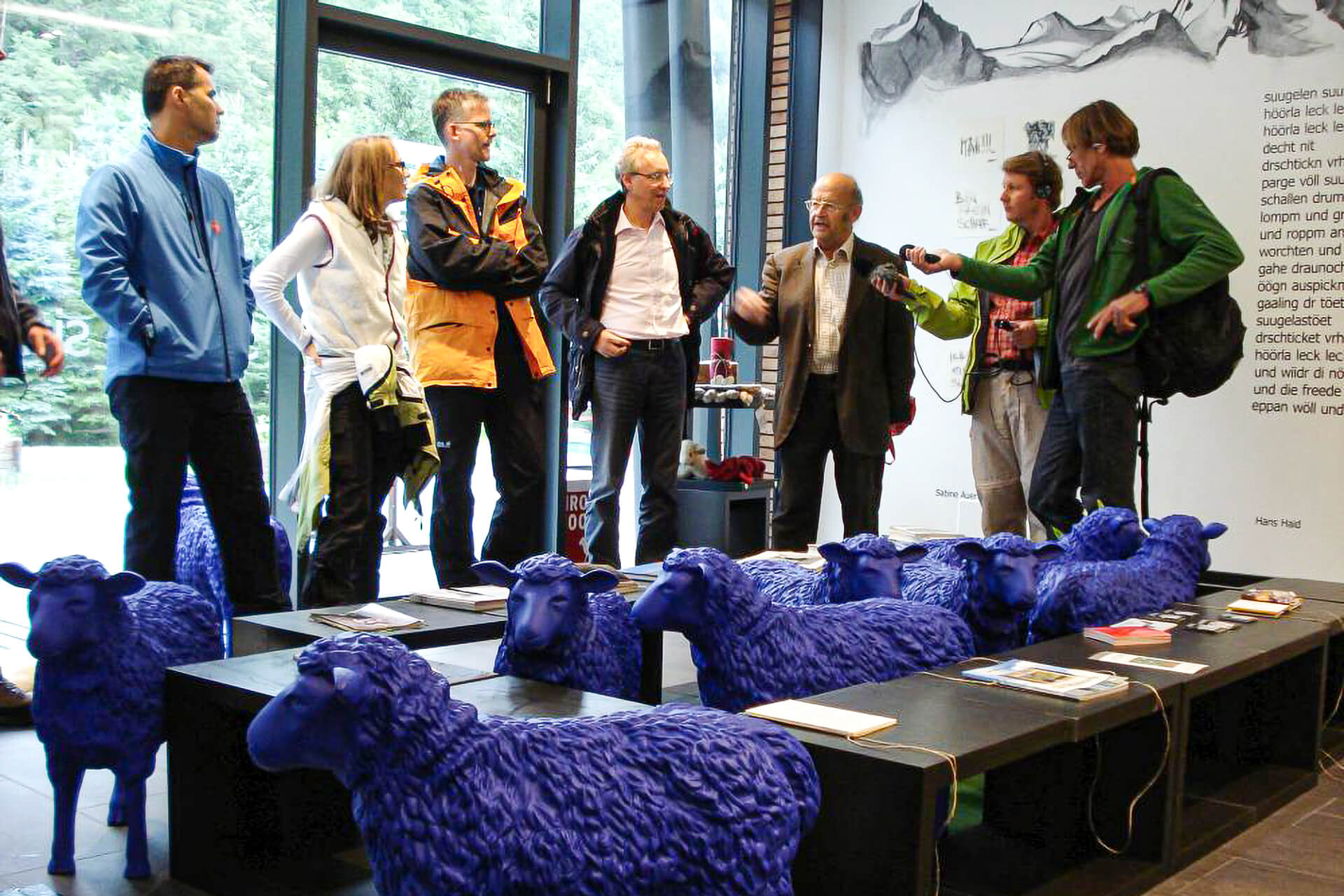
2012 on the occasion of the Pro Vita Alpina exhibition on the subject of sheep drives in the Ötztal Tourism information point in Ambach, Ötztal. The photo shows a group that Barbara Haid, daughter of Hans Haid, accompanied to the sheep drive in September 2012, as well as two journalists. Information about the vernissage of the exhibition: https://www.meinbezirk.at/imst/c-lokales/einladung-zur-ausstellungseroeffnung-schafe-sind-in-der-galerie-im-infopoint-des-oetztal-tourismus-in-ambach_a332965

Schoofe (Sheep)

suugelen pamperlen schalleewe gschtraun wiidr muttl muttele kilberlen suugl jaarlig schtechschoof schoofpraatle olm is gleiche a sella freede güetn appetitt

little sheep, ewe with a bell, castrated sheep, ram, hornless ram, small hornless ram, young female sheep, lamb raised on milk, one year old sheep, ram roast, always the same, such joy and bon appetit

Out and about with the sheep with Hans “Walmtaler” Niedermaier (d. 2023) (Photo: Alfward Farwer, 2009)
The photo beautifully documents how Hans Haid repeatedly went with the sheep and talked to the drivers and gathered information.

Manuel Götsch

Manuel Götsch

Shepherd

Manuel Götsch is a well-known shepherd from the Schnalstal valley in South Tyrol who has gained recognition for his work in alpine farming and his commitment to the traditional way of life and sustainable agriculture. As a member of a family deeply rooted in the traditions of the Schnalstal valley, Manuel Götsch plays an important role in preserving and developing the centuries-old practices of alpine farming.

Manuel Götsch grew up in the Schnalstal valley and was involved in the family’s agricultural activities from an early age. He developed a passion for nature and animals at an early age, which eventually led him to take up the profession of shepherd. He took responsibility for the care and well-being of the herds that are driven to the high alpine pastures during the summer months. This practice of transhumance is a central tradition in the region, where livestock are moved to higher pastures in the warmer months to take advantage of the fresh grass and return to the valleys in winter.

Working as a shepherd requires a variety of skills and a deep understanding of the alpine environment. Manuel Götsch has extensive knowledge of animal behavior, plant life and the changing weather conditions in the mountains. His daily work includes monitoring the herds, ensuring their health and protecting them from potential dangers such as predators and extreme weather events.

A notable aspect of Manuel Götsch’s work is his commitment to sustainable agriculture and the preservation of biodiversity. By grazing, the animals contribute to the spread of plant seeds and help keep the mountain meadows open and diverse. This sustainable management promotes biodiversity and helps maintain the ecological balance in the Alpine regions.

In addition, Manuel Götsch is also active in the local community and is committed to promoting and passing on traditional craft techniques. This includes making cheese and other dairy products, processing wool and maintaining the alpine buildings. These skills are not only an important part of his life, but also a cultural heritage that he preserves and passes on to younger generations.

Manuel Götsch has gained widespread recognition and respect in the community through his work and commitment. He is a living example of how traditional agricultural practices can remain relevant in the modern world and make a valuable contribution to preserving the environment and cultural identity.

His story and his work as a shepherd in the Schnalstal valley are an inspiring example of the importance of tradition, sustainability and the close connection between man and nature. Manuel Götsch contributes to preserving the cultural heritage and natural beauty of the South Tyrolean Alps and protecting them for future generations.

The Schnalser sheepherder Manuel Götsch leads around 1700 sheep every year from the Schnals Valley over the main Alpine ridge to the Ötztal – as his ancestors have done for centuries. He spends the summer there with the animals. This type of livestock farming is called transhumance and is UNESCO intangible cultural heritage. Manuel takes Sebastian Ströbel on a tour through the huge alpine area and together they try to save an injured sheep.

https://www.zdf.de/dokumentation/terra-x/sebastian-stroebel-meine-alpen-menschen-der-berge-doku-100.html

Inheritance of his ancestors

Ancient shepherds’ calls echo through the morning darkness again. One of the most spectacular and oldest cattle drives in the Alps is about to begin: 1,500 sheep are being driven from the Schnalstal in South Tyrol to the Ötztal in Austria. For many centuries, people have been moving their animals across the mountains; this form of nomadic pastoralism is called transhumance and has been recognized by UNESCO as an intangible cultural heritage of humanity.
A film crew accompanied the young South Tyrolean who has taken on the legacy of his ancestors: the 24-year-old shepherd Manuel Götsch. He hopes that this tradition, which has already lasted for centuries despite all the changes in the world, will continue long after him.

Willy Gurschler

Willy Gurschler

Interview with the sheep whisperer

WE DRIVE THROUGH A TUNNEL. THEN A MOUNTAIN MEADOW CLIMBS UP TO THE LEFT. SURROUNDED BY BLACK AND WHITE SHEEP, WILLY GURSCHLER, THE SHEPHERD, STANDS THERE. AS WE GET THERE, HIS HERD MOVES AWAY, BEATING. EXCEPT FOR ONE SMALL SHEEP. IT STANDS BETWEEN US, NIBBLING ON OUR JACKETS, SEEKS TO BE CLOSE TO US. BEATING FOR ATTENTION.

What is a sheep like?
Sometimes loyal, sometimes shy, sometimes cocky, now stubborn in spring. They also always steal the hay from me here in the meadow, which I actually only stored for interim feeding. Well, a woolly animal like that can be pretty cheeky.

Willy, do you know your sheep inside and out?
Yes, they are very peculiar, each one has its own character and temperament. Some are rather stubborn, others are more trusting. They don’t have names, but the sheep and I are very familiar. The way I walk, they recognize me by the way I walk and the way I smell. They know exactly when I’m coming. The mothers and their young recognize each other by the sound. By the “baa” so to speak and by the bell. Each owner has their own color combinations for their flock so that they can tell the animals apart. The yellow tags in the ears are also used for this purpose.

How many sheep can you count?
Do you have a system?
With 1600 sheep, counting is difficult, so you count them once in spring and then once in autumn. There are enough sheep that are born on the way. Some of them have accidents up there in the mountains.

How did you get into sheep?
Well, I used to work and did herding as a hobby on the side, at weekends. Now I’m retired and stay up there for the whole three months. My father was also a shepherd for three decades, but few have done it as long as I have, namely 36 years.

Are there special routes or do the sheep go their own way?
We’re going over the Hochjoch. But the sheep would go without a shepherd. The older sheep in particular remember the paths and their meadows well. Sometimes the newborns and mothers are left behind in the valley, but they also go over the yoke and back alone.

So behind the yoke there are actually whole meadows? Are these pastures common property?
Between the glaciers are where you think there is nothing left. Sometimes it is completely blue because so many flowers grow. The sheep only eat the best. But the pastures belong to eight different owners.

Who is your actual employer?
The farmer, a cooperative? The sheep?
Willy laughs. No, I don’t have a direct employer, I herd them because I like it. But the sheep of over 30-40 farmers are driven to pastures. You get a flat rate per sheep, but you don’t do it for the money. It’s not that easy to find new shepherds either. The young people don’t want to run after them for much longer.

The money or the sheep?
Laughs again. The sheep. They’ll soon run after the money. That’s why many people decide to go into livestock farming in a different way. We used to drive 6000-8000 sheep up. Today, cow milk farming is more profitable.

You’re on the road for three months. Do you miss other people on the mountain?
Are you ever bored?
No, it’s never boring, there’s something different to do every day. I’m happy when I’m up there and I’m happy when I’m down there too. On some days I just have to make sure I have some peace and quiet. The hikers all want to chat. I prefer to go my own way and when I want to chat myself, I stop at a mountain hut. I know all the innkeepers up there. You also meet some mountain guides who tell me when they have seen a sheep on a ridge.

What are your tasks?
I always walk my rounds, once across the meadows, once up into the mountains. I also carry the salt to the herds. I have set up little salt huts (small houses) everywhere. I look after my sheep well. In the past, I would carry fifty kilograms of salt up on my back by myself. For hours without stopping. Now I can’t do that anymore. Age. If they don’t have enough salt, they run after hikers – then they salt. That’s not to be underestimated – when a herd like that is racing towards you.

Where do you sleep up there?
In the shepherd’s hut. My father still had snow on his bed covers in the hut when it snowed during the night, and his frozen socks. When I go up there now, I’ll find a nice room, heated with wood and electricity. That’s how I’ve set it up. It’s cozy and comfortable up there, I don’t want for anything.

What do we need to protect the herd from the most?
What dangers are they exposed to?
The most dangerous thing is actually the eagle, which grabs the little lambs one by one. Or the fox. Fortunately, there are no bears here yet. Now that the glaciers are receding, there aren’t so many dangerous places to fall in the mountains. Sometimes lightning kills one of the animals. But you can’t be careful everywhere and you can’t protect the animals from the forces of nature.

How do you communicate with your colleagues?
Whistle or use your cell phone?
I don’t have any colleagues up there. I am the only shepherd in the mountains. But there is a whole group of drovers, about 20 of us. We know each other so well that we don’t really need to talk much. We whistle, the dogs help us. In the autumn we round up the sheep for three days – we all need them. It’s a huge area, you can’t even imagine it. If a few sheep are left behind, they just have to be searched for again afterwards.

You’re looking at 1600 sheep. Do you have a favourite sheep in your own flock?
Mah, I love all 56 of them. Willy laughs.

What do you call your 56 favourite sheep?
Lick-lick-lick or go-go-go. But on the mountain that doesn’t help me much, they have enough salt. They no longer listen to me.

As soon as we retreat, Willy calls out his go-go-go.
The favorite herd slowly approaches with a multi-tonal ringing. To their favorite shepherd.

Hansi Platzgummer

Hansi Platzgummer

Artists from the Schnalstal

“It’s always there, the Similaun.”
Hansi Platzgummer on the mountain that has shaped his life and his art

Hansi Platzgummer, born in 1952, is – like his brother Sepp – a Schnalser native, his whole life closely interwoven with the Similaun, nature, the mysticism of the valley. This connection is also reflected in his pictures. In the following conversation, he provides insights into his career as an artist – and into his extensive knowledge of the (natural) historical development of the Schnalstal.

You have been working as a painter for many years. How did you get into art and what role did the Schnalstal and in particular the Similaun play in it?

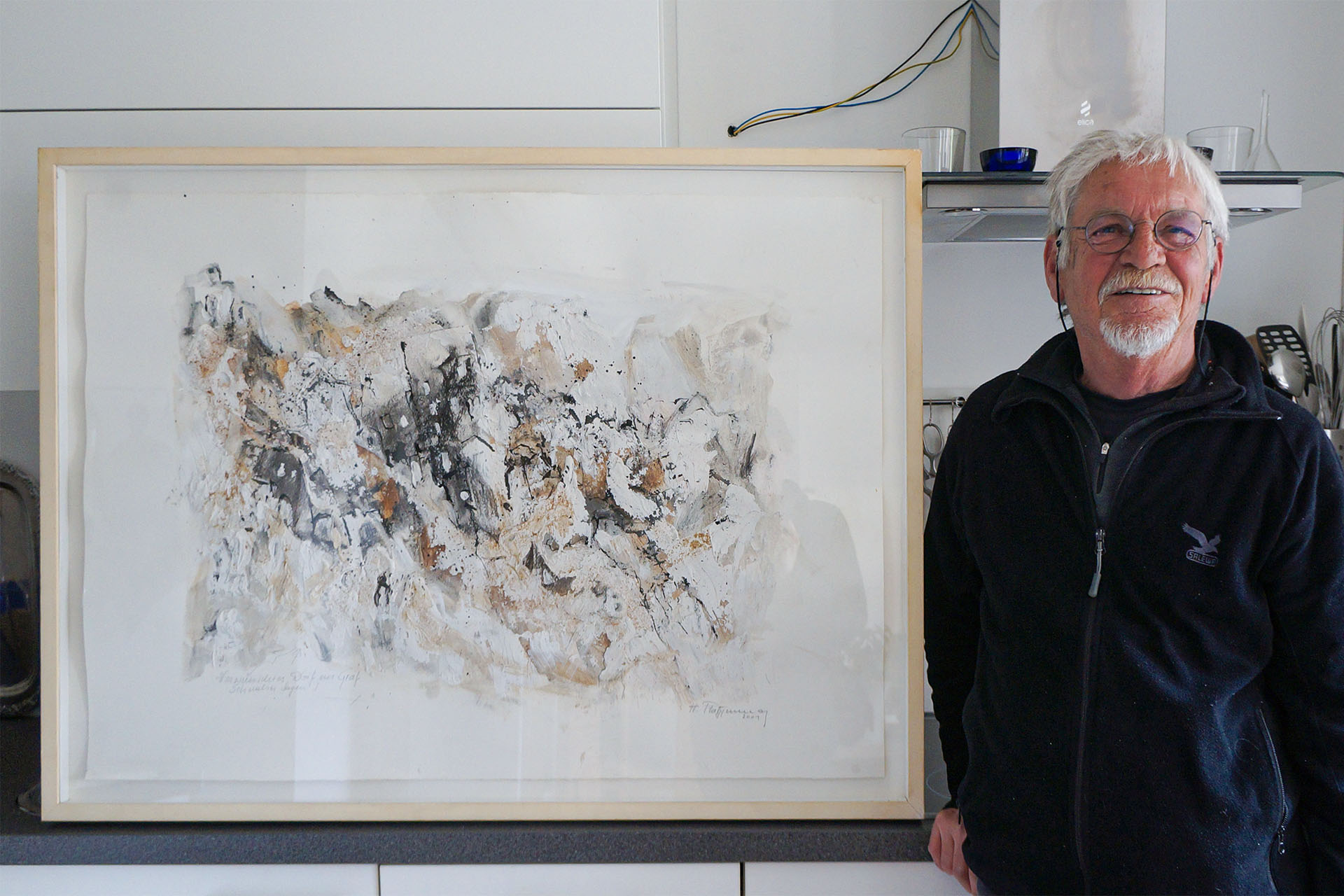
Yes, the art thing just happened that way… I’ve always drawn, but I’ve only really been working intensively with it in the last few years. I started with watercolor painting, with drawing the farms in the valley as they nestle into the landscape, harmonious and proud at the same time. At some point I started working with natural pigments and earths. In nature, these beautiful, gray-blue, ochre or reddish earths and clays are created through a variety of processes. I work with them and make pigments from them, which I then process with water using a kind of fresco technique to create structural images that appear somewhat abstract. So what does abstract mean – I couldn’t be any closer to nature than with these pigments. (laughs)
What also continues to fascinate me – in art and in life – are sheep and how they shape our landscape and the people in the Schnalstal. They often appear in my pictures. Without the sheep, the Schnalstal would not exist in its current form; the landscape has developed like this over thousands of years, influenced by the grazing of the animals. I am convinced that humans followed sheep and not the other way around. Sheep are excellent trailblazers, they find a way through everywhere. And of course they were the most important source of livelihood for the Schnalser population for a long time, both in terms of food and economy. I believe that the sheep’s paths are the valley’s original paths. If you follow these paths, you will also find the oldest traces of humans – cup stones, burnt offering sites, etc. “Ötzi”, the famous glacier mummy, also walked these paths. I always find inspiration for my art on these paths.

Since you mentioned Ötzi: As a child and later as an adult, you spent a lot of time at the Similaun Hut, which has been in your family for over 100 years and is on the way to the site where the Iceman was found. How did you experience this historic discovery?

The Similaun Hut was, so to speak, my second home, yes, that’s where the adventures of my childhood took place. When Ötzi was found, it was no big deal at first. They thought he was a missing mountaineer, so the body was recovered and the site secured. I remember my nephew calling me that day from the Similaun Hut and saying: ‘That’s a strange mountaineer, I’ve never seen one like him before, he’s got hay in his shoes and a really strange ice pick!’ (laughs) It was only later that the significance of the find became clear – and then, of course, many scientists from all areas came to the hut: archaeologists, botanists, geologists, but also matriarchy and myth researchers. I was out and about with many of them, which was very interesting and gave me a lot of knowledge. The area was being investigated from every conceivable perspective. I got to know the Schnalstal Valley and its mountains from a completely new perspective.

What connection do matriarchy and mythology researchers have to the Similaun?

We now know that the name Similaun goes back to the pre-Indo-Germanic name Sam Alu Ana, which means something like ‘White Goddess Ana’. Ana stands for earth mother. In the imagination of the mountain peoples, most mountains were originally female; with their springs and pastures they were considered to be life givers, hence the female names. It is assumed that in the Neolithic period matriarchy was the predominant form of society in Central Europe – patriarchy and male naming only prevailed later. If you look at the location of the Similaun, it is a very special mountain. Especially as a geographical orientation aid: coming from Juval, you have the Similaun in front of you, the same from Vent, and also from the Passeier Valley or from the Taschljöchl in Vinschgau – it is always there, the Similaun. This is also the reason why it appears in many legends, for example ‘The Three Blessed Ones’.

The great importance of our mountain world is evident in numerous places. In addition to Ötzi, other discoveries have been made that are almost as interesting and important: In the Finailgrube at 2,400 m, for example, there was a burnt offering site. Animal bones were found in its coal layers, but also glass beads from the Mediterranean region and amber from the Baltic Sea. The layers date back to the Bronze Age, i.e. to around 1,800 BC. This means that these passes and high pastures were already used as a connection from the Baltic Sea down to the Mediterranean.

Today, many people climb, ski and cross the mountain. This was also made possible by the glacier railway. How do you see the tourist development of the Schnalstal and the development that the valley has experienced as a result?

To change something, you always need people with ideas, plans and the strength to implement them. The glacier railway was an important development for the valley, even if a lot of things have changed as a result.
Mountain climbing used to mean venturing into nature. Nowadays, mountain climbing is more associated with “action”. Many people start in the valley, go to the summit and back again in a single day. What counts today is the altitude and the distances, it is divided into precise stages, time limits are set, etc. It is almost a competition. Many people no longer really experience nature because they have to take their time for it – and time is in short supply these days. But maybe that’s just the talk of an old man! (laughs)
Nature simply does not move quickly. But if you let yourself be drawn into it, there are so many amazing things in store – especially in the mountains, especially here in the Schnalstal, with its originality. And you can still experience that today, despite all the changes.

Martin Rainer

Martin Rainer

Artist

Martin Rainer was born in 1923 on the Örlerhof farm in the Schnalstal valley. As a child, he began to carve wooden figures while tending his father’s flock, and throughout his life his works were inspired by this archaic, deeply religious pastoral world.

After returning home at the end of the Second World War and after a period of imprisonment in an American camp near Naples, during which he continued to create wood carvings, even winning first prize in a competition organized among prisoners, he continued his work in the art camp.

In 1947 he attended the art school in Val Gardena and later the Academy of Fine Arts in Munich. In the 1960s his home farm and other farms were demolished to make room for the Vernago reservoir. In 1964, after his marriage, he and his family moved to Brixen, where he worked until his death in 2012.

So he began to create small sculptures and portraits to order, including those of his seven children. In the course of his very long artistic career, he tried his hand at wood, terracotta and bronze, creating statues, medals, bas-reliefs and leaving us countless masterpieces that enrich numerous private collections as well as public works throughout the province of Bolzano.

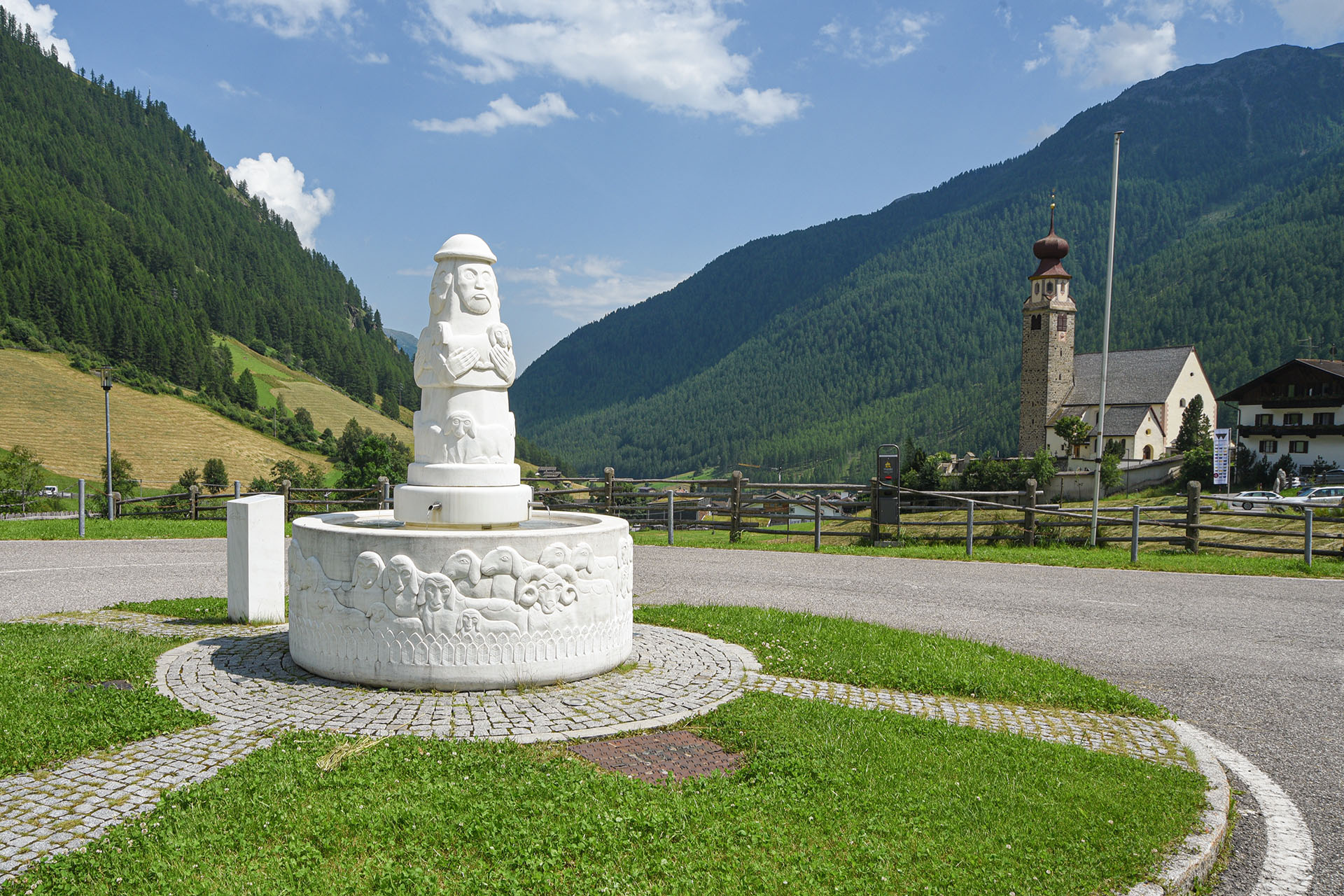
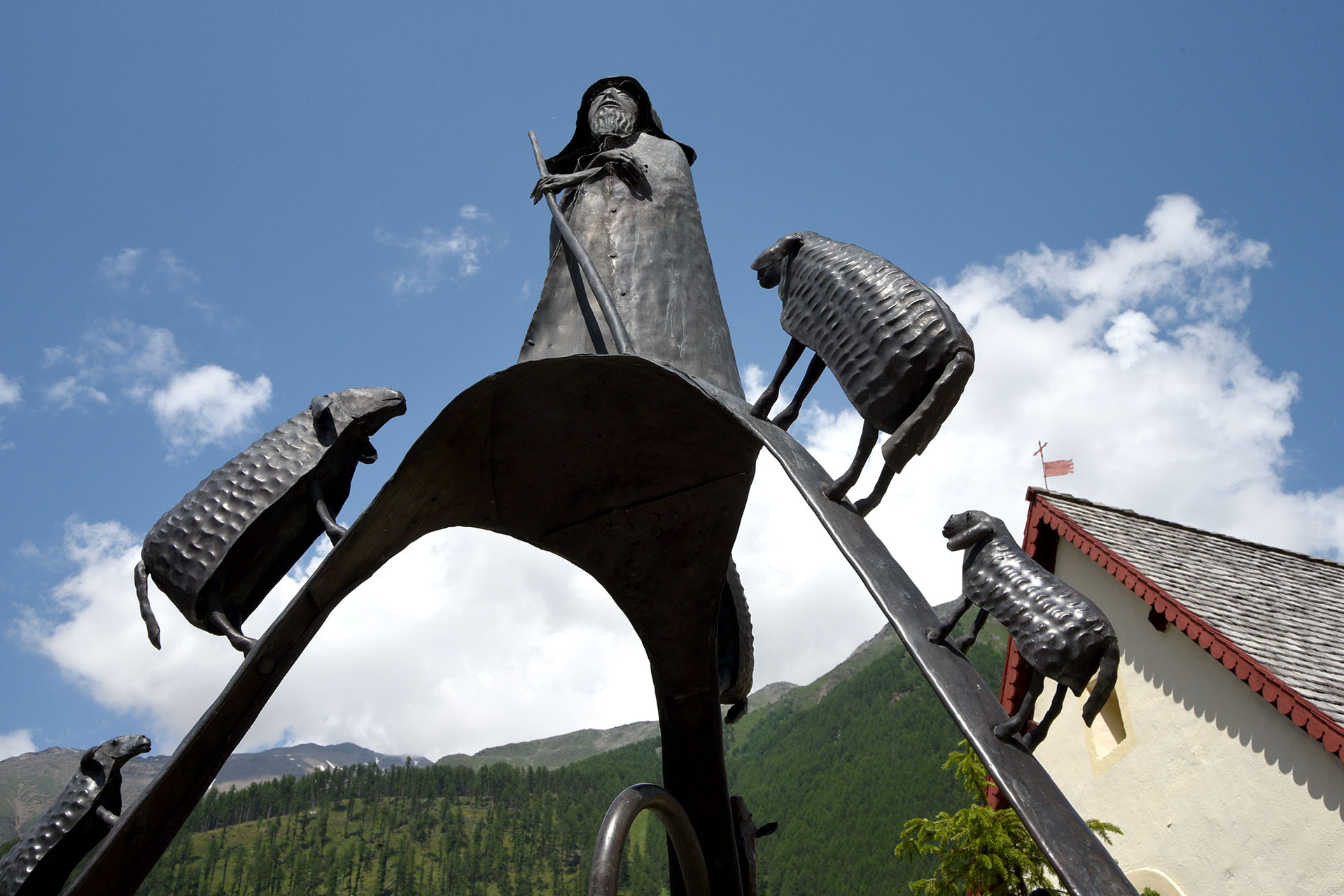
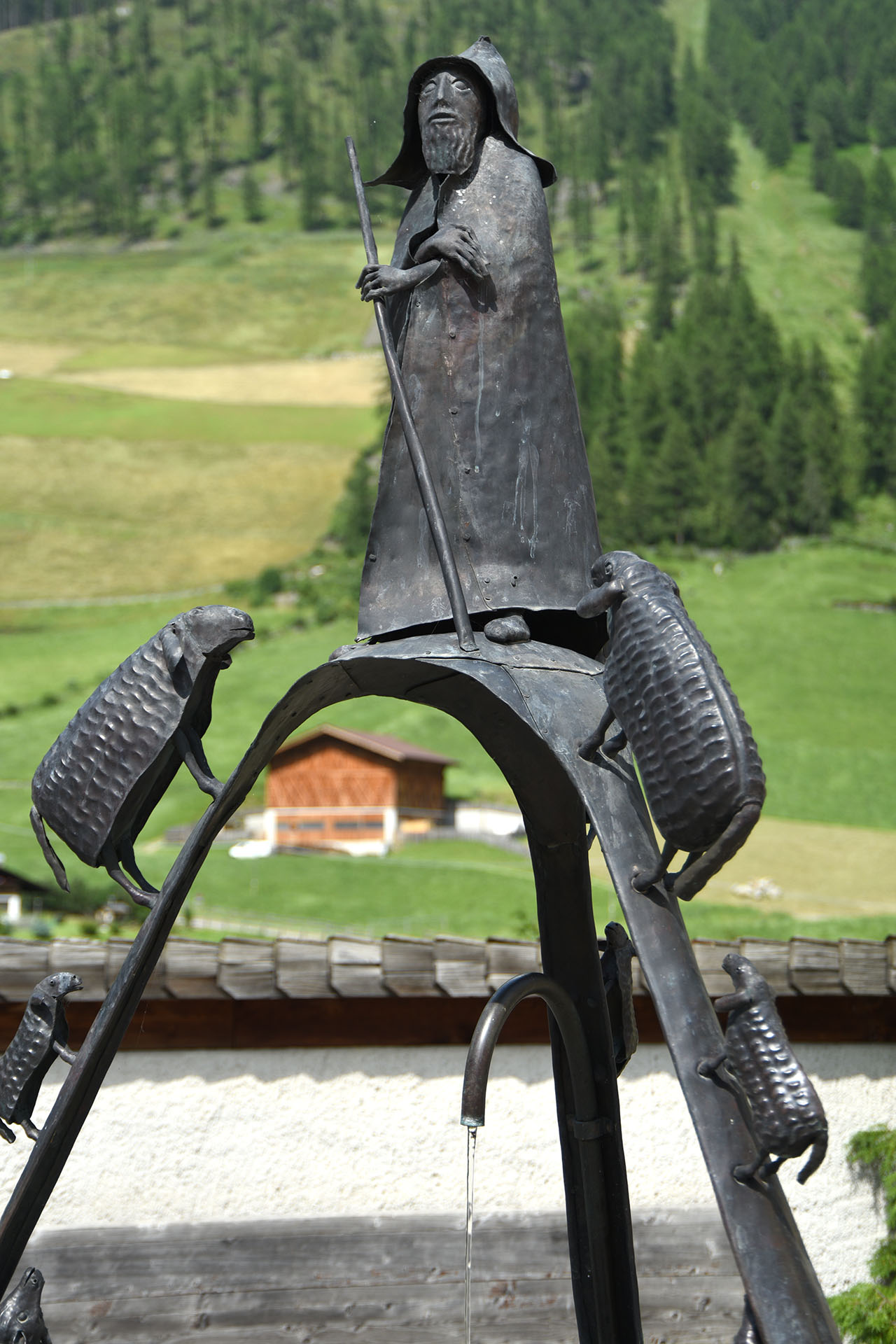
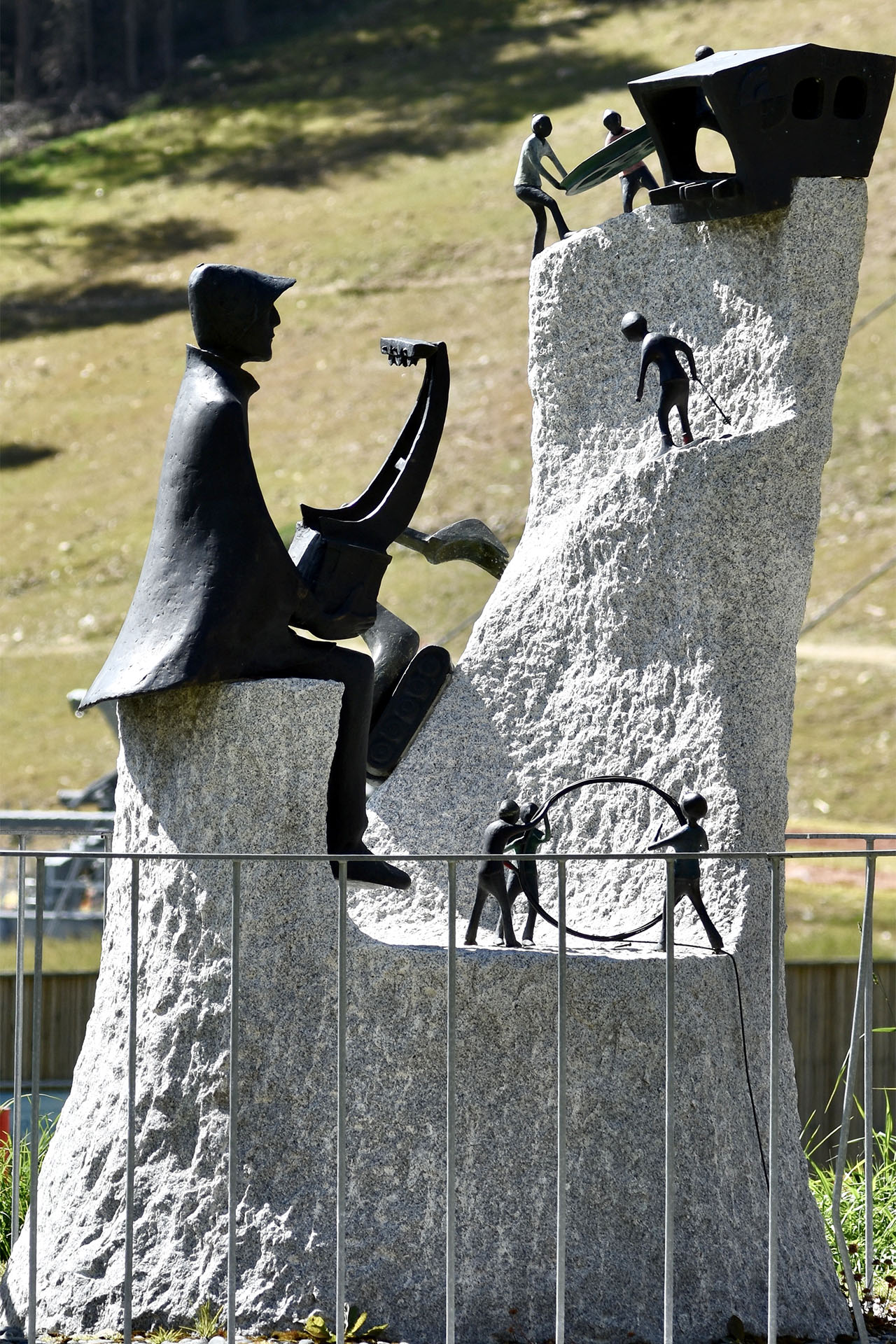
A common thread, perhaps not always recognizable, links his works to his youthful experiences: I think of the characters that animate his nativity scenes, rich in small details and which, although influenced by his academic experience, retain the roots of his native valley. These countless figures and situations recall, in three-dimensional form, certain paintings by Hieronymus Bosch; in short, Martin Rainer is a storyteller of the first order. His most famous work is undoubtedly the monumental Fountain of Life in the Cathedral Square in Bressanone. On the marble basin filled with water, the symbol of life, rests an elegant screw-shaped bronze pyramid decorated with allegorical figures. Another fountain in front of the Schnalstal parish church shows the Good Shepherd surrounded by his sheep, and in this case the setting of the work is the alpine landscape of his native valley. Sheep, shepherds, mountaineers, hunters and prey: a microcosm seen with profound knowledge and a touch of irony, are his favorite themes.

Martin Rainer, who is remembered for always being modestly dressed, has received countless awards and honours, but of all of them I would like to mention the Walther von der Vogelweide Prize and the honorary citizenship of the municipality of Schnals, which he particularly valued. Dozens of biographies and catalogues published over the years help to keep the memory of the artist and his work alive.

Friedrich Gurschler

Friedrich Gurschler

Artist

He was born in 1923 in Unser Frau in Schnals. His uncle Luis taught him to carve and he discovered his passion for this art form at an early age. After military service, he worked for three years as a farmhand in the Schnalstal. He then attended the art school in Ortisei in Val Gardena.

From 1953 to 1958, Friedrich Gurschler studied sculpture at the Academy of Fine Arts in Nuremberg. In Nuremberg, he learned the essential principles of sculpture. He studied animal anatomy intensively. The Nuremberg Zoo was next to the art academy. He used this opportunity to get to know exotic animals. After his studies, he returned to South Tyrol. Since then, he has lived and worked as a freelance artist in Töll/Partschins. Friedrich Gurschler spent almost half his life carving two large nativity scenes. They tell of his Christian values ​​and show the animal and human world of his surroundings. His origins in the Schnalstal and his connection to the culture of the Vinschgau are particularly evident here.

On Friedrich Gurschler’s 90th birthday, the Kastelbell Castle Board of Trustees organized an exhibition in his honor. Friedrich Gurschler shaped art in South Tyrol, especially with his works in public spaces, churches, cemeteries and squares. He was an honorary citizen of Partschins and received several awards, including the “Walther von der Vogelweide Prize.”

Friedrich Gurschler was a very nature-loving and at the same time religious person. “In the loneliest places in the mountains and at night when observing the starry sky, I experience the most mysterious things and feel very connected to the magnificence of creation.” This has shaped his life and his works.

Source: Vinschgerwind / Peter Tscholl
https://www.vinschgerwind.it/menue-lokalwirtschaft/item/31105-friedrich-gurschler-gedenken-toell-partschins-schnals-vinschgau

Gianni Bodini

Gianni Bodini

Artist, photographer, author

Gianni Bodini was born in 1948 in Laas. Journalist and photographer, author of numerous reports and books that mainly highlight certain aspects of Alpine culture, such as: Rites and traditions in South Tyrol, Ancient irrigation systems in the Alps, Food traditions in the Alps, Archaeology of the Alps…

For some years he has sporadically followed the movements of herds in various mountain regions, but for more than 50 years he has regularly followed the sheep and shepherds from the Vinschgau to the summer pastures in the Ötztal. His images and texts do not only focus on the sheep, the undisputed protagonists of this ancient and spectacular event, but also report the stories told by the shepherds, recording the changes in the landscape also due to the retreat of the glaciers. He also collects documents and historical testimonies found in ancient archival texts, as well as iconographic material related to the theme of pastoralism.

His curiosity and passion for the Alpine agricultural and pastoral world feed his insatiable thirst for knowledge and drive him to spend whole days outdoors observing the behavior of animals and shepherds at high altitudes, but they also motivate him to lock himself in libraries and archives to delve into the past.