

Transhumance is a UNESCO Intangible Cultural Heritage Site
What is intangible cultural heritage?
UNESCO has defined five areas that include intangible cultural heritage:
- Oral traditions and forms of expression, including language as a carrier of intangible cultural heritage
- Performing arts
- Social practices, rituals and festivals
- Knowledge and practices relating to nature and the universe
- Traditional craft techniques
Intangible cultural heritage is not static, but dynamic and characterized by change. To be included in the UNESCO list, a tradition must have been passed down over at least three generations.
On the one hand, there is a National Inventory in which examples of a country’s intangible cultural heritage are included. Analogous to the World Heritage, which is reserved for material heritage, there is also a Representative List of the Intangible Cultural Heritage of Humanity. Transhumance in the Ötztal Alps has been included in both lists.
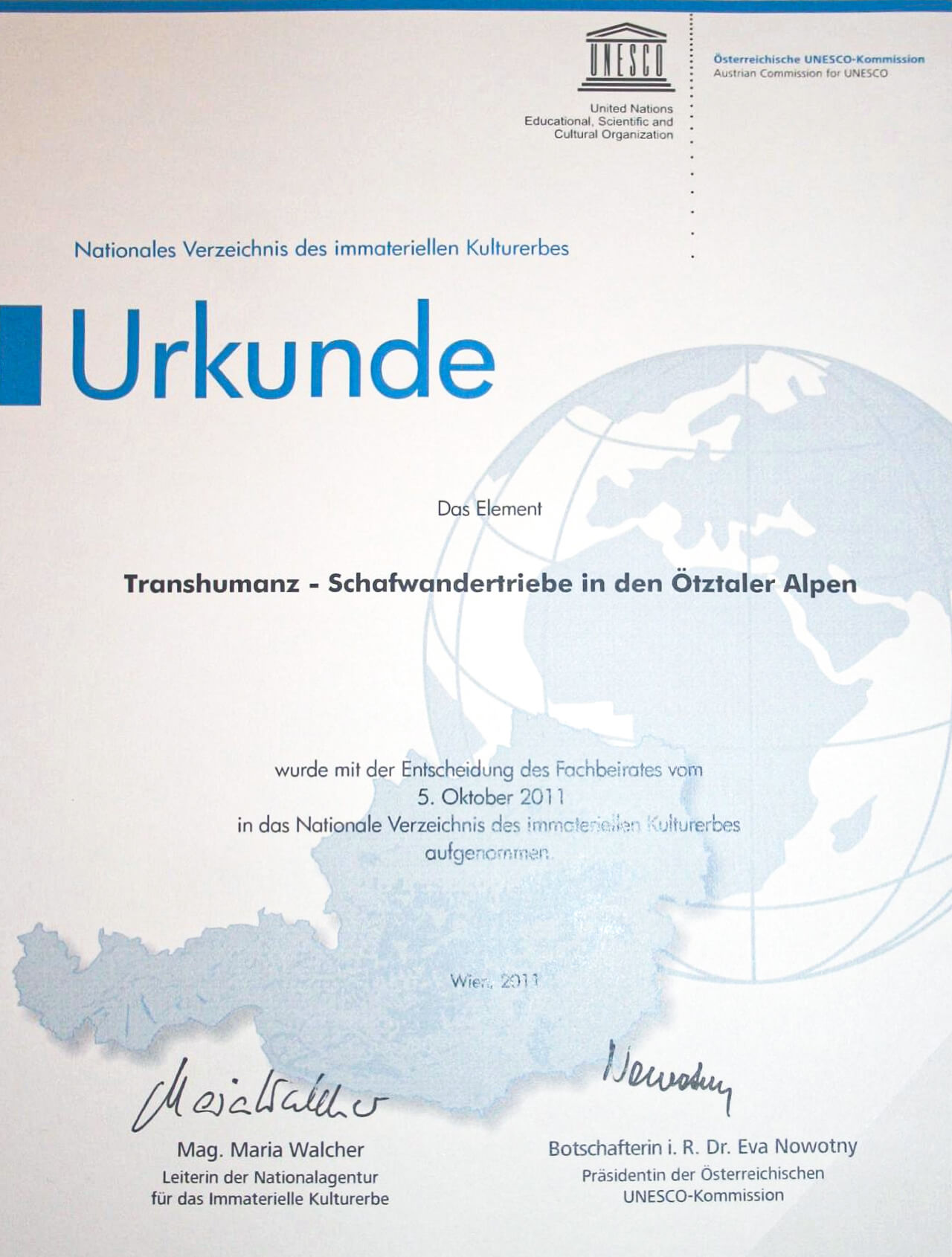
In 2011, transhumance became national intangible cultural heritage
After many years of research, collecting documents and declarations of support, transhumance in the Ötztal Alps was included on the national UNESCO list in Austria in the area of ”Knowledge and practices relating to nature and the universe”.
The submission was initiated largely by the commitment of the folklorist Prof. Dr. Hans Haid, honorary chairman of the Pro Vita Alpina association, in close cooperation with the Schnals cultural association, represented by Monika Gamper and Benjamin Santer.
The uniqueness of this transhumance was a decisive factor in its inclusion on the list. The sheep drive is considered the only cross-border transhumance in the Alps and also leads over the glaciers. According to prehistoric and early history research, it has been practiced for at least 6,000 years. Numerous folk tales, stories from oral tradition and field names attest to the great age of the sheep drives in the Ötztal Alps. Transhumance takes place according to old rituals and customs. Knowledge about the sheep drive is passed on from generation to generation.
The certificate for inclusion in the national register was awarded during a ceremony on November 10, 2011 in Vienna.
In 2019, the Ötztal sheep drive will become an intangible cultural heritage of humanity
After being included on the National List of Intangible Cultural Heritage of Austria, the Pro Vita Alpina cultural association and the South Tyrolean Schnals cultural association, in cooperation with other countries and above all with the help of the UNESCO Commission for Intangible Cultural Heritage, endeavored to put the tradition of transhumance on the International List.
Austria, Italy and Greece submitted the application for the inclusion of transhumance management jointly, and the UNESCO Committee decided to include it during its meeting on December 11, 2019 in Bogota (Colombia). In 2023, other countries were added: Albania, Andorra, Croatia, France, Luxembourg, Romania and Spain.
I. Photo “unesco-festakt-bozen-2019.jpg”
UNESCO ceremony, Bozen/Bolzano 2019
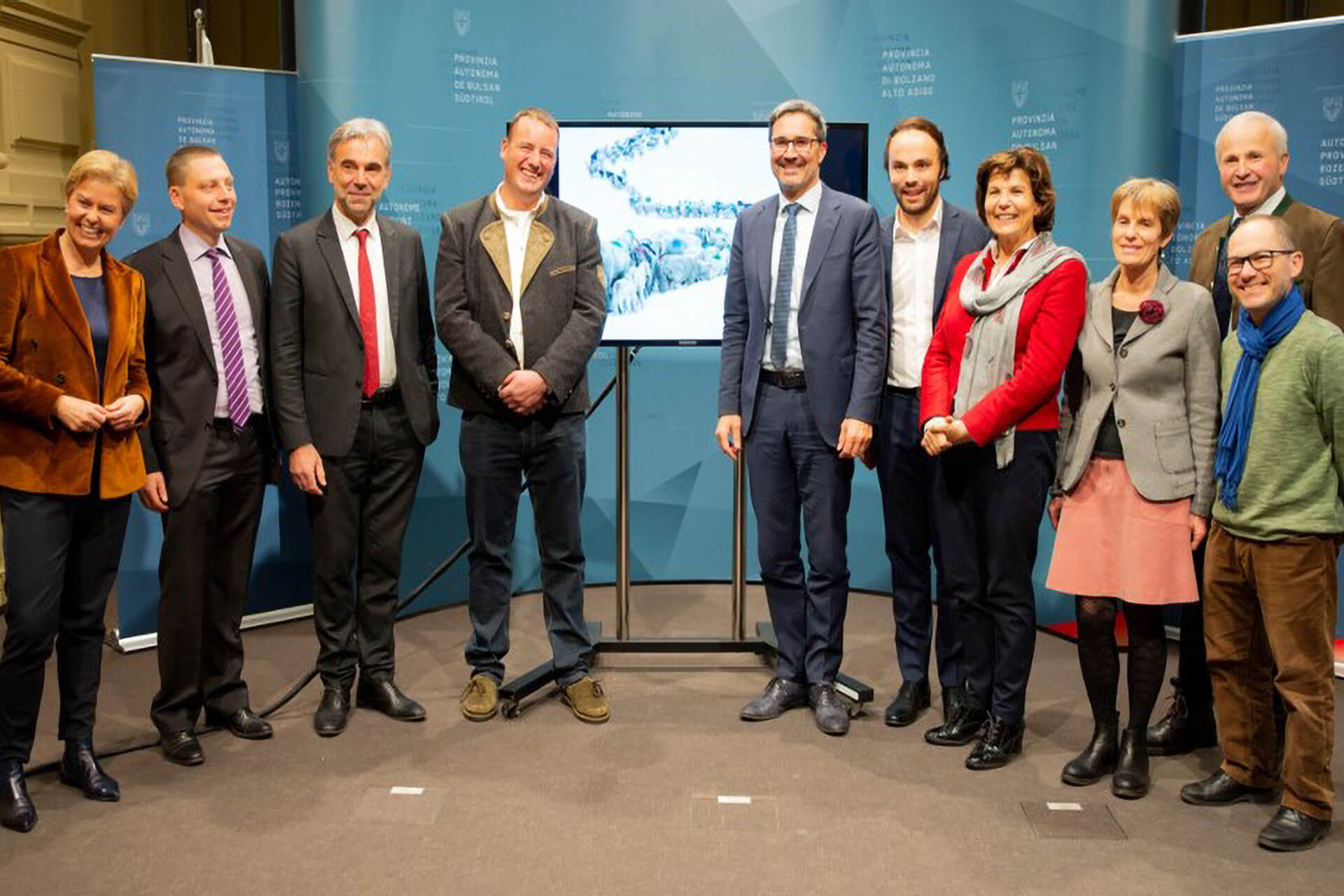
From left to right: Monika Gamper & Benjamin Santer, Schnals cultural association; Arnold Schuler, South Tyrolean regional councillor for agriculture, forestry, civil protection and communities; Martin Rainer, agricultural community; Arno Kompatscher, Governor of South Tyrol; Philipp Achammer, South Tyrolean regional councillor for German education and culture and for integration; Maria Hochgruber Kuenzer, South Tyrolean regional councillor for spatial development, landscape and monument preservation; Luise Gafriller, Pro Vita Alpina cultural association; Josef Götsch, agricultural community; Johannes Ortner, Pro Vita Alpina cultural association.
II. Photo “unesco-festakt_2019-11-29.jpg”
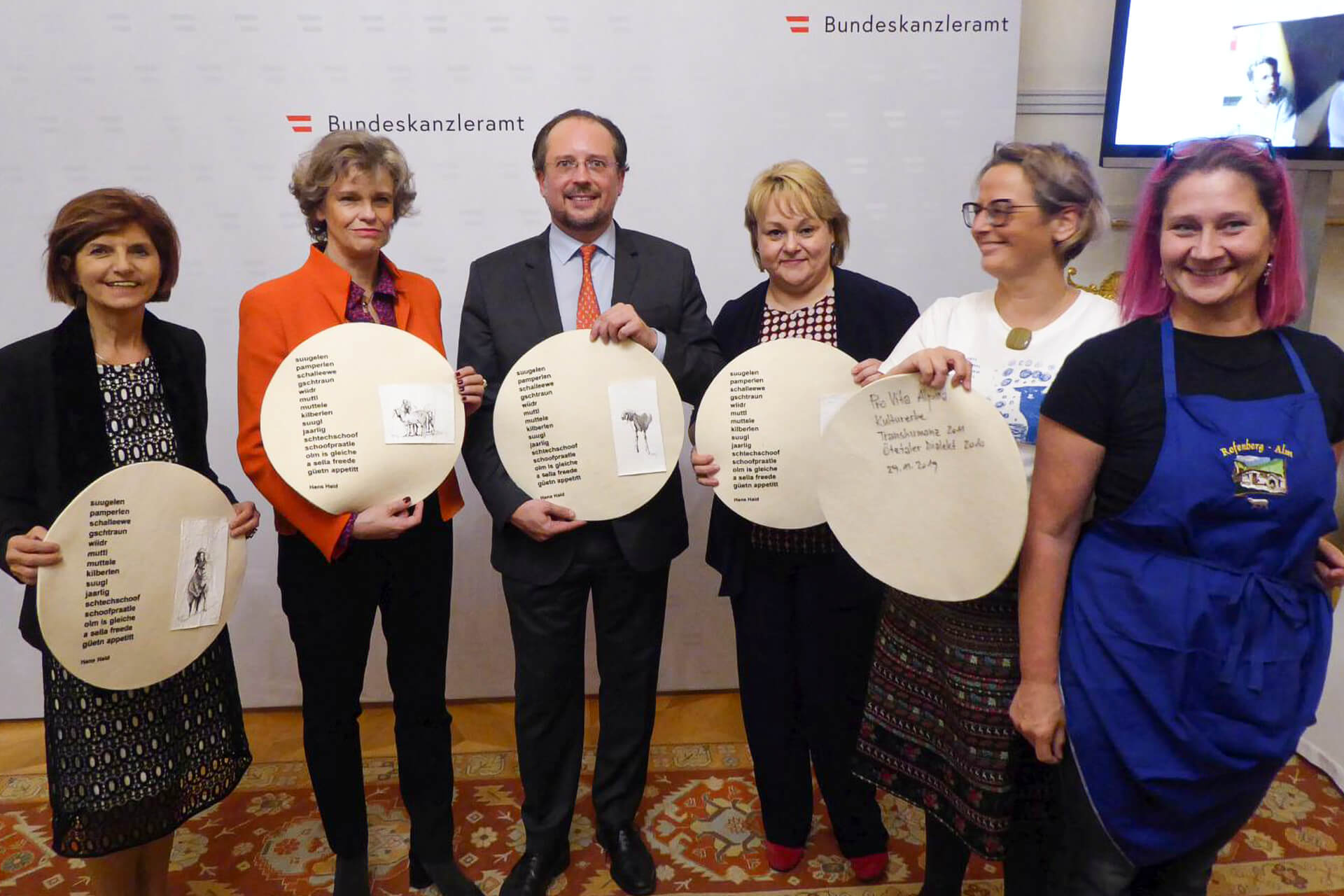
In November 2019, a ceremony “10 years of intangible cultural heritage in Austria. Creativity, identity, continuity” took place in the Federal Chancellery in Vienna.
From left to right: Anna Steiner, Austrian Foreign Ministry; Sabine Haag, President of the Austrian UNESCO Commission; Alexander Schallenberg, Federal Minister for the EU, Arts, Culture and Media; Patrizia Jankovic, Austrian UNESCO Commission; Florentine Prantl, Pro Vita Alpina Cultural Association; Barbara Haid, Pro Vita Alpina Cultural Association.
III. Photo “unesco-festakt_2011-11-10_23.jpg”
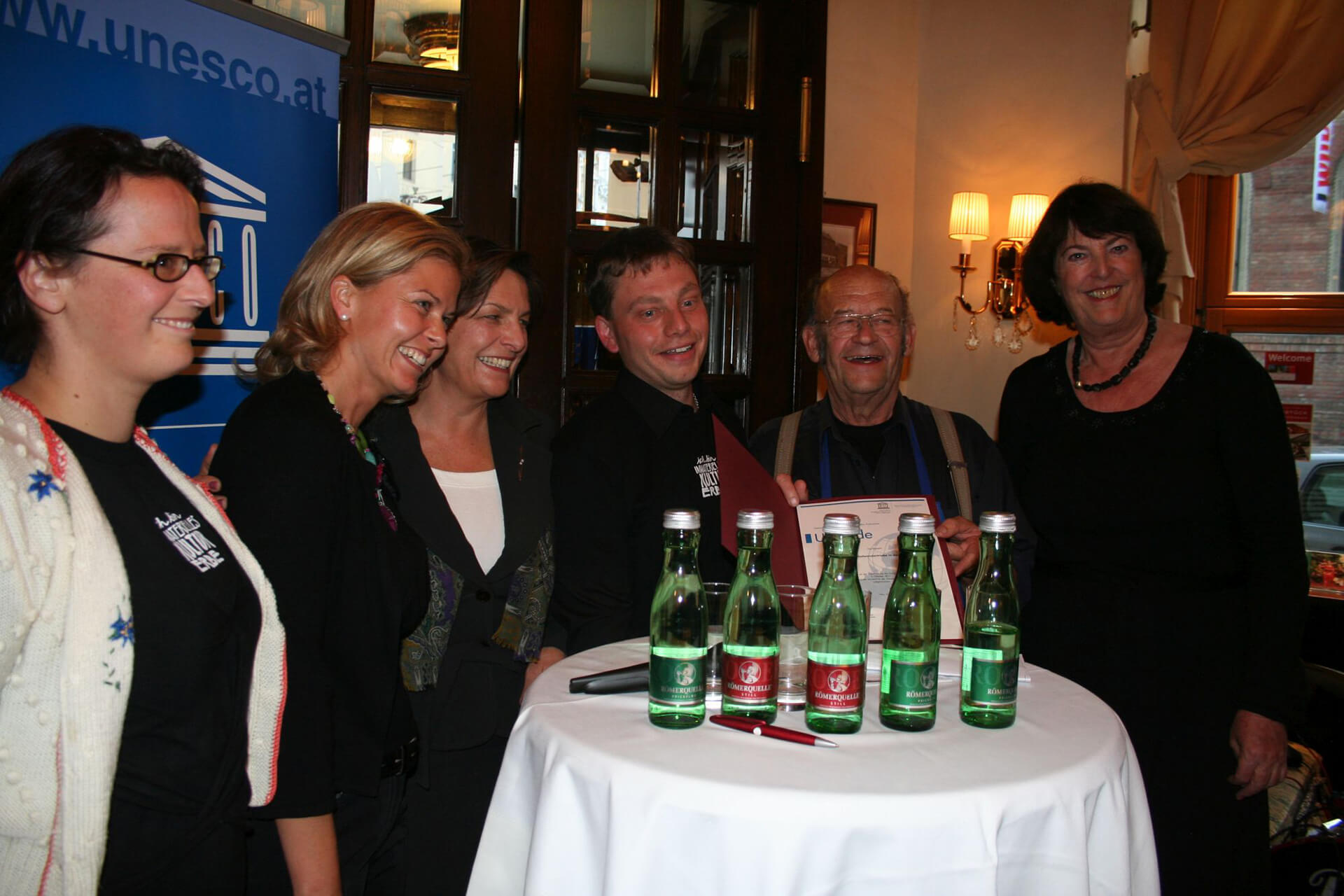
Awarding of the certificate in Vienna, November 10, 2011
From left to right: Florentine Prantl, Pro Vita Alpina Cultural Association; Monika Gamper, Schnals Cultural Association; Maria Walcher, Austrian UNESCO Commission; Benjamin Santer, Schnals Cultural Association; Hans Haid, Pro Vita Alpina Cultural Association; Eva Nowotny, President of the Austrian UNESCO Commission.
Further links from the Austrian UNESCO Commission:
- What is intangible cultural heritage?: https://www.unesco.at/kultur/immaterielles-kulturerbe/bewerbung-um-aufnahme/haeufig-gestellte-fragen
- Transhumance in the National Inventory: https://www.unesco.at/kultur/immaterielles-kulturerbe/oesterreichisches-verzeichnis/detail/article/transhumanz-schafwandertriebe-in-den-oetztaler-alpen/ (German)
- Transhumance in the National Register: https://www.unesco.at/en/culture/intangible-cultural-heritage/national-inventory/news-1/article/transhumance-migratory-herding-of-sheep-in -the-oetztal-alps (English)
- Transhumance as an intangible cultural heritage of humanity: https://ich.unesco.org/en/RL/transhumance-the-seasonal-droving-of-livestock-01964 (English)


