

The sheep breeds of the transhumance
The sheep breeds of the transhumance
The sheep herding between Schnalstal and Ötztal, a cultural heritage that is still alive today.
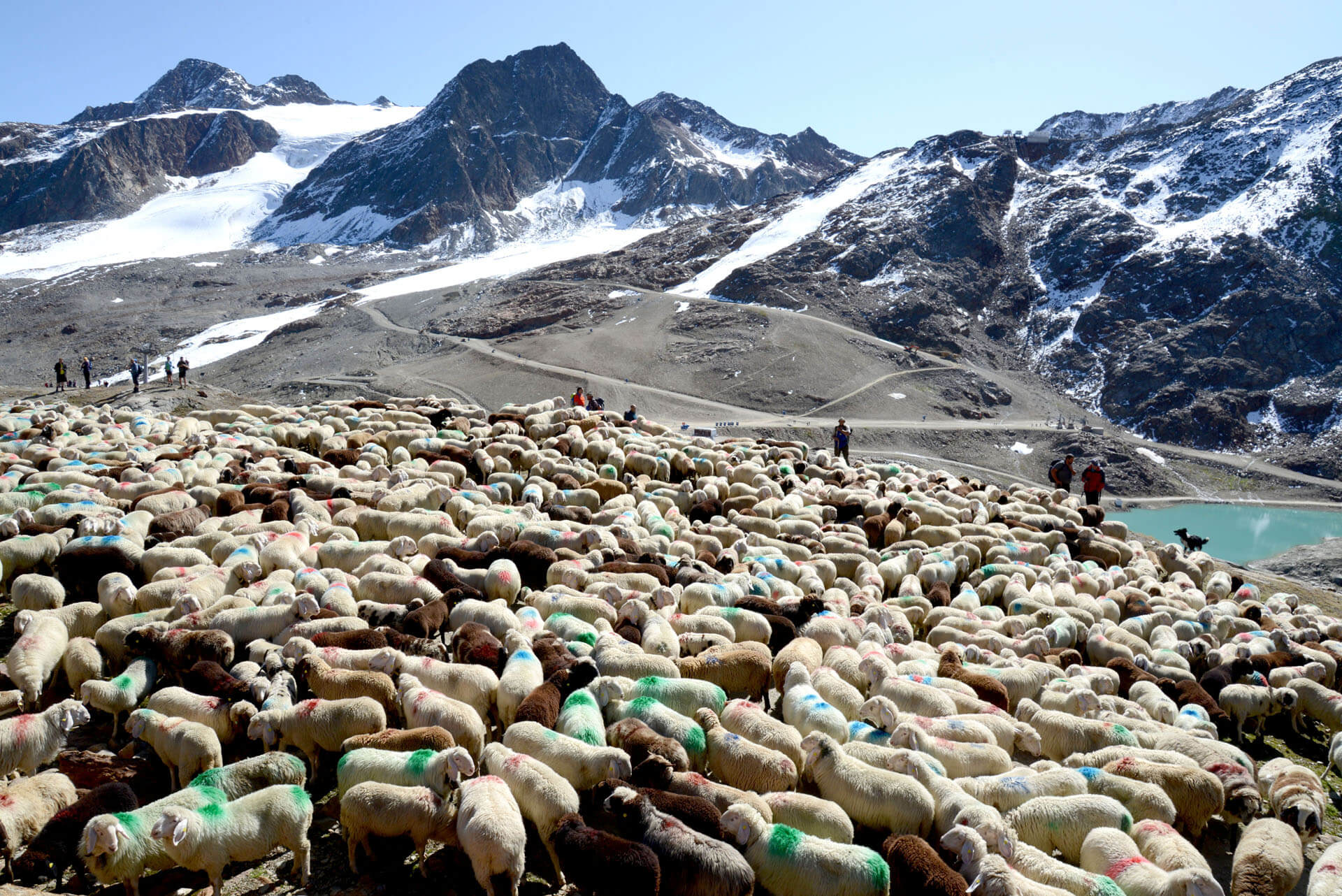
Schafrassen bei der Transhumanz im Schnalstal
The sheep population in South Tyrol has fluctuated significantly over the last hundred years. While there were 61,857 sheep in 1929, there were only 25,271 sheep in 1970. 40,114 sheep were counted in 2018. It is mainly indigenous sheep breeds that are most frequently found in the sheep herding programme: Tiroler Bergschaf, Tiroler Steinschaf, Schnalser Schaf and the Villnösser Brillenschaf. However, there are also farmers who keep sheep breeds from Switzerland and send them along to the sheep drive: Valais Blacknose sheep and Jura sheep. Suffolk sheep (a breed from England) are also occasionally encountered.
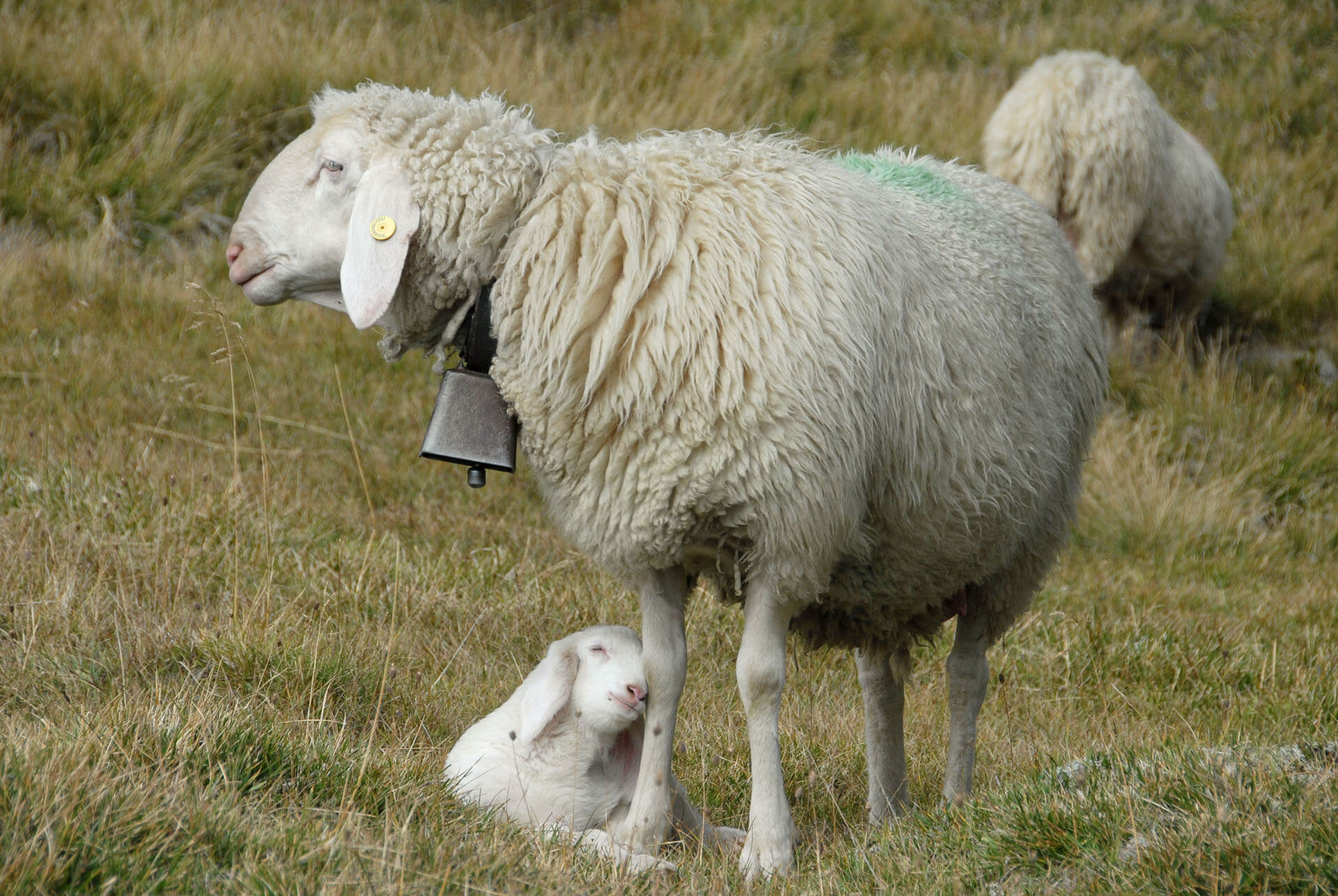
Schnals sheep
The Schnalser sheep is similar to the Tyrolean mountain sheep and recognising the difference between the two is an art in itself. The easiest way to recognise the Schnalser sheep is by the pronounced nose fold.
Tyrolean mountain sheep
The mountain sheep is the typical South Tyrolean sheep of today. However, the breed is less than a hundred years old. Breeding began in North Tyrol in 1938. The breed originated from local stone sheep through crossbreeding with the Bergamasco sheep.
Brown mountain sheep
The number of brown mountain sheep has been increasing rapidly since around 2000, as can be observed during the large sheep drives over the passes of the Ötztal Alps. Among the approximately 1,800 to 2,000 sheep that pass over the almost 3,000 m high Niederjoch on the Similaun, the proportion has risen continuously from just under ten per cent to almost thirty per cent (as of 2010). A related breed is the black-brown mountain sheep.
Villnöss spectacle sheep
It is often claimed that this is the oldest breed of sheep in South Tyrol. However, it only emerged in the course of the 19th century from crossbreeding autochthonous Land sheep with Bergamasco sheep and, above all, Paduan sheep. It is genetically very similar to the Carinthian spectacled sheep. The unmistakable characteristic of this sheep breed are the ‘spectacles’, i.e. the black border (‘pigmentation’) around the eyes.
Tyrolean Stone Sheep
The Tiroler Steinschaf is a breed of sheep originating from North Tyrol. Breeding began in 1969 in the Zillertal valley. It has little in common with the Alpine Stone Sheep, which was common in the Eastern Alps and South Tyrol until around 1900, but is almost non-existent today. Today’s Tiroler Steinschaf is also significantly larger than the old Alpine Steinschaf: the former reaches a weight of up to 100 kg, the old breed only 30 to 40 kg. One thing they do have in common is their wool colour: the sheep have different colours ranging from grey to black to white. The rams have curved horns.
Literature tip: Hans Haid: The sheep. A cultural history. Böhlau Verlag Vienna, 2010. ISBN: 978-3-205-78442-5
Short presentation of the sheep breeds with pictures: https://www.kleintierzucht.it/schafe.html


