Category

History

Three legends from the Schnalstal Valley

Three legends from the Schnalstal Valley

Collected by Gianni Bodini
The Niederjöchler

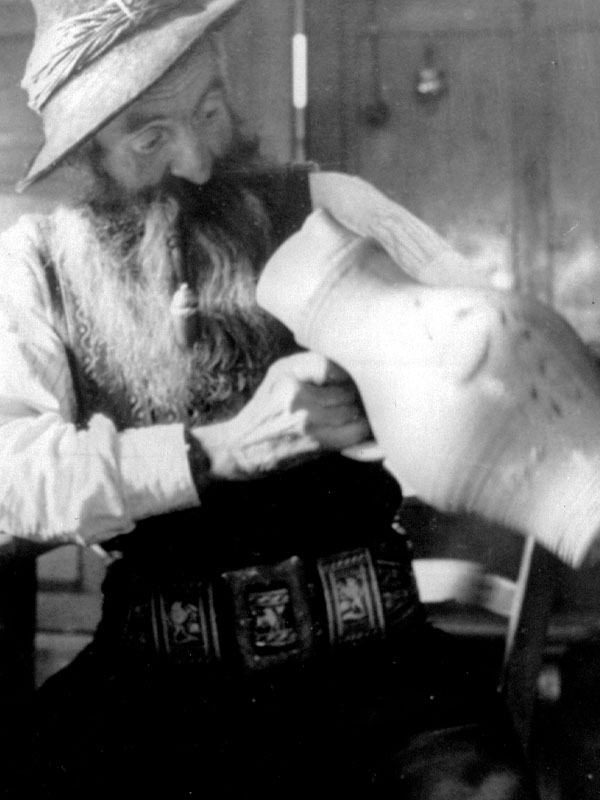
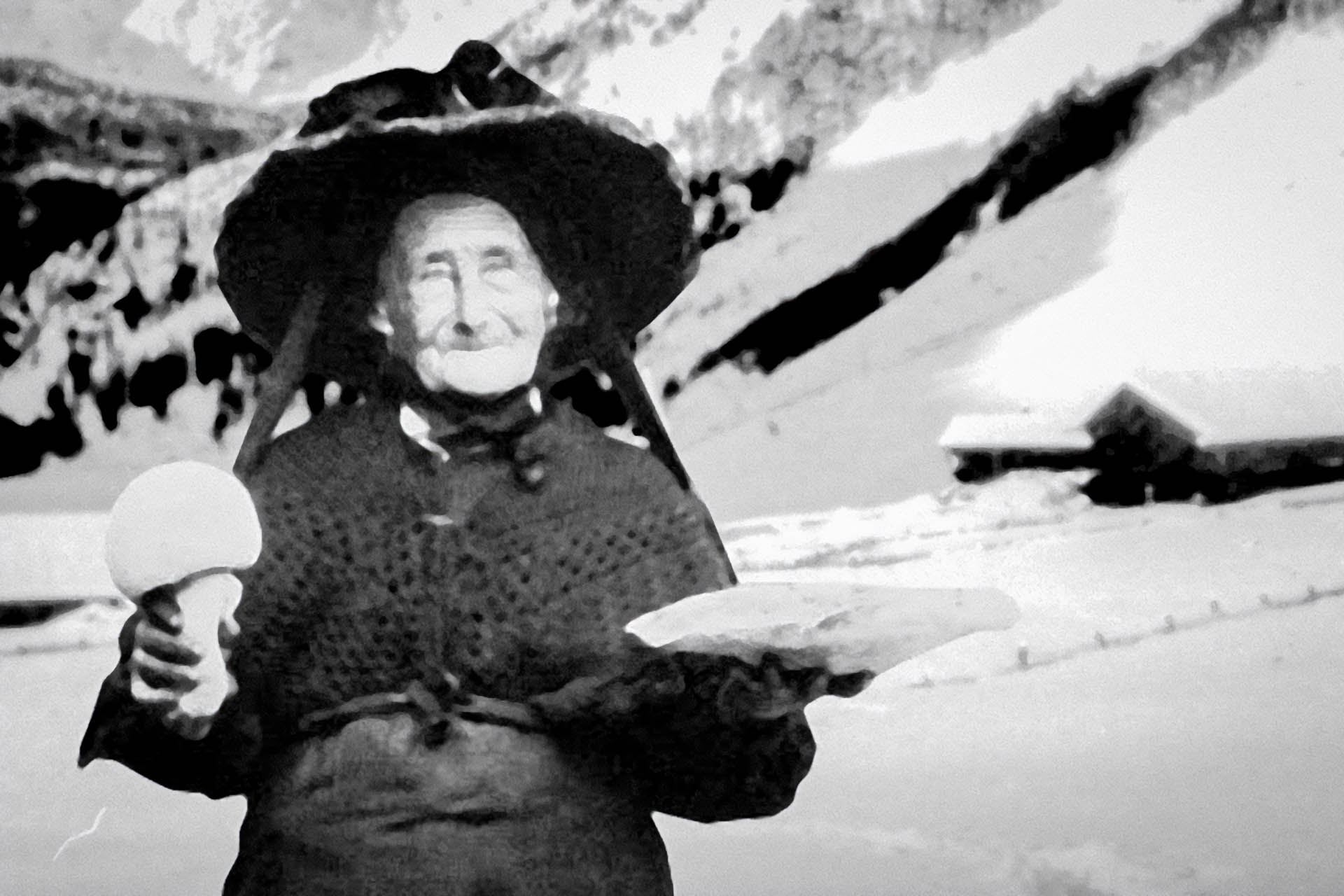
A path leads from the Schnalstal Valley over the Niederjochferner to Vent in the Ötztal Valley. Little ice men used to live on this glacier, who were also called ‘Eisnörggelen’ or ‘Niederjöchler’ for short. High up on the Niederjoch it once happened that a shepherd lost his way in the severe cold during a storm, sat down dead tired on a stone slab and fell asleep. Suddenly he was shaken awake. As he finally awoke from his frozen slumber, two Niederjöchler stood in front of him, grabbed him and dragged him down into the Schnals valley. The constant movement revitalised the man and he happily reached the valley. The shepherd, who lived for a long time afterwards, had a memorial erected at that spot in gratitude.

„O Mander, husch, husch!“

Every year in mid-June, a herd of over a thousand sheep moves from Schnals to the Gurgleralm and Windachalm in Ötztal. They graze there throughout the summer and return to South Tyrol in September. Once again, it was time to bring the sheep home. As the Schnalsers appeared in their shirtsleeves, they came across an old witch near Obergurgl who, despite the warm rays of the sun, was dressed in a thick woollen winter robe but was still shivering so much from the cold that her teeth were chattering. When she saw the Schnalsers, she breathed into her skinny hands and shouted: ‘O Mander, shoo, shoo!’ The sturdy men just laughed at her. The next day, the sheep drive made its way across the Ferner, but was caught in a snowstorm. One thousand three hundred sheep perished along with their companions, except for two shepherds.

The cursed mountain pasture

From Vent, two hours into the Niedertal valley, it is called the “Ochsenhütte”. It is an abandoned hut, because a blessing rests on this mountain pasture. The roof has long gone and only the walls remain as a sign that this was once a flourishing alpine pasture. Rock faces tower to the right and left, green glacier ice peeks down from above. But here at the Ochsenhütte is green pastureland. But no cow can be driven here, no matter how often it has been tried, because this mountain pasture is cursed. And this is how it came about: in ancient times, this was a blessed alpine pasture, from where lots of butter and cheese were carried down into the valley. Once a poor family of hikers came up through the valley and wanted to continue their journey over the Niederjoch to Schnals and into the Vinschgau Valley. The weather was bad and it was not advisable to go over the Niederjoch, especially not with wife and children. So the father of the family asked the head shepherd for accommodation for the night. But he had no mercy, nor did the other mountain people. They even mocked the poor shepherds until the shepherd finally shoved them out of the hut with harsh words: “Stay outside with the sheep and goats in the stable!” They had to go into the sheep pen, freezing and wet. And in the night it happened that the family got a little one in addition to the four heads. Translated with DeepL.com (free version) Nevertheless, the shepherds chased the weak mother, her newborn and the other children outside the hut. The father and his family left the hard people with the curse: “So you shall remain shepherds until the judgment of God and never again be cowherds and oxherds. The grass of this pasture shall feed no more cattle!” And the curse was fulfilled. That same year, 40 cows and oxen perished in the black fire. Yes, the Niedertal has become a large sheep pasture. Around 2000 sheep graze there. But you can often see the former shepherds creeping around as sad shadows and hear them wailing.
More articles

Accident at the Stettiner Hütte and in the Tisental valley

Accident at the Stettiner Hütte

Interview Hans Haid with Hans Götsch

Audio interview recorded by Hans and Gerlinde Haid on 13.02.2006 in Hans Götsch's house in the Schnalstal Valley

The folklorist Hans Haid and his wife Gerlinde recorded this audio interview with Hans Götsch in his house in Val Senales on February 13, 2006. Hans Götsch describes a story about an accident at the Stettiner Hütte around the 1920s, and he also talks about an accident in the Tisental Valley in 1979.

[Excerpt “Goetsch-Interview-Hans-Haid.mp3”: At 0:37 there is still the question from Hans Haid, from 1:03 Hans Götsch narrates. There are some interim questions from Hans Haid (in italics). This excerpt lasts until 11:36]

Accident at the Stettner Hütte (1920/1930s) & accident in 1979 in the Tisental valley

Transcription in dialect (German)

De hobm se gsegn, dass sie nimmer auerkemmen aufn Gletscher. Und dann hobm si mießn ausweichn. Sein auf die Stettiner Hütte zuachn gangen mit de Viecher und do seines zuachn gongen mit de Viecher und so seines nochr drfroorn.

Die in der Hüttn Plotz ghobt hobm, hobms überlebb und olls wos draußn gebliebm ischt, di sein am Morgn nochr drfroorn.

Zwischenfrage Hans Haid: In welchem Jahr?
Des tat i scho aussafindn. Der Weger, der Hermann, a dr Lois, dr heitige Baur vom Weghof, die wissatn des sicha genau. De hobm ins des dazumal als kloane Buabm erzählt.

Haid: Du hast das aber selber nicht erlebt?
Na, na. Mier nimma.

Haid: Also: Durchs Pfossental, dann Grub Alm und hinauf aufs Gurgler Eisjoch. Und deshalb ist mir das komisch vorgekommen, denn da hat man ja weit übers nächste Joch drüber … und da ist die Stettiner Hütte. Und da ist es gewesen? Beiläufig das Jahr?

I glaub, des kennt gwesn sein in die zwanzger, dreißger Johr. Des Jahrhundert holt jednfalls. Do sein sovl Toate obm gwesn. Die Schof sein drfroarn. Von Schturm. Des ischt gonz is gleiche wie bei ins in die 70er Jahr, des ischt 1979. Gsogt hobm si, so bei die 350, 400 Schof, wos do hin gwesn sein. Do hobm si, wie si drzählt hobm, olle Zimmr voll ongeton, in gonzn Schutzhaus, olls voll oongschteckt, wos si Plotz koppt hobm. Hots holt iibrlebb und di gonz schwarn Wiidr und die Görn, hobm se gedenkt, die überlebms und an Morgn seins a drfrorn, von Wind drschtickt. So a koltr Schneaschturm ischt do gwesn. Do sein olle vrwahnt.

Und so ähnlich ischt es ins passiert. I wor jo drbei, wie mier di 200 Toatn do koppt hobm. 1979 oder 1980. I woas jetzt nit so genau. Im Frühjahr bein Auftreibm ischt doss passiert. Dos ischt des Johr gwesn, wo mei Bruada ghiatet hot, auf dr Olm in Niedrtol. Und des von mir dos erschte Johr, wo i nit ols Treiber aufd Olm mitgongen bin. Weil i auf da Seilbohn drin, bei dr Gletscherbohn Bohnenbegleiter gwen bin.

Und do ischt so a groaßr Nordwind gongen und kolt gwesn. Ietz hobm mier mit dr Bohn nimmr fohrn gekennt und dann hot mir des koa Rua glott. Honn i mier gedenkt, dos gibt’s jo nit, dass die andrn mit de Schof iibrn Joch kemmen heit. Und donn hon i gfrogt, ob i drin nit weggean kon, weil i decht nit foarn kon. I mecht gern den Bruader nachgean, also den Schaftrieb. Donn bin i aussa Vernagt und dr Baur, der Unterprettracher, des wor damals nö dr Hermann, dr zweite Bua, der den Hof übernommen hot. Der ischt mier donn mitgongen durchn Tisnberg eini und wie mier dann aufn Hausr kemmen sein, ischt der erschte Bauer außr. Des woar dr Rainer Johann, der Leiterbauer. Und donn hat er zu mir gsogg, weil i eam ongschprochn hob, wia tuats do obm: Jo moansch du, i will hin sein? Voar i hin bin, gea i lieber hoam. Und do sog i, jo, des derf do nit sein, dass man die Kollegn hintn lott, wenn do oanr weckgeat. Der wor jo gonz drfroarn. Und wie i nochr auikemmen bin, bis zebrigscht im Tauf, untr die Jochkeefl, ischt mei Onkl, dr Götsch Konrad, gschtontn bei di Schof holt do, und der hot ausgschaug, wie dr Etzi, wie vom Messner des Foto von Himalaja, der Bort mit zehn Zentimetr longe Eiszopfn. Aso ischt der Mensch obm gschtontn und mit de Augn hot er nimmr ausgseegn. Nit. Do honn i mier gedenkt, muaß man ihn amol auskraln, dass er ibrhaup amol schaugn kann. Dann hat er gschriirn. Hot a weh geton, wenn man so drfrorn ischt. Nit. Und donn sog i: Konrad, gea ietz hoam, wearn mir schaugn, wie mier doss drrichtn. Des ischt leidr ins a nitt gelungen. Mier hobm woll di Schof von Tauf her. Die sein nimmr virwärts, nimmr hintri gongen. Es war ungefähr so a Metr Neuschnea. Von Wind verwaht. Und so schteil. Von di Schof hoscht selbr nimmr viel gsegn. Und donn hobm mir woll di Schof zrugg gebrocht auf dr Kuppe do, wo mans in Mittogsknöttl hoasst, auf der Kuppe do, weil man gedenkt hat, kannt die Lahn gaaling kemmen und kannt di Schof olle weck tien…

Gaaling hobm mir woll di Schof a bissl zrugg gebrocht und donn ischt Obmnt gwordn und dann hobm mier holt a mießn zrugg gean. Und i muass sogn, des woa eigentlich a bissl a Fahler, a von de Treiber, die do mitwoarn. Es hätt jo die Bergrettung, die Feuerwehr verständigt wern solln, die gholfn hättn aui zu gean, mera Leit mitnondr, donn hätt ma dr Schof sicha weita oa gebrocht und am nextn Tog warn koane vrendet gwesn.

In nägschtn Tog, wies grau gworn isch, do hobm mir am Obmnt a bissl a Aussprach gholtn zwischn ins Baurn und donn ischt ausgmocht worn, dass dr Leo mitm Hubschraub kimmt und ins inni fliegt, wie weit er holt konn fliegn. Und wir worn donn um Viertl noch vier, holb fünf ischt er donn kemen und hot erscht amol mi und in Finailer, weil i gwisst hon, wo di Schof sein, wo mir se glossn hobm. Donn ischt er zwoa, dreimol, viermol gflogn, bis er holt olle obm ghobb hot. In negschtn Tog wor is gleiche Sauwettr, lei nimma gschniebn. Dr Onrwint ischt gongen, in den Tol drinn, da hosch nit amol gscheit schnaufn kennt, vo lautr dass dr Wind do gwirblt hot. Und donn hot der nit glei londn kinnt, homma miassn so oihupfn in Schnea, do semma sem selba fast drstickt. Do bischt jo gschteckt, doss de Fiaß nimma aussikriagt hoscht in dem Tiefschnea drin. Und donn sein mia schaugn gongen, wo di Schof so sein. Und dees ischt schiach oanfoch, wenn man dees amol gseachn hot, deet und dort so a Lechl, wo man gsegn hot, do gea a bissl so a Dampf au, do mießn no lebate Schof druntr sein, weil si gschnauft hobm und durchs Schnaufn dr Dompf aufgschtiegn und hobm nochr ausgrobm. Und wos ischt passiert, die obm auf gstondn sein, hobm no glebb und ollle, die druntr drinn gwesn sein, sein holt drfoarn gwesn. Und so a 100 wearn holt vrendet sein gwesn. Hauptsächlich de Lamplar, de kloan. Mit de ondrn sein se driibr keemen, zen Glick. De zweite Gruppe woarn jo de Muattaschoof. Und donn ischts holt passiert gwesn. Dann hobm mir gschaut, olle Schof zsommzesammle, in Netze eini ze tien und hobm se donn zu Tal gflogn. Mier kennen olle von Glück redn, dass in die Treibr nit mehr passiert ischt. Hättn jo leicht kinnt Leit draugean. Do siicht man oamol, wie wertvoll die Bekleidung ischt. Wenn Leit do mitgean, doss se miassn bekleidet sein, worm hobm, an ordentlichs Schuagwond hobm. Es ischt holt nit vorstellbar, doss do jeder Mensch konn mitgean. Des muass de Witterung zualossn. Dort obm aufm Joch ischt a ondrs Wettr, a ondrs Klima. Doss holt etwas passieren a konn. So ischt doss holt. 1979 wor doss. Glaub schon 79.

Nit anders wird es in der Stettiner Hütte passiert sein. Nicht ondrs.

English translation

I think it was in the 1920s or 1930s. This century anyway. There were so many deaths up on the mountains back then. The sheep froze to death in the storm. It was the same as here in 1979. It was said that 350 to 400 sheep died. They put the sheep in the rooms of the shelter, all the ones that had space, as they say. They survived. The herders thought the older rams and ewes could survive the night outside, but by the next morning they had all frozen to death or suffocated in the storm. There was such a cold snowstorm back then.

It happened to us in a similar way. I was there when we had the 200 deaths. In 1979 or 1980, I don’t remember exactly. It happened in the spring when we were herding. That was the year my brother was herding cattle on the mountain pasture in “Niedertal”. And for me it was the first year that I didn’t go to the mountain pasture as a herdsman. Because I worked at the cable car in Kurzras, at the glacier lift.

There was a strong north wind blowing and it was cold. We couldn’t take the cable car any more and it left me no peace. I thought, “There’s no way that the others are coming over the yoke with the sheep today”. And then I asked if I could go away because I couldn’t take the cable car after all. I would like to follow my brother to the sheep drive. Then I went to “Vernagt” and the farmer, “der Unterprettracher”, Hermann, the second son who took over the farm, went with me. From “Vernagt” over the “Tisenberg”.
When we arrived at the “Hausr”, the first farmer came to meet us. It was Rainer Johann, the “Anderleiterbauer”. He said to me, when I asked him what it looked like up there: “Do you think I want to be dead? Before I die, I’d rather go home”, to which I said, ‘You can’t abandon your colleagues by simply walking away’. He was frozen to death. When I arrived, right at the top of the “Tauf”, under the “Jochköfeln”, my uncle, Götsch Konrad, was standing with the sheep and looked like Ötzi or Reinhold Messner in the photo on the Himalayas. His beard was covered with ten-centimeter-long icicles so that he couldn’t see a thing. I thought to myself that I would have to scrape it off so that he could see anything at all. Then he screamed, because it must hurt to be frozen like that. I said to him: “Konrad, go home now. We’ll see how we can solve this.” But unfortunately, we didn’t succeed. We brought the sheep from the “Tauf”, but they didn’t go forwards or backwards. There was about a meter of fresh snow that had been blown away by the wind. And it was steep there. You couldn’t see much of the sheep. Then we brought the sheep back to the top of the hill, to the so-called “Mittogsknöttl”, because we thought an avalanche might come and take the sheep with it.

At some point we drove the sheep back a bit, it was getting dark and then we had to go back too. I have to say it was a mistake on the part of the herders who went with us. They should have informed the mountain rescue service or the fire department to go with them. With more people, we would have taken the sheep further down and none would have died the next day.

In the evening, we farmers got together and agreed that Leo (Gurschler) would come with the helicopter and fly us in, as far as he could fly. The next day at about half past four, the helicopter first flew me and the “Finailer” farmer up, as I knew where the sheep were. Then it flew four more times until it had brought everyone up. It was the same bad weather that day, only it wasn’t snowing anymore. The upper wind was blowing in this valley, you couldn’t even breathe, it was so strong. That’s why it couldn’t land straight away and we had to jump down into the snow, almost suffocating ourselves. We were so stuck in the deep snow that we almost couldn’t get our feet out. Then we looked for the sheep. The sight was terrifying, every now and then you could see a hole from which a bit of steam was rising, there must still be live sheep underneath. We then dug the sheep out. The sheep at the top were still alive, but the ones at the bottom were all frozen to death, about 100 of them, mainly lambs. Fortunately, they got over the yoke with the others. The second group were the ewes. We tried to gather up all the sheep and things and put them in nets to fly them down into the valley. We can all count ourselves lucky that nothing more happened to the herders. People could easily have died. You can see how valuable good clothing is. When people go on a trip, they have to be dressed appropriately, with warm clothes and good shoes. It is inconceivable that everyone can go. The weather must allow it. It’s a different weather up there on the mountains, a different climate. Something can always happen. That’s the way it is.

That was in 1979 and it was probably similar at the “Stettiner Hütte”.

Right to escape from snow

Transcription in dialect (German)

Die Ventr tua i olm respekNern. Wie des 79 gwen ischt. Sein mir noch Vent gfoorn und hobm donn erlebt, wie entn di Bauern is Fuatr ins gebrocht hobm fier di Schof, di mia bei Vent ghiatet hobm. Des hot olls der Österreichische Bund finanziert. A die Großzügigkeit und das Verständnis der Bauern drübm: dos war bei ins do nit aso. Na, des mecht i olm sogn, bei ins di Leit, i woas nit, dribn honn i dees drlebb, dass die Hirtn, mier olle, sein do mit wormen Tee vrsorgt wordn und Essn hobm mir kriagt, hearwerts vo jedn Mensch.

Di Schof hobm kennt no di gonzn Bluam oofressn, bei da HausNa do. Hot koa Mensch gschumpfn. Di HausNa voll onscheissn kennt, a niemand gschumpfn. Die Leit hobm olle Verstöndnis kopp. Des sog i olm, wenn do bei ins eppas war in Schnals, di warn nit aso, i glab des oafach nit. Mit di erstn Schof sein mia ibrs Joch driibakeemen, dann hobm mir mießn Schneafluchtrecht oifoorn. In Vent worn 50, 60 cm Schnea. Jo jo, i bin jo selbr dribn gwesn. Nit. Wos willsch do Nen mit soovl Schof. Hobm mier mießn ochofohrn, ibr di Pruggn und rechts so her auf den Anger, den ebmen Plotz. Und do hobm mir holt di Schof ghietet. Ondrs wars nit gongen. I woas eigentli nit, unten, wo di TolstaNon is, warum si nit sem auf den Plotz gloD hom. Do entn, vielleicht sein si no enger beinond gwen, doss man nit soviel miesst schaugn, dass ins nit auskemen, weil nach unten kemen si nit, do is der Bach, nach oben kemen si nit, dort sein di Felsen, deniedn sein mehr di Heisr. Dann hot ma lei mehr zwischen di Heisr mehr Wach stehen sozusagen, doss si ins nit auskemen. Und donn worn mier do drübm zwoa Tog, volle Tog. Di Venter hobm ins mitn Hubschrauber Heu gebracht, hot ins is FuDer gebracht. Es waren so 800 oder gar 1000 Schof, eher glab i 1000 Schof. Jo, zwoa Toge sein mier bliebm. Mier sein direkt aufgnommen wordn. Des muaß man selbr mitdrlebm. I wor jo olle Tog driebm.

English translation

I always respect the people of Vent. When we went to Vent in 1979*, we experienced how the farmers there brought us feed for the sheep we herded in Vent. It was all financed by the Austrian government. The generosity and understanding of the farmers there would not be the same here. In Vent, I experienced that the shepherds, i.e. all of us, were provided with warm tea and food without us having to ask for it.

The sheep were allowed to eat all the flowers in front of the front door and nobody scolded them. They were also allowed to shit on the front door and nobody scolded them. The people were all understanding. I believe that if something like that happened here in the Schnalstal valley, it wouldn’t be like that. We got over the pass with the first sheep, but then we had to make use of the right to escape the snow. There was 50, 60 cm of snow in Vent. Yes, I was there myself. What can you do with so many sheep? We had to drive down to Vent, over the bridge to the right onto the “Anger”, onto the flat area. And that’s where we herded the sheep, it wouldn’t have worked any other way. I don’t really know why they didn’t let us on the square next to the valley station. They would have been closer together there and you wouldn’t have had to be so careful, as there would have been the stream below, the rock above and the houses next to it. We would only have had to stand guard between the houses. We spent two full days in Vent. The Vent people brought us hay by helicopter. There were 800 or maybe even 1000 sheep, more likely 1000. We were taken in straight away. You have to experience it for yourself, I was there the whole time.

(*The drivers usually say: “We drive with the sheep”)

More articles

Bad weather August-September 1987

Bad weather

Interview Hans Haid with Alfons Gufler

Alfons Gufler from Pfelders describes some accidents during transhumance

Folklorist Hans Haid had a long conversation with Alfons Gufler on October 16, 2006 at his farm (Hinteroberstein) in “Pfelders” and also recorded it on tape. In summer 2007, Alfons Gufler moved from Pfelders to Ötztal with sheep for the thirtieth time. What happened at the end of August and then at the end of September 1987? How did he experience it all?

Bad weather August-September 1987

Transcription in dialect (German)

jo, das ischt oamol gewesn. hats in 29. august ongfongen schneibm. ischt grod schenwieser kirchtog gewesn. und die sell nocht hats ongfongen schneibm. und in montag hots no woltn gschniibm und in erchtog sein vor dr hitt entn 30 cm gewesn, in erchtig. und dr hittnwirt von dr longtoleckhitt, dr siggi, isch lei mea mitn pistngerät gfohrn bis zur schenwies. und bis sem aui is grod no gongen mit di kettn.

und die schof sein holt olle in die schneabr obm gschtontn und in die schneabr gschtontn und in mittig (= mittwoch) ischt nochr dr obmann kemmen und dr gernot patzlt und no zwoa baurn. zearschts geat kimmt is bundeshea mit dr hubschraubr mitn hei fliegn. und nochr ischt holt olm letz wettr gwesn und nebl und gschniibm und a lausigs ongricht. in pfinstig bin i innr in longtol. sog dr siggi, gea nur jo nit in dr schwärze durch. und sein obm hon i 58 schtean kopp. sell hon i gwisst. und die schwärze ischt a gfährlichs ort. und i honn gsogg: na, i gea nit.

und bin von dr hitt außo und inni und ibr die prugg und bin inni in die schwärze. nebmen boch hon i no in rucksocck niidrgleggt und hon in hund gmocht drbei zuachisitzn. norchr bin i auchi. die schof sein obm zu zwoa schiiebeler gwesn. auchgewootn und hon an wiidr drwuschn. in sem han i aufn ruggn niidrglegg und bei de hintrn schtutzn oorgezoogn bis zen boch. nor hon i an weg kopt. und nochr bin i aur um zu die andrn. und hon die ondrn her und hiegrn boch.

und außrwärts bin i in longtol zuegekehrt und hot dr siggi gschumpfn. alloan do inni in ar selln gfohr. obr i honn mir gedenkt, wenn die sunn auskimmt, bricht alls und laant obi und die schof hon i hiin. und in somstig hon i af dr oan seitn obm a schiibl schteckn kopp, olls gloshort gwesn. bin um drui weg mitn batterieliecht iibrs briggl und in die seitn auhn und honn die schof oha bis zintrigscht hintr dr windlehn und deniidn zen peilstoan aussn. do isch dr lukas keemen und er sogt: um zwelfe kimmt dr hubschraubr hei fliegn. i sell mitfliegn. i sog: lukas, flüig du ma mit, i zoag da die schoofschiibl, i konn nitte, wenn i nüicht untr de fieße honn, geat nitte. donn isch dr lukas ohn und mitgflogn und hons fleißig gemocht und olls guat gongen, hei gflogn. und nochmittooge isch nocha dr transporta auha mit kettn drau und die paurn, i muass sogn, a hilfe, wos ma do findet. und di hobm in transporta voll hei kopp. die paurn hobm iberall drinnt hei getroogn, fir die schofe und hobms gfietrt.

(Zwischenfrage Haid: Und sind gar keine hin gewesen?)
und i hob bein schnea koane hin kopp.

untrn kapellele, wo man ins löngtol geat, hot a ebe glämprt und zwoa lamplr kott. i honn si nitt außrgebrocht vo lautr schnea. nor honn i a platzl ausgetretn, woasch, in schnea drinn gleim angetretn. und die lamplr holt a bissl gsaug bei dr görre und ischt olles guat gongen. die lamplr sein mit hear in herbescht. lebatr. guat gongen. na, i honn wegnen schnea koane hin kopp.

in mantig hobm mir schon in erstn schnea kopp. und in mantig drau hon i in berg oogschaut und oogschaut. ietz sein außr ramol hoach obm schofe gwesn. honn i mitn glos gseachn. hoach obm. sogt dr alfred vo schönwies: gea nur jo nit auchn. gea nur jo nit auchn.

na, i gea nit auchn. und ear ischt hoam außn und i gea zum briggl ochn und in die laanstriche auchn und i bis inchn obm und han die elf schafe genommen. oane hat glämprt und hot a lampl, wilde wie a fuchs. obr die lebm. acht tage nicht kopp. und die schof oor und hon se außn und olles guat gongen.

a schob hebts ocht tog bis zehn tog. ob du muescht die johreszeit oonschaugn. in langes bein aukearn sein se mit drei tog hin. obr zelescht in august wenn die schofe fleisch und fettn hobm und a wolle au und fiern durscht kriagn se schnea, heebms acht bis zehn tage. und do hott si des bewiesen.

English translation

Yes, that happened once. It started to snow on August 29. It was the night after the “Schönwieser” church festival. On Monday it continued to snow and on Tuesday there was 30 cm of snow in front of the hut. The owner of the “Langtalereckhütte”, Siggi, drove to the “Schönwieshütte” with his snow groomer. You could only just drive there with snow chains.

The sheep were all standing in the snow. On Wednesday, the chairman, Gernot Patzelt and two more farmers came. As soon as it was possible, the helicopter from the army flew up hay. After that it was always bad weather with fog and snowfall. On Thursday I went to “Langtal”. Siggi said to me: “Don’t go into the “Schwärze”. But I knew I still had 58 sheep there. The “Schwärze” is a dangerous place and I said I wouldn’t go there.

Then I left the hut, crossed the bridge and went up into the “Schwärze”. I put my rucksack down next to the stream and told the dog to sit next to it. Then I went up. The sheep were standing at the top in two groups. I waded up and caught a ram. I put it on its back, grabbed it by the hind feet and pulled it down to the stream. So I had a path, went up to the others and led them all across the stream.

I stopped at the “Langtalereckhütte” on the way out of the valley and Siggi reprimanded me: “In there alone in such danger!”. But I thought to myself, when the sun comes out, the avalanches will break loose and the sheep will all be gone.

I knew that a group of sheep were still stuck on the other side and as the sky was crystal clear on Saturday, I set off at three o’clock in the morning with my flashlight. I went over the bridge and up the side and drove the sheep down behind the “Windlehn”, over to the “Peilstein”. There Lukas came to me and said: “The helicopter is coming at twelve o’clock to deliver hay”. I replied: “Please be so kind and fly instead of me, I can’t do it, if I don’t have any ground under my feet. I’ll show you where the groups of sheep are”. Then Lukas went down and flew with the helicopter. He did well, everything went well and they flew the hay up successfully. In the afternoon, the transporter with snow chains arrived, which they loaded full of hay to take to the sheep and feed them. The farmers were a great help.

(Interposed question Haid: And did no sheep die?)
Despite the snow, not a single sheep died.

Below the chapel where you enter the “Langtal” valley, a ewe has given birth to two little lambs. I couldn’t get them out because of all the snow. So I trod out a place with my feet and trampled down the snow so that the lambs could suckle better and everything went well. The lambs came with me in autumn. Alive. No, I didn’t lose any sheep because of the snow.

We already had the first snow on Monday. And on Monday the following week, I searched the mountain. Outside “Ramol”, high up in the mountains, I saw sheep. I saw them with binoculars, high up. Alfred from “Schönwies” said to me: “Don’t go up there. Don’t go up there”. But I went anyway, I went over the bridge, up along the avalanche line and there were eleven sheep up there and I took all eleven sheep with me. One had a lamb, a wild one, as wild as a fox. But they lived. The sheep had nothing for eight days. Nothing. No food. I took them all downstairs. Everything went well.

A sheep can survive eight to ten days without food. But you have to consider the time of year and the circumstances. In spring, when the sheep are on the move, they would be dead after three days. But in August, when they are fat and well-fed, have thick wool and have snow to quench their thirst, they can survive for eight to ten days.

Bad weather in June and September 1979

Transcription in dialect (German)

des ischt in neinundsiebziger jahr gwesn. hon i 1020 in endrn tol durch. bin i alloane gwesn, der iibrfuar ischt ibrn ]mml. woascht, sischt koanr. und nor ischt gonz a letzes we[r inngetroffn, und nochr: schnea, schnea. und nochr ischt gwesn: sein bein aukearn 66 hin gwesn. in langes, beinm aukearn. 66 schtuck sein hin gwesn. ischt a mords oongricht gwesn. de finanzer und de gendarm, olles ho[ si ingsetzt. und hots amol heargseechn: olle zomm]en, mit an baggr inngrobm odr vrbrennen und so. dass is viich aweck kimmt des toate. und zelescht ischt so weit gwesn, bold sie gschtunkn hobm, dass mir sie hobm gekennt inngroobm. ja. und nochr hon i holt inngegrobm und no oanr hat no gholfn. und aua ins ]mmltol und do sein de finanzer oha und gfrogt: hobt es de schof olle inngegrobm? – Jo. – Und morgn um siebn kimmsch am joch döbm und donn gemma schaugn gean. Und de finanzer sein hoamgfoarn und i bin no amol aui und hob grobm, bis ma nicht mea segn ho[. bolt i nicht mea gsegn hob, bin i zua an kno[ hin, mit an speck und an broat, hon i in rucksack kopp. donn bin i untrn kno[ und hob a weil glegn mitm rucksackl untrn kopf und ums togn hob i wieder ongfongn grobn. und donn hob is scho fleißig gmocht und in da fria bin am ]mml hin zu dem wossr und hob mi a bissl ogewoschn, doss i nit a so wild ausschaug. donn sein de finanzer obm gwesn und hobm gsogt: lass es guat sein. de schof sein ingschniibm gwesn. gelaant sein nit viel, obr di sein inschniibm. und donn hot man getriibn. wenn du a schof ontreibst in an an ding obm, is besser steanlassn. de schofe sein schwoch und wenn se nit ze fressn kriagn, hebms des nimma, do sein se gschwächt. (Anmerkung: Alfons Gufler spricht hier von anderen Orten in Tirol.) und donn sein 66 hingwest.

ist der september kemmen. 23. september ist sonntag gwesn. in gurgl 30 cm schnee zmorgets. in gurgl. sonntag gwesn. schafausstellung. 30 cm in gurgl untn. dr schneapflug gfoorn. und in ondrn tog ha[n mir in ]mmlstol ongfongen zommtreibm. jetzt hobm mier holt no gemiesst wortn und wortn, bis es a kloans bissl augeheat hot schneibm und nocha bin i mit 8 leit zum zammtreibm. und in erchtn tog hon i mier gedenkt, wenn di leit nit verlaant wern, war i schon zfriedn. und donn hobm mier de hälne zsomgebrocht in drei togen und sein mit de sem her und nocha holt nochgsuacht, oba in ganzn sein über 100 hin gwesn. langes und herbescht. über 100 sein in die berg bliebn.

English translation

That was in 1979. 1020 sheep took me through the valley. I was alone on the drive over to the “Timmelsjoch”. No one else. The weather was really bad and sometimes there was a lot of snow. And so it happened that 66 sheep died during the spring drive. 66 sheep were dead. That was really bad. The financiers and the gendarmes all got involved to ensure that all the dead sheep were removed. How we did it, whether we dug a hole with an excavator to bury the dead animals or burned them, was not important, we just had to get rid of all the dead animals. The dead animals stank when I dug them in, someone helped me with that. Back in “Timmelstal, the financiers came to me again and asked: “Did you bury all the sheep properly? Tomorrow at seven o’clock you will come to the yoke and we will check it”. The financiers then went home and I went up again, because otherwise they would definitely see some feet the next day and so I dug again. Until I could no longer see anything. Then I went to a boulder and ate bacon and bread from my backpack. Then I lay down under the boulder with my head on the backpack. When the day dawned, I continued digging again. I was also very diligent. In the morning, I went to the water at the “Timmelsjoch” and washed myself a bit so that I didn’t look so wild. Then the financiers arrived at the top, others like the day before, and said: “Let it go”.

The sheep were snowed in. There weren’t that many avalanches, but the sheep were snowed in. They were driven, but not to a snow-free place and if you drive a sheep, it’s better to leave it standing. The sheep are weak if they don’t get anything to eat and then they can’t stand being driven forward. (Note: Alfons Gufler is talking about other places in Tyrol here.) 66 sheep were dead. And then September came. September 23rd was a Sunday. There was already 30 cm of snow in the “Gurgl” in the morning. The sheep show took place on this Sunday. But there were 30 cm of snow in the “Gurgl” below. The snowplow was driving. And the next day we were supposed to start collecting the snow in the “Timmelstal” valley.
But now we had to wait until it snowed less. I then set off with eight people to round up. On the first day, I thought it was important that we didn’t get caught in an avalanche, then I’d be happy. In three days we had gathered half of them and then returned with them over the yoke. We searched for sheep several times. In total, however, over 100 sheep were dead. In spring and autumn, because over 100 remained on the mountain.

Weitere Beiträge

UNESCO World Heritage

Transhumance is a UNESCO Intangible Cultural Heritage Site

What is intangible cultural heritage?
UNESCO has defined five areas that include intangible cultural heritage:

  • Oral traditions and forms of expression, including language as a carrier of intangible cultural heritage
  • Performing arts
  • Social practices, rituals and festivals
  • Knowledge and practices relating to nature and the universe
  • Traditional craft techniques

Intangible cultural heritage is not static, but dynamic and characterized by change. To be included in the UNESCO list, a tradition must have been passed down over at least three generations.

On the one hand, there is a National Inventory in which examples of a country’s intangible cultural heritage are included. Analogous to the World Heritage, which is reserved for material heritage, there is also a Representative List of the Intangible Cultural Heritage of Humanity. Transhumance in the Ötztal Alps has been included in both lists.

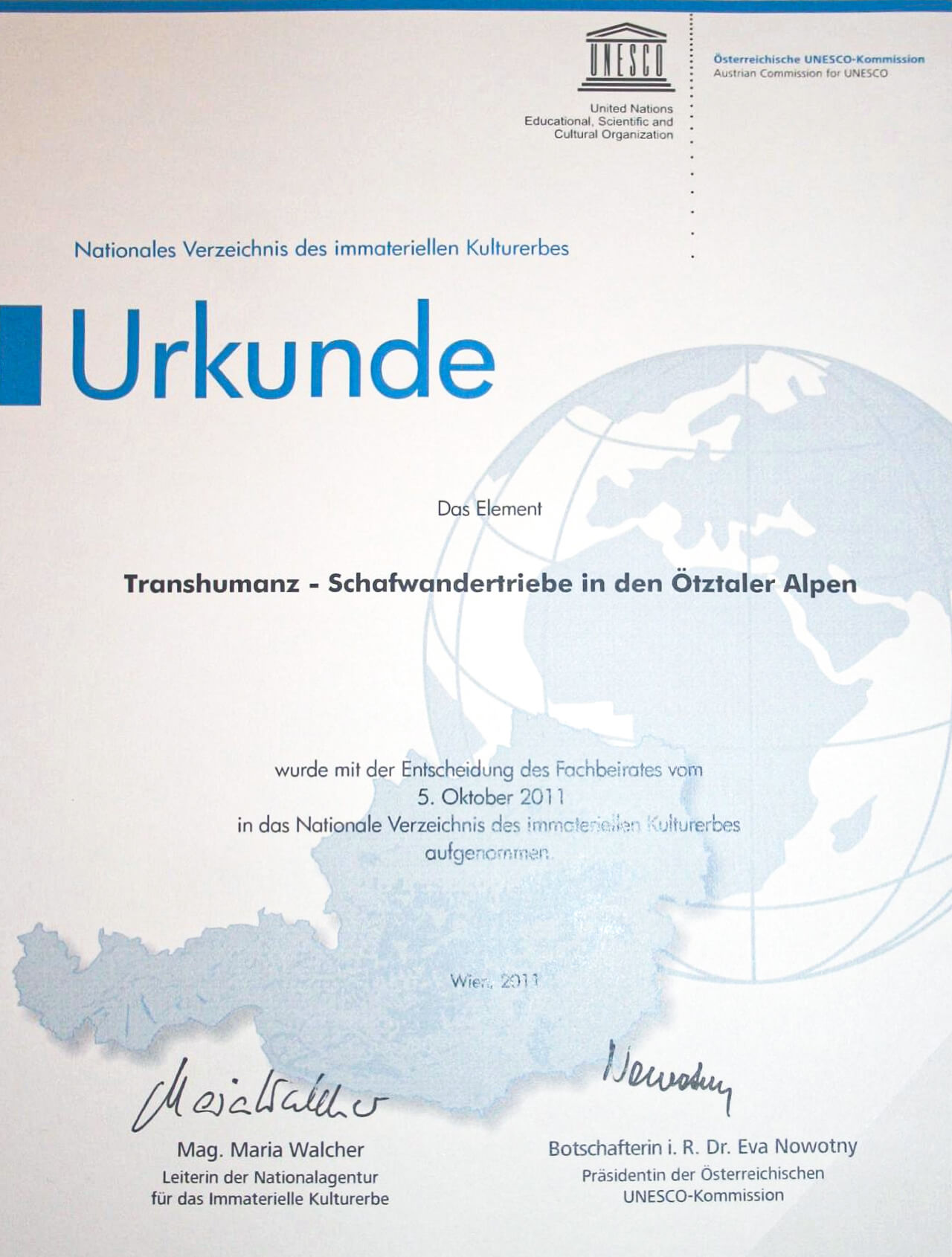
In 2011, transhumance became national intangible cultural heritage

After many years of research, collecting documents and declarations of support, transhumance in the Ötztal Alps was included on the national UNESCO list in Austria in the area of ​​”Knowledge and practices relating to nature and the universe”.

The submission was initiated largely by the commitment of the folklorist Prof. Dr. Hans Haid, honorary chairman of the Pro Vita Alpina association, in close cooperation with the Schnals cultural association, represented by Monika Gamper and Benjamin Santer.

The uniqueness of this transhumance was a decisive factor in its inclusion on the list. The sheep drive is considered the only cross-border transhumance in the Alps and also leads over the glaciers. According to prehistoric and early history research, it has been practiced for at least 6,000 years. Numerous folk tales, stories from oral tradition and field names attest to the great age of the sheep drives in the Ötztal Alps. Transhumance takes place according to old rituals and customs. Knowledge about the sheep drive is passed on from generation to generation.

The certificate for inclusion in the national register was awarded during a ceremony on November 10, 2011 in Vienna.

In 2019, the Ötztal sheep drive will become an intangible cultural heritage of humanity

After being included on the National List of Intangible Cultural Heritage of Austria, the Pro Vita Alpina cultural association and the South Tyrolean Schnals cultural association, in cooperation with other countries and above all with the help of the UNESCO Commission for Intangible Cultural Heritage, endeavored to put the tradition of transhumance on the International List.

Austria, Italy and Greece submitted the application for the inclusion of transhumance management jointly, and the UNESCO Committee decided to include it during its meeting on December 11, 2019 in Bogota (Colombia). In 2023, other countries were added: Albania, Andorra, Croatia, France, Luxembourg, Romania and Spain.

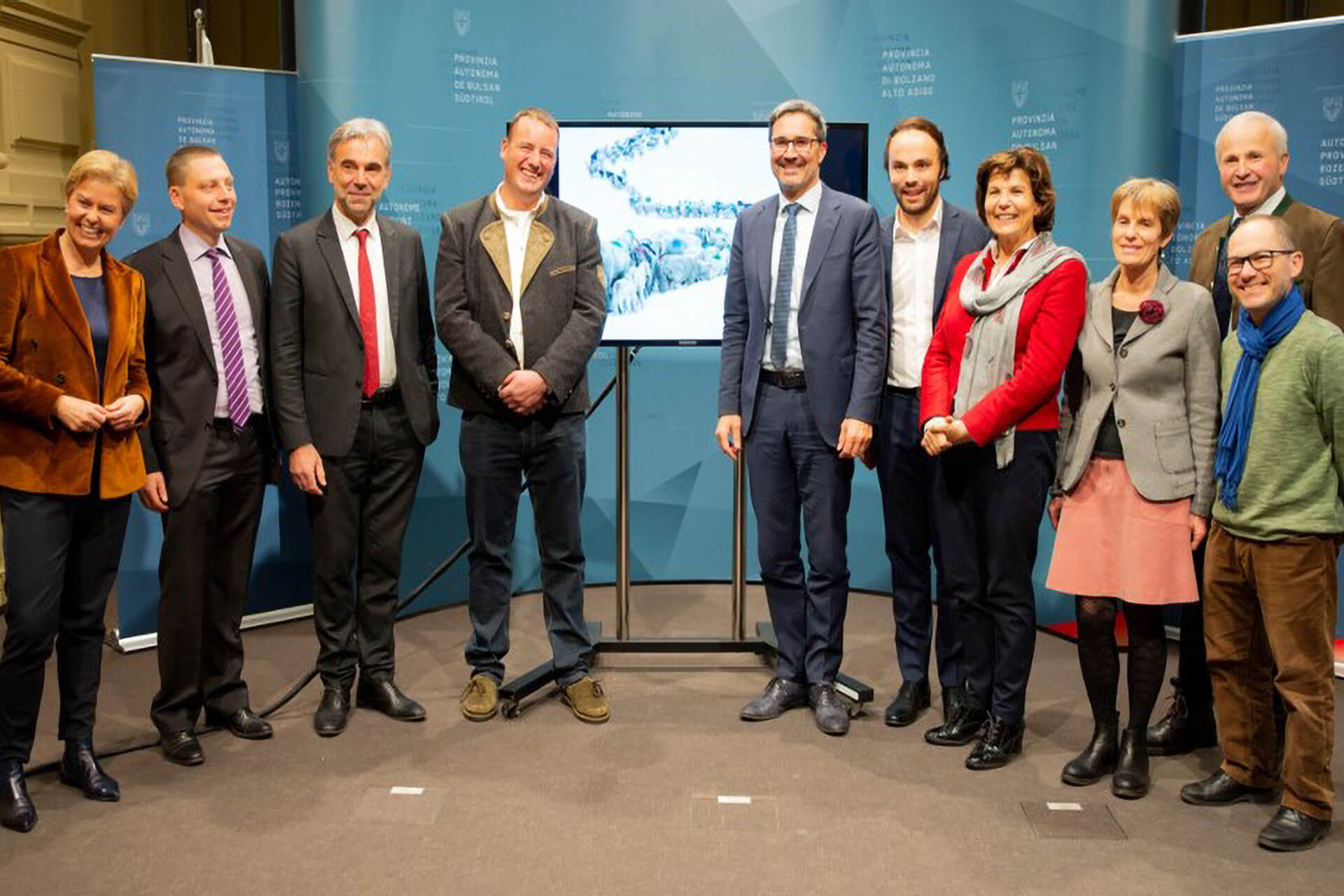
I. Photo “unesco-festakt-bozen-2019.jpg”
UNESCO ceremony, Bozen/Bolzano 2019
From left to right: Monika Gamper & Benjamin Santer, Schnals cultural association; Arnold Schuler, South Tyrolean regional councillor for agriculture, forestry, civil protection and communities; Martin Rainer, agricultural community; Arno Kompatscher, Governor of South Tyrol; Philipp Achammer, South Tyrolean regional councillor for German education and culture and for integration; Maria Hochgruber Kuenzer, South Tyrolean regional councillor for spatial development, landscape and monument preservation; Luise Gafriller, Pro Vita Alpina cultural association; Josef Götsch, agricultural community; Johannes Ortner, Pro Vita Alpina cultural association.

II. Photo “unesco-festakt_2019-11-29.jpg”
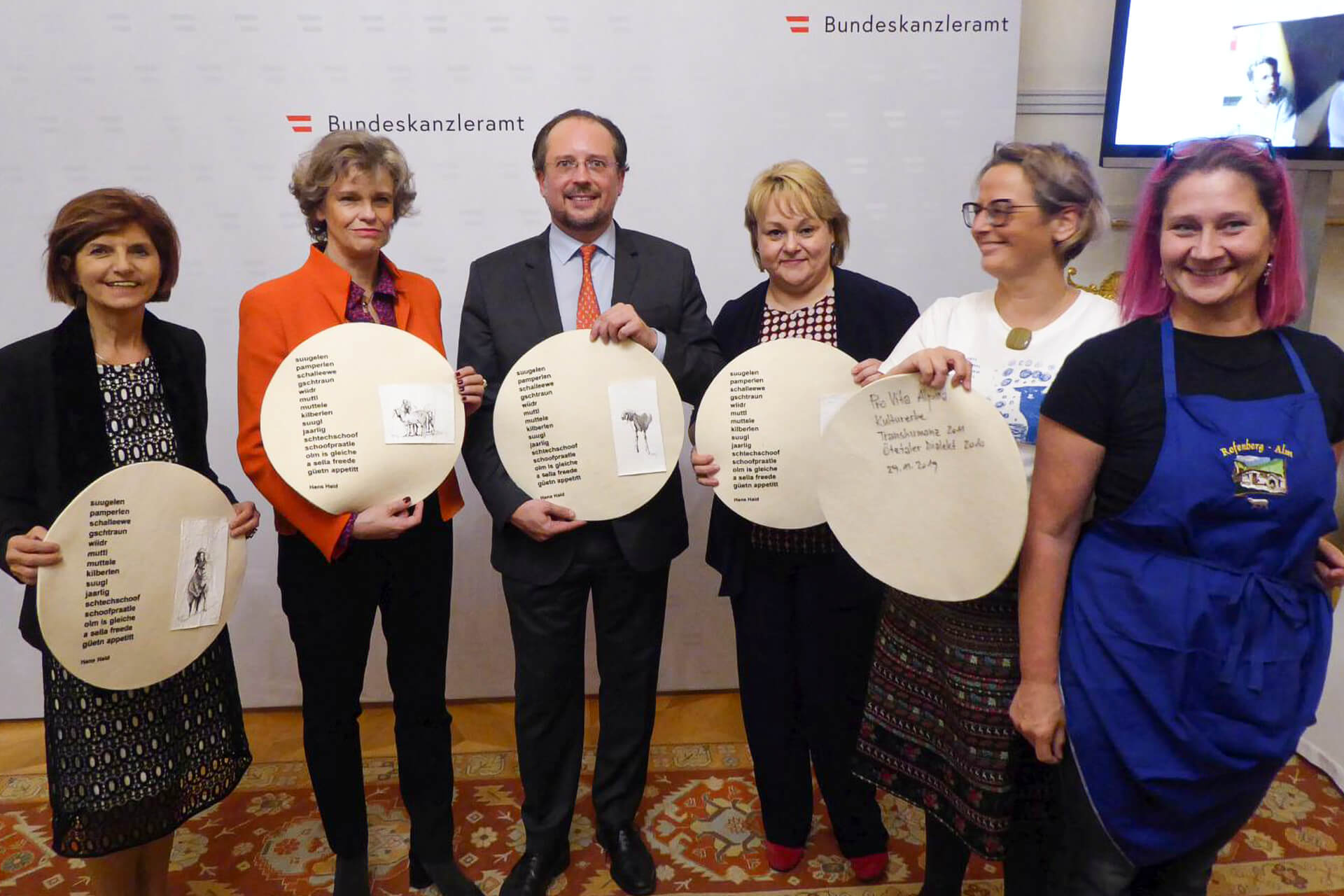
In November 2019, a ceremony “10 years of intangible cultural heritage in Austria. Creativity, identity, continuity” took place in the Federal Chancellery in Vienna.
From left to right: Anna Steiner, Austrian Foreign Ministry; Sabine Haag, President of the Austrian UNESCO Commission; Alexander Schallenberg, Federal Minister for the EU, Arts, Culture and Media; Patrizia Jankovic, Austrian UNESCO Commission; Florentine Prantl, Pro Vita Alpina Cultural Association; Barbara Haid, Pro Vita Alpina Cultural Association.

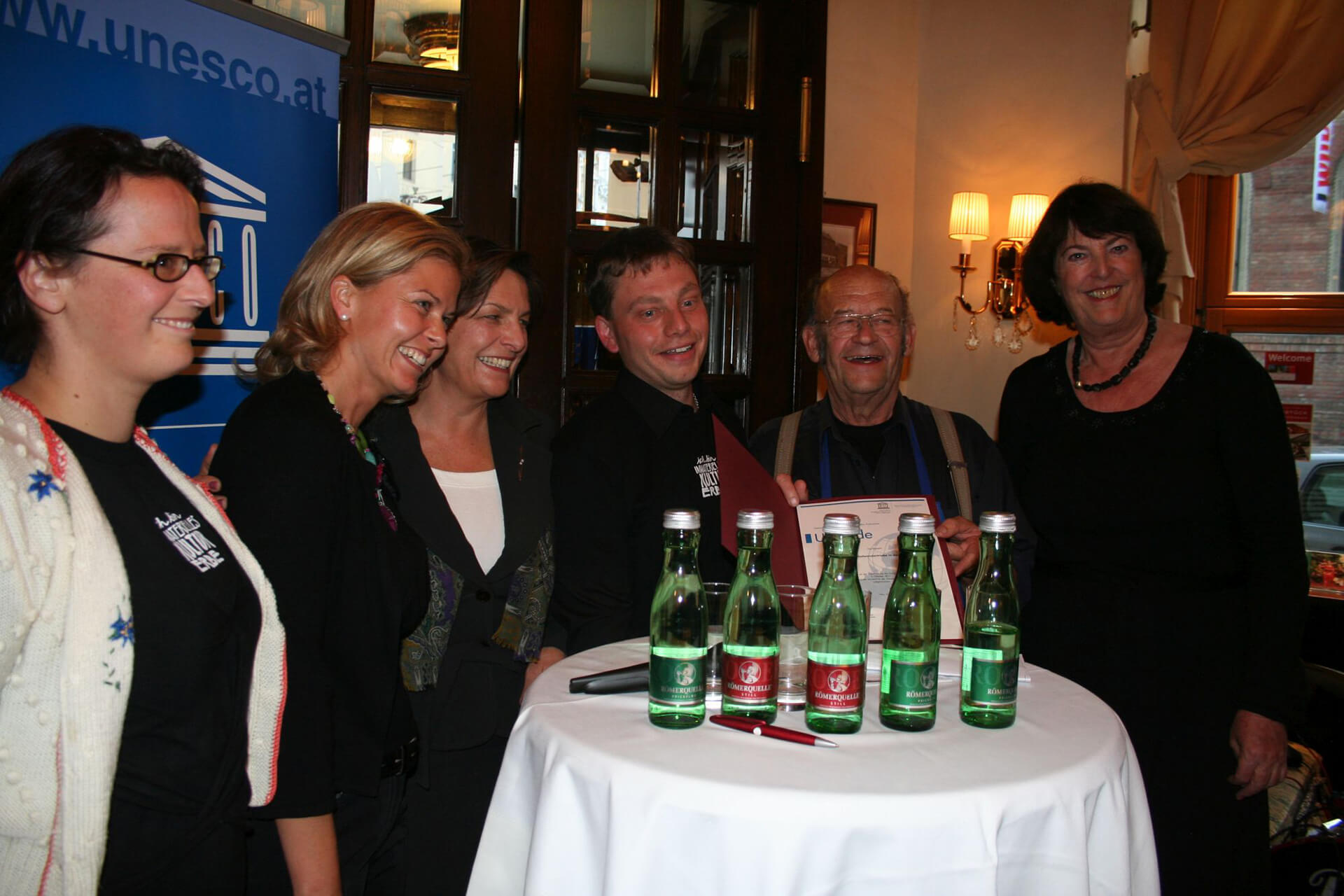
III. Photo “unesco-festakt_2011-11-10_23.jpg”
Awarding of the certificate in Vienna, November 10, 2011
From left to right: Florentine Prantl, Pro Vita Alpina Cultural Association; Monika Gamper, Schnals Cultural Association; Maria Walcher, Austrian UNESCO Commission; Benjamin Santer, Schnals Cultural Association; Hans Haid, Pro Vita Alpina Cultural Association; Eva Nowotny, President of the Austrian UNESCO Commission.

More articles

The South Tyrolean climate in earlier times

The South Tyrolean climate in earlier times

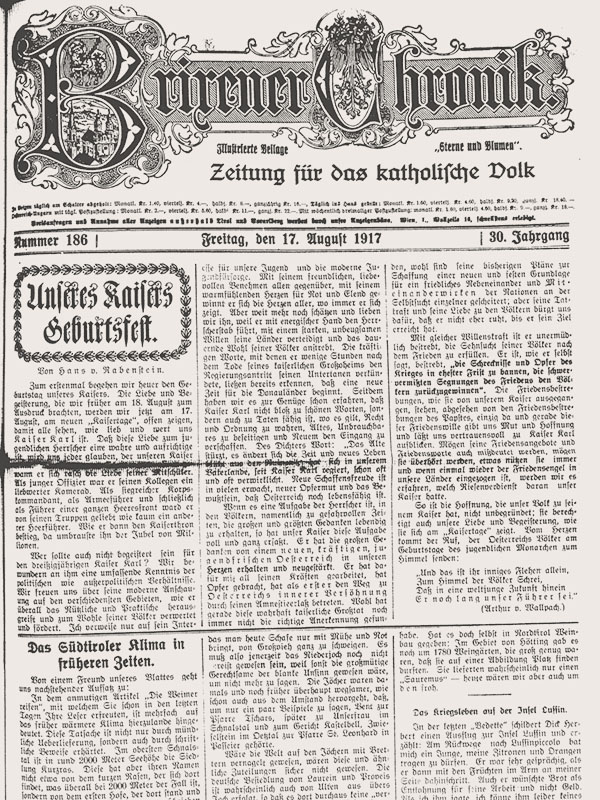
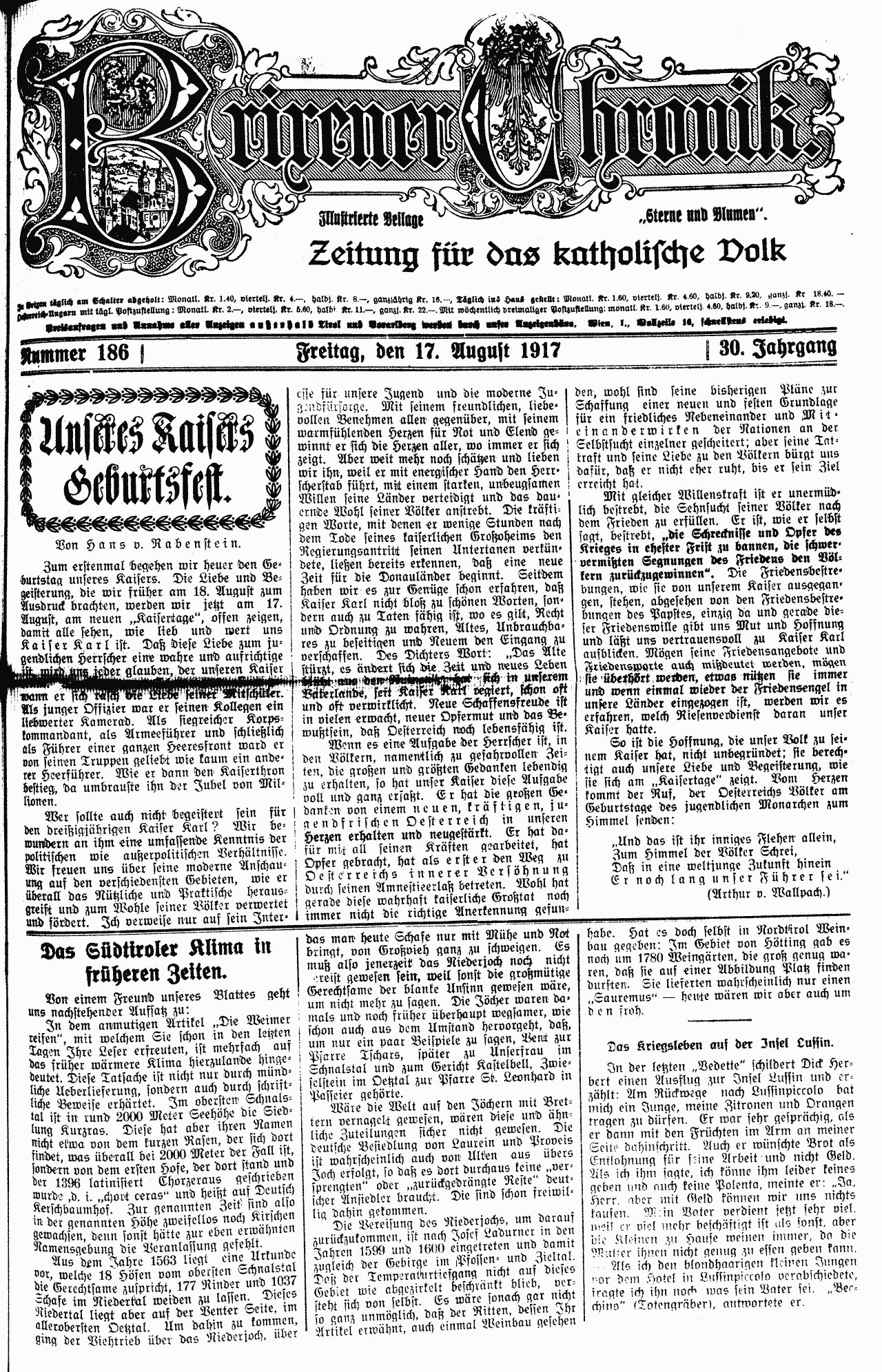
Brixner Chronik

Issue 186 from August 17, 1917

A document from 1563 grants 18 farms from the upper Schnalstal valley the right to graze 177 cattle and 1037 sheep in the Niedertal valley. However, this Niedertal lies on the Venter side, in the uppermost Oetztal. To get there, the cattle had to be driven over the Niederjoch, over which sheep today can only be brought with difficulty, not to mention large cattle. So the Niederjoch must not have been iced over at the time, otherwise the magnanimous righteousness would have been sheer nonsense, to say the least. At that time and even earlier, the Jöcher were even more remote, as can be seen from the fact that, to give just a few examples, Vent belonged to the parish of Tschars, later to Unserfrau in Schnalstal and to the court of Kastelbell, Zwieselstein in Oetztal to the parish of St. Leonhard in Passeier.

From: Brixener Chronik, newspaper for the Catholic people, number 186, Friday 17 August 1917

Excerpt from the article “The South Tyrolean climate in earlier times”

More articles

Difficult ascent

Difficult ascent

Tiroler Volksbote

Friday, June 26, 1913, page 6

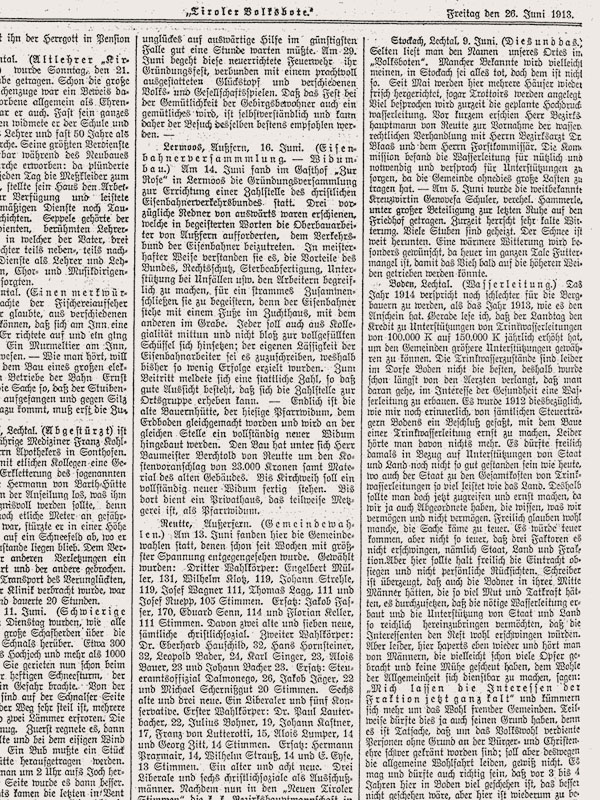
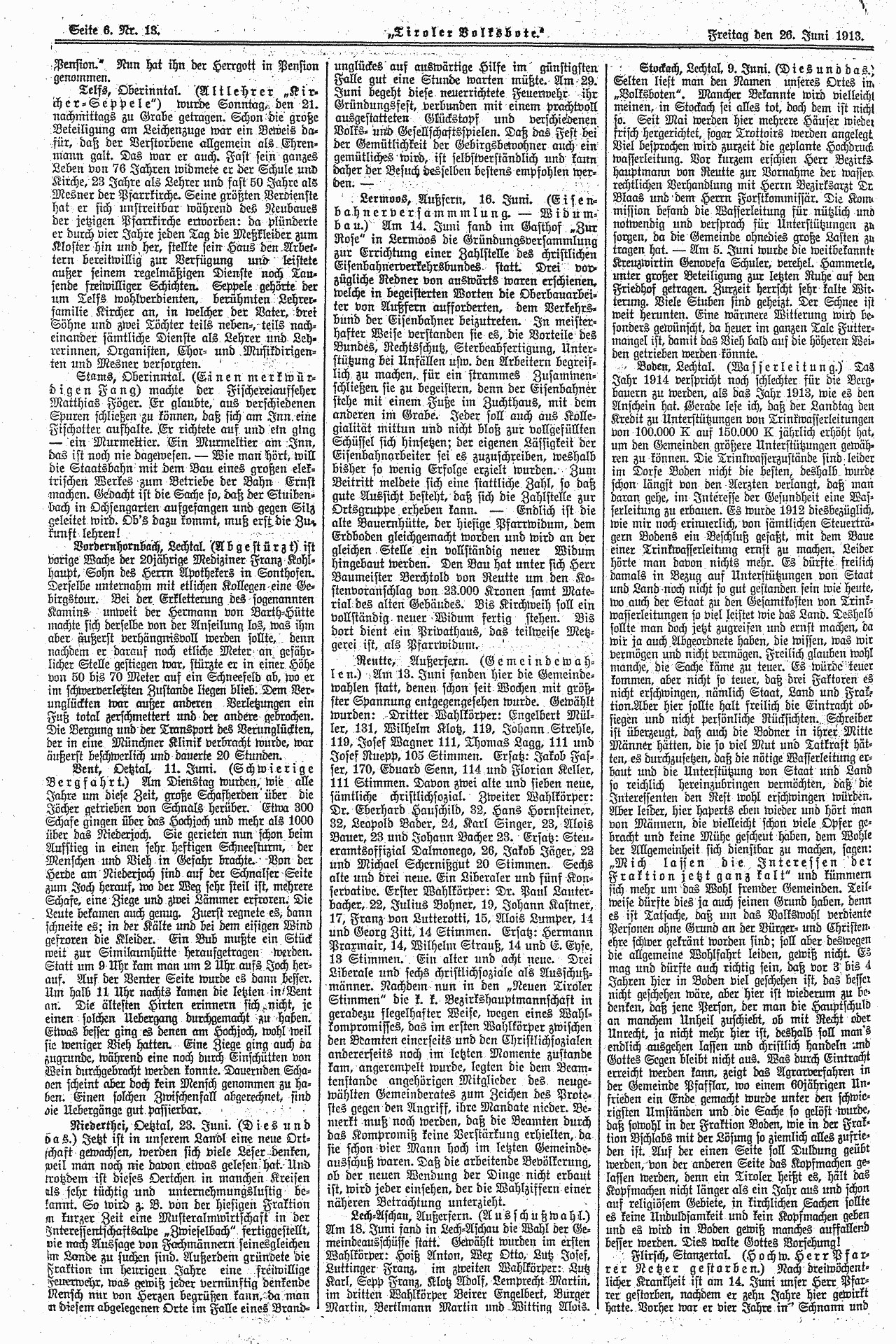
Vent, Oetztal, June 11 (Difficult ascent.) On Tuesday, as every year at this time, large flocks of sheep were driven over the Jöcher from Schnals. About 300 sheep went over the Hochjoch and more than 1000 over the Niederjoch. They were caught in a very heavy snowstorm on their ascent, which put people and livestock in danger. Several sheep, a goat and two lambs from the herd on the Niederjoch froze to death on the Schnals side up to the Joch, where the path is very steep. The people also got enough. First it rained, then it snowed; their clothes froze in the cold and the icy wind. One boy had to be carried a long way up to the Similaun hut. Instead of 9 o’clock, we got up to the pass at 2 o’clock. Things got better on the Venter side. The last ones arrived in Vent at half past midnight. The oldest shepherds don’t remember ever having gone through such a crossing. Things were a little better for those on the Hochjoch, probably because they had fewer cattle. One goat perished there too, while another could still be brought through by pouring wine over it. However, no one seems to have suffered any lasting damage. Apart from such an incident, the passages are easily passable.

Excerpt from the article: “Difficult ascent”
From: Tiroler Volksbote, Friday, June 26, 1913, page 6
1914_06_26_VB_6_SchafherdenüberdieJöcher_Schlechtwetter.jpg (left column, rather below)

Newspaper reports researched by Manfred Schwarz and Annemarie Hofer
published in: Manfred Schwarz, Annemarie Hofer: “Hören Sie einmal wieder ein Wort aus unserem Thale”. Ötztal and Schnals in newspaper reports and pictures 1849-1918. Publication series Ötztal-Archiv, Volume 29. ed.: Pro Vita Alpina, Schnals Cultural Association, 2023
“Difficult ascent”: page 53

More articles