

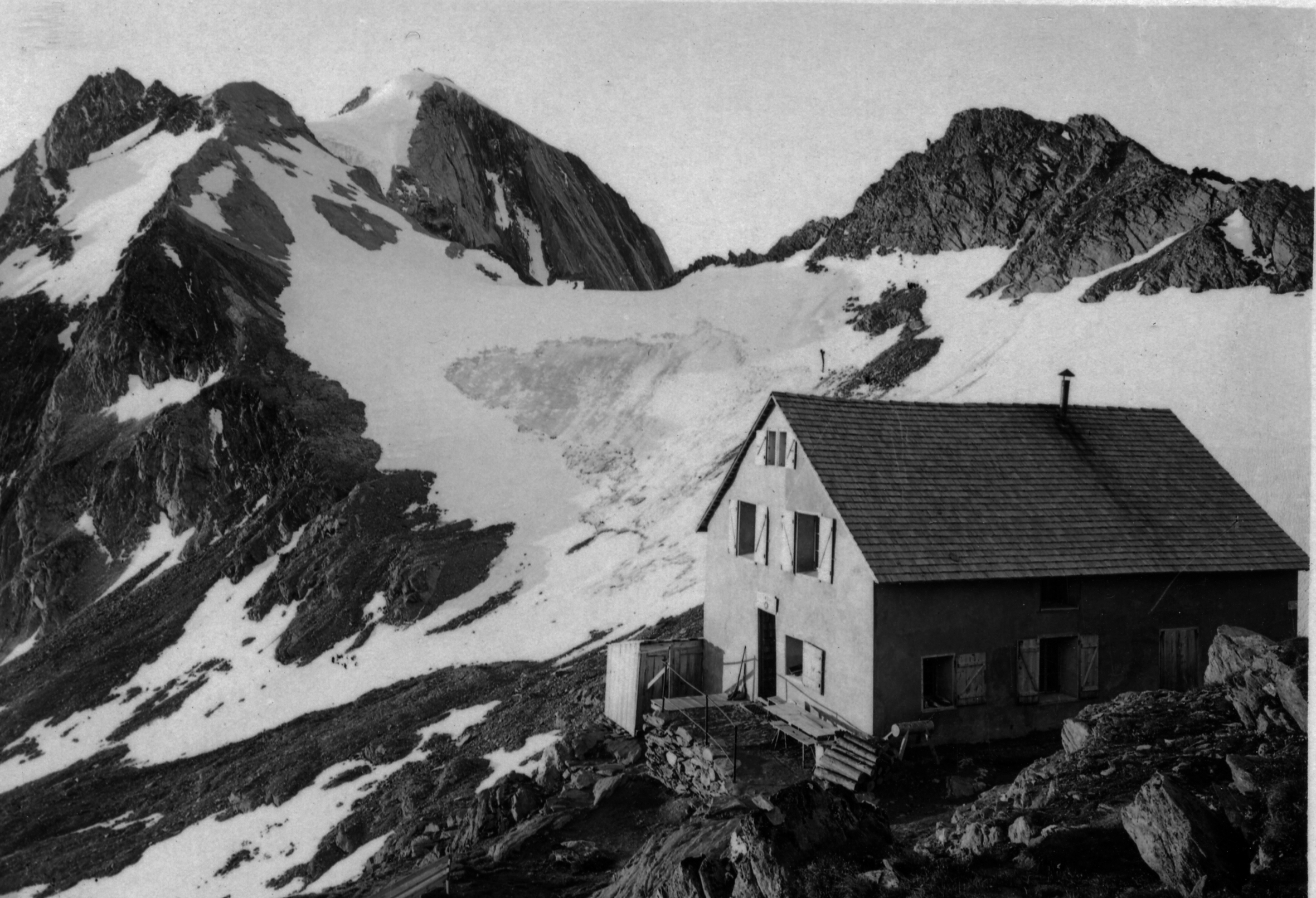
Accident at the Stettiner Hütte
Interview Hans Haid with Hans Götsch
Audio interview recorded by Hans and Gerlinde Haid on 13.02.2006 in Hans Götsch's house in the Schnalstal Valley
The folklorist Hans Haid and his wife Gerlinde recorded this audio interview with Hans Götsch in his house in Val Senales on February 13, 2006. Hans Götsch describes a story about an accident at the Stettiner Hütte around the 1920s, and he also talks about an accident in the Tisental Valley in 1979.
[Excerpt “Goetsch-Interview-Hans-Haid.mp3”: At 0:37 there is still the question from Hans Haid, from 1:03 Hans Götsch narrates. There are some interim questions from Hans Haid (in italics). This excerpt lasts until 11:36]
Accident at the Stettner Hütte (1920/1930s) & accident in 1979 in the Tisental valley
Transcription in dialect (German)
De hobm se gsegn, dass sie nimmer auerkemmen aufn Gletscher. Und dann hobm si mießn ausweichn. Sein auf die Stettiner Hütte zuachn gangen mit de Viecher und do seines zuachn gongen mit de Viecher und so seines nochr drfroorn.
Die in der Hüttn Plotz ghobt hobm, hobms überlebb und olls wos draußn gebliebm ischt, di sein am Morgn nochr drfroorn.
Zwischenfrage Hans Haid: In welchem Jahr?
Des tat i scho aussafindn. Der Weger, der Hermann, a dr Lois, dr heitige Baur vom Weghof, die wissatn des sicha genau. De hobm ins des dazumal als kloane Buabm erzählt.
Haid: Du hast das aber selber nicht erlebt?
Na, na. Mier nimma.
Haid: Also: Durchs Pfossental, dann Grub Alm und hinauf aufs Gurgler Eisjoch. Und deshalb ist mir das komisch vorgekommen, denn da hat man ja weit übers nächste Joch drüber … und da ist die Stettiner Hütte. Und da ist es gewesen? Beiläufig das Jahr?
I glaub, des kennt gwesn sein in die zwanzger, dreißger Johr. Des Jahrhundert holt jednfalls. Do sein sovl Toate obm gwesn. Die Schof sein drfroarn. Von Schturm. Des ischt gonz is gleiche wie bei ins in die 70er Jahr, des ischt 1979. Gsogt hobm si, so bei die 350, 400 Schof, wos do hin gwesn sein. Do hobm si, wie si drzählt hobm, olle Zimmr voll ongeton, in gonzn Schutzhaus, olls voll oongschteckt, wos si Plotz koppt hobm. Hots holt iibrlebb und di gonz schwarn Wiidr und die Görn, hobm se gedenkt, die überlebms und an Morgn seins a drfrorn, von Wind drschtickt. So a koltr Schneaschturm ischt do gwesn. Do sein olle vrwahnt.
Und so ähnlich ischt es ins passiert. I wor jo drbei, wie mier di 200 Toatn do koppt hobm. 1979 oder 1980. I woas jetzt nit so genau. Im Frühjahr bein Auftreibm ischt doss passiert. Dos ischt des Johr gwesn, wo mei Bruada ghiatet hot, auf dr Olm in Niedrtol. Und des von mir dos erschte Johr, wo i nit ols Treiber aufd Olm mitgongen bin. Weil i auf da Seilbohn drin, bei dr Gletscherbohn Bohnenbegleiter gwen bin.
Und do ischt so a groaßr Nordwind gongen und kolt gwesn. Ietz hobm mier mit dr Bohn nimmr fohrn gekennt und dann hot mir des koa Rua glott. Honn i mier gedenkt, dos gibt’s jo nit, dass die andrn mit de Schof iibrn Joch kemmen heit. Und donn hon i gfrogt, ob i drin nit weggean kon, weil i decht nit foarn kon. I mecht gern den Bruader nachgean, also den Schaftrieb. Donn bin i aussa Vernagt und dr Baur, der Unterprettracher, des wor damals nö dr Hermann, dr zweite Bua, der den Hof übernommen hot. Der ischt mier donn mitgongen durchn Tisnberg eini und wie mier dann aufn Hausr kemmen sein, ischt der erschte Bauer außr. Des woar dr Rainer Johann, der Leiterbauer. Und donn hat er zu mir gsogg, weil i eam ongschprochn hob, wia tuats do obm: Jo moansch du, i will hin sein? Voar i hin bin, gea i lieber hoam. Und do sog i, jo, des derf do nit sein, dass man die Kollegn hintn lott, wenn do oanr weckgeat. Der wor jo gonz drfroarn. Und wie i nochr auikemmen bin, bis zebrigscht im Tauf, untr die Jochkeefl, ischt mei Onkl, dr Götsch Konrad, gschtontn bei di Schof holt do, und der hot ausgschaug, wie dr Etzi, wie vom Messner des Foto von Himalaja, der Bort mit zehn Zentimetr longe Eiszopfn. Aso ischt der Mensch obm gschtontn und mit de Augn hot er nimmr ausgseegn. Nit. Do honn i mier gedenkt, muaß man ihn amol auskraln, dass er ibrhaup amol schaugn kann. Dann hat er gschriirn. Hot a weh geton, wenn man so drfrorn ischt. Nit. Und donn sog i: Konrad, gea ietz hoam, wearn mir schaugn, wie mier doss drrichtn. Des ischt leidr ins a nitt gelungen. Mier hobm woll di Schof von Tauf her. Die sein nimmr virwärts, nimmr hintri gongen. Es war ungefähr so a Metr Neuschnea. Von Wind verwaht. Und so schteil. Von di Schof hoscht selbr nimmr viel gsegn. Und donn hobm mir woll di Schof zrugg gebrocht auf dr Kuppe do, wo mans in Mittogsknöttl hoasst, auf der Kuppe do, weil man gedenkt hat, kannt die Lahn gaaling kemmen und kannt di Schof olle weck tien…
Gaaling hobm mir woll di Schof a bissl zrugg gebrocht und donn ischt Obmnt gwordn und dann hobm mier holt a mießn zrugg gean. Und i muass sogn, des woa eigentlich a bissl a Fahler, a von de Treiber, die do mitwoarn. Es hätt jo die Bergrettung, die Feuerwehr verständigt wern solln, die gholfn hättn aui zu gean, mera Leit mitnondr, donn hätt ma dr Schof sicha weita oa gebrocht und am nextn Tog warn koane vrendet gwesn.
In nägschtn Tog, wies grau gworn isch, do hobm mir am Obmnt a bissl a Aussprach gholtn zwischn ins Baurn und donn ischt ausgmocht worn, dass dr Leo mitm Hubschraub kimmt und ins inni fliegt, wie weit er holt konn fliegn. Und wir worn donn um Viertl noch vier, holb fünf ischt er donn kemen und hot erscht amol mi und in Finailer, weil i gwisst hon, wo di Schof sein, wo mir se glossn hobm. Donn ischt er zwoa, dreimol, viermol gflogn, bis er holt olle obm ghobb hot. In negschtn Tog wor is gleiche Sauwettr, lei nimma gschniebn. Dr Onrwint ischt gongen, in den Tol drinn, da hosch nit amol gscheit schnaufn kennt, vo lautr dass dr Wind do gwirblt hot. Und donn hot der nit glei londn kinnt, homma miassn so oihupfn in Schnea, do semma sem selba fast drstickt. Do bischt jo gschteckt, doss de Fiaß nimma aussikriagt hoscht in dem Tiefschnea drin. Und donn sein mia schaugn gongen, wo di Schof so sein. Und dees ischt schiach oanfoch, wenn man dees amol gseachn hot, deet und dort so a Lechl, wo man gsegn hot, do gea a bissl so a Dampf au, do mießn no lebate Schof druntr sein, weil si gschnauft hobm und durchs Schnaufn dr Dompf aufgschtiegn und hobm nochr ausgrobm. Und wos ischt passiert, die obm auf gstondn sein, hobm no glebb und ollle, die druntr drinn gwesn sein, sein holt drfoarn gwesn. Und so a 100 wearn holt vrendet sein gwesn. Hauptsächlich de Lamplar, de kloan. Mit de ondrn sein se driibr keemen, zen Glick. De zweite Gruppe woarn jo de Muattaschoof. Und donn ischts holt passiert gwesn. Dann hobm mir gschaut, olle Schof zsommzesammle, in Netze eini ze tien und hobm se donn zu Tal gflogn. Mier kennen olle von Glück redn, dass in die Treibr nit mehr passiert ischt. Hättn jo leicht kinnt Leit draugean. Do siicht man oamol, wie wertvoll die Bekleidung ischt. Wenn Leit do mitgean, doss se miassn bekleidet sein, worm hobm, an ordentlichs Schuagwond hobm. Es ischt holt nit vorstellbar, doss do jeder Mensch konn mitgean. Des muass de Witterung zualossn. Dort obm aufm Joch ischt a ondrs Wettr, a ondrs Klima. Doss holt etwas passieren a konn. So ischt doss holt. 1979 wor doss. Glaub schon 79.
Nit anders wird es in der Stettiner Hütte passiert sein. Nicht ondrs.
English translation
I think it was in the 1920s or 1930s. This century anyway. There were so many deaths up on the mountains back then. The sheep froze to death in the storm. It was the same as here in 1979. It was said that 350 to 400 sheep died. They put the sheep in the rooms of the shelter, all the ones that had space, as they say. They survived. The herders thought the older rams and ewes could survive the night outside, but by the next morning they had all frozen to death or suffocated in the storm. There was such a cold snowstorm back then.
It happened to us in a similar way. I was there when we had the 200 deaths. In 1979 or 1980, I don’t remember exactly. It happened in the spring when we were herding. That was the year my brother was herding cattle on the mountain pasture in “Niedertal”. And for me it was the first year that I didn’t go to the mountain pasture as a herdsman. Because I worked at the cable car in Kurzras, at the glacier lift.
There was a strong north wind blowing and it was cold. We couldn’t take the cable car any more and it left me no peace. I thought, “There’s no way that the others are coming over the yoke with the sheep today”. And then I asked if I could go away because I couldn’t take the cable car after all. I would like to follow my brother to the sheep drive. Then I went to “Vernagt” and the farmer, “der Unterprettracher”, Hermann, the second son who took over the farm, went with me. From “Vernagt” over the “Tisenberg”.
When we arrived at the “Hausr”, the first farmer came to meet us. It was Rainer Johann, the “Anderleiterbauer”. He said to me, when I asked him what it looked like up there: “Do you think I want to be dead? Before I die, I’d rather go home”, to which I said, ‘You can’t abandon your colleagues by simply walking away’. He was frozen to death. When I arrived, right at the top of the “Tauf”, under the “Jochköfeln”, my uncle, Götsch Konrad, was standing with the sheep and looked like Ötzi or Reinhold Messner in the photo on the Himalayas. His beard was covered with ten-centimeter-long icicles so that he couldn’t see a thing. I thought to myself that I would have to scrape it off so that he could see anything at all. Then he screamed, because it must hurt to be frozen like that. I said to him: “Konrad, go home now. We’ll see how we can solve this.” But unfortunately, we didn’t succeed. We brought the sheep from the “Tauf”, but they didn’t go forwards or backwards. There was about a meter of fresh snow that had been blown away by the wind. And it was steep there. You couldn’t see much of the sheep. Then we brought the sheep back to the top of the hill, to the so-called “Mittogsknöttl”, because we thought an avalanche might come and take the sheep with it.
At some point we drove the sheep back a bit, it was getting dark and then we had to go back too. I have to say it was a mistake on the part of the herders who went with us. They should have informed the mountain rescue service or the fire department to go with them. With more people, we would have taken the sheep further down and none would have died the next day.
In the evening, we farmers got together and agreed that Leo (Gurschler) would come with the helicopter and fly us in, as far as he could fly. The next day at about half past four, the helicopter first flew me and the “Finailer” farmer up, as I knew where the sheep were. Then it flew four more times until it had brought everyone up. It was the same bad weather that day, only it wasn’t snowing anymore. The upper wind was blowing in this valley, you couldn’t even breathe, it was so strong. That’s why it couldn’t land straight away and we had to jump down into the snow, almost suffocating ourselves. We were so stuck in the deep snow that we almost couldn’t get our feet out. Then we looked for the sheep. The sight was terrifying, every now and then you could see a hole from which a bit of steam was rising, there must still be live sheep underneath. We then dug the sheep out. The sheep at the top were still alive, but the ones at the bottom were all frozen to death, about 100 of them, mainly lambs. Fortunately, they got over the yoke with the others. The second group were the ewes. We tried to gather up all the sheep and things and put them in nets to fly them down into the valley. We can all count ourselves lucky that nothing more happened to the herders. People could easily have died. You can see how valuable good clothing is. When people go on a trip, they have to be dressed appropriately, with warm clothes and good shoes. It is inconceivable that everyone can go. The weather must allow it. It’s a different weather up there on the mountains, a different climate. Something can always happen. That’s the way it is.
That was in 1979 and it was probably similar at the “Stettiner Hütte”.
Right to escape from snow
Transcription in dialect (German)
Die Ventr tua i olm respekNern. Wie des 79 gwen ischt. Sein mir noch Vent gfoorn und hobm donn erlebt, wie entn di Bauern is Fuatr ins gebrocht hobm fier di Schof, di mia bei Vent ghiatet hobm. Des hot olls der Österreichische Bund finanziert. A die Großzügigkeit und das Verständnis der Bauern drübm: dos war bei ins do nit aso. Na, des mecht i olm sogn, bei ins di Leit, i woas nit, dribn honn i dees drlebb, dass die Hirtn, mier olle, sein do mit wormen Tee vrsorgt wordn und Essn hobm mir kriagt, hearwerts vo jedn Mensch.
Di Schof hobm kennt no di gonzn Bluam oofressn, bei da HausNa do. Hot koa Mensch gschumpfn. Di HausNa voll onscheissn kennt, a niemand gschumpfn. Die Leit hobm olle Verstöndnis kopp. Des sog i olm, wenn do bei ins eppas war in Schnals, di warn nit aso, i glab des oafach nit. Mit di erstn Schof sein mia ibrs Joch driibakeemen, dann hobm mir mießn Schneafluchtrecht oifoorn. In Vent worn 50, 60 cm Schnea. Jo jo, i bin jo selbr dribn gwesn. Nit. Wos willsch do Nen mit soovl Schof. Hobm mier mießn ochofohrn, ibr di Pruggn und rechts so her auf den Anger, den ebmen Plotz. Und do hobm mir holt di Schof ghietet. Ondrs wars nit gongen. I woas eigentli nit, unten, wo di TolstaNon is, warum si nit sem auf den Plotz gloD hom. Do entn, vielleicht sein si no enger beinond gwen, doss man nit soviel miesst schaugn, dass ins nit auskemen, weil nach unten kemen si nit, do is der Bach, nach oben kemen si nit, dort sein di Felsen, deniedn sein mehr di Heisr. Dann hot ma lei mehr zwischen di Heisr mehr Wach stehen sozusagen, doss si ins nit auskemen. Und donn worn mier do drübm zwoa Tog, volle Tog. Di Venter hobm ins mitn Hubschrauber Heu gebracht, hot ins is FuDer gebracht. Es waren so 800 oder gar 1000 Schof, eher glab i 1000 Schof. Jo, zwoa Toge sein mier bliebm. Mier sein direkt aufgnommen wordn. Des muaß man selbr mitdrlebm. I wor jo olle Tog driebm.
English translation
I always respect the people of Vent. When we went to Vent in 1979*, we experienced how the farmers there brought us feed for the sheep we herded in Vent. It was all financed by the Austrian government. The generosity and understanding of the farmers there would not be the same here. In Vent, I experienced that the shepherds, i.e. all of us, were provided with warm tea and food without us having to ask for it.
The sheep were allowed to eat all the flowers in front of the front door and nobody scolded them. They were also allowed to shit on the front door and nobody scolded them. The people were all understanding. I believe that if something like that happened here in the Schnalstal valley, it wouldn’t be like that. We got over the pass with the first sheep, but then we had to make use of the right to escape the snow. There was 50, 60 cm of snow in Vent. Yes, I was there myself. What can you do with so many sheep? We had to drive down to Vent, over the bridge to the right onto the “Anger”, onto the flat area. And that’s where we herded the sheep, it wouldn’t have worked any other way. I don’t really know why they didn’t let us on the square next to the valley station. They would have been closer together there and you wouldn’t have had to be so careful, as there would have been the stream below, the rock above and the houses next to it. We would only have had to stand guard between the houses. We spent two full days in Vent. The Vent people brought us hay by helicopter. There were 800 or maybe even 1000 sheep, more likely 1000. We were taken in straight away. You have to experience it for yourself, I was there the whole time.
(*The drivers usually say: “We drive with the sheep”)


